
- Key Takeaways
- The Allure of a Black Marble Fireplace
- Choosing Your Black Marble
- Design and Installation Insights
- Enhancing the Ambiance
- Preserving Your Fireplace’s Beauty
- Thermal Performance Considerations
- Conclusion
Key Takeaways
- Black marble fireplace is an elegant focal point of luxury, a timeless symbol of grace, and a combination of sculptural lines and natural luster for both modern and classical interiors. Think of the fireplace as a visual anchor for the room and organize other surfaces, furniture, and lighting around it to highlight its importance.
- As we saw, with a little strategic contrast and clever material pairing, black marble’s impact can be dramatic, particularly against white marble, pale walls, or textured mosaic tiles. Use a bare bones palette of contrasting stones, metals, and fabrics so the fireplace stays the obvious focal point instead of fighting something else for attention.
- Selecting the correct marble type and surface finish is crucial for aesthetics and performance since veining patterns, undertones, and polish levels alter how light and shadow dance across the stone. Compare a few samples in your actual room lighting and then decide based on price, maintenance, and existing floors or walls before settling.
- Because marble is heavy and inflexible, it must have a strong structural basis, precisely located brackets, and proper fire resistant backing materials, all necessitating excellent structural planning and professional-grade installation. Utilize a specific installation checklist and work with qualified experts when retrofitting into existing walls to prevent structural problems and expensive damage.
- Ambient touches like spotlighting, artfully selected decor, and textural contrast with mosaic tiles, natural stone, wood or textiles help accentuate the fireplace’s distinctive veining and dimension. Try various light temperatures, accessory finishes, and textiles to balance the vibe so it reads elegant and not heavy.
- Long-term beauty and value require consistent care. This includes daily gentle cleaning, periodic deep maintenance, and professional sealing or restoration as needed, particularly in high-use areas. Develop an easy upkeep schedule and maintain service records so the fireplace stays premium-looking and continues to increase your home’s overall value and attraction.
===
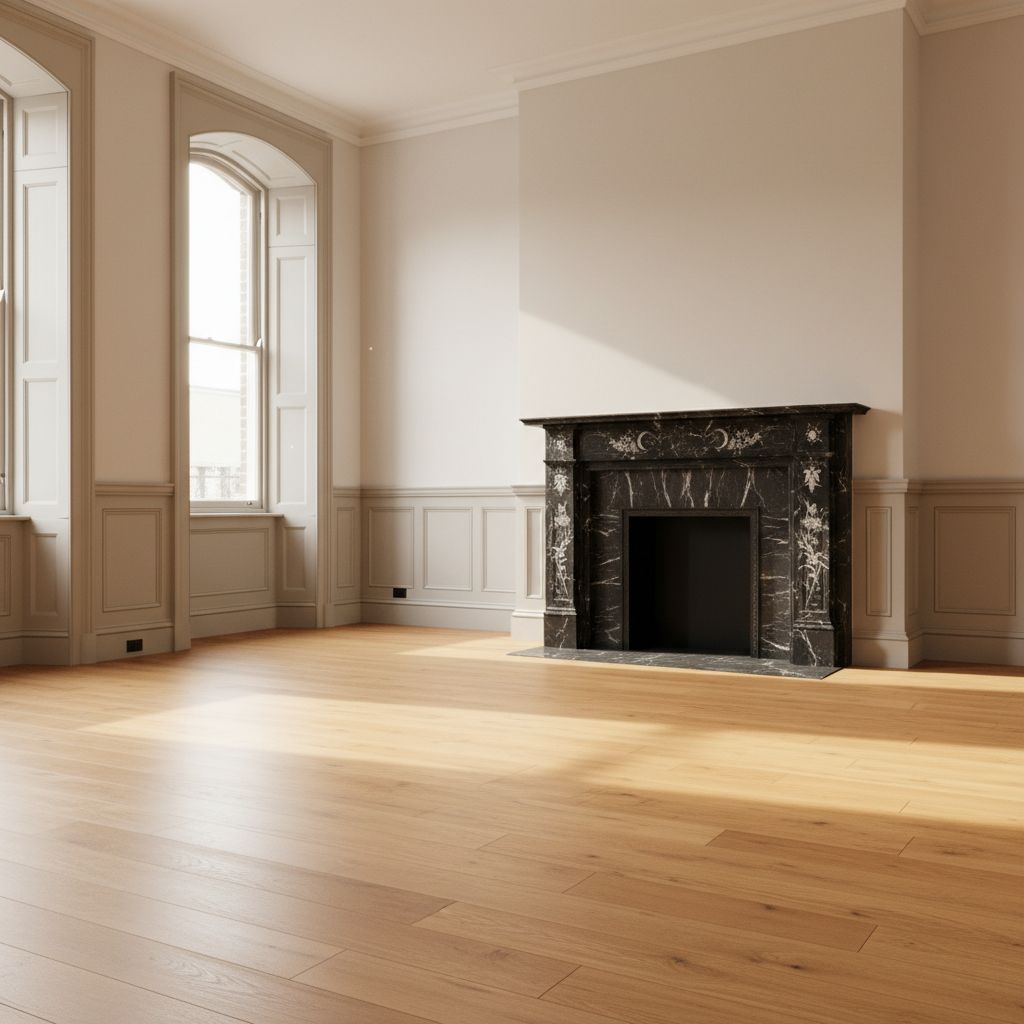
A black marble fireplace is a fixed heating feature made from dark natural stone with visible veining, used as both a heat source and a design focal point in a room.
It frequently grounds living rooms, studios, or small apartments with a sleek, minimal aesthetic that complements contemporary or traditional design schemes.
To make a pick, we’re accustomed to considering heat output, upkeep, price, and room size, which the following sections dissect in detail.
The Allure of a Black Marble Fireplace
A black marble fireplace is such a perfect focal point in a room. It captures your eye with its rich color, sharp geometry, and subtle sheen. The jet-black base with white or grey veining reads modern and classic, so it’s right at home in small studio apartments and larger townhouses alike.
1. Timeless Elegance
Black marble is considered eternally elegant, so a fireplace in this material feels fresh even as styles come and go. The deep surface establishes a soothing, grounded canvas for bookcases, media consoles or built-in seats, which makes the space remain more structured and purposeful as the years pass.
A luxury black marble mantel typically blends solid, top-quality stone with precise cutting, edge profiling and hand finishing. Mitred corners, tight joints and crisp openings maintain the lines, and a honed or polished finish moderates light playing across the face.
The sculptural presence comes from this precise geometry: slim legs, a narrow header, and a sleek silhouette that frame the firebox like simple architecture. This cadence of verticals and horizontals provides the room with a definite visual structure without feeling cumbersome.
Black marble resonates alongside other sophisticated pieces. There’s no shame in echoing the material language with a freestanding white statement bathtub in an adjacent bathroom, slim brass candleholders on the mantel, or one large framed print—just to keep the look cohesive, not stiff.
2. Striking Contrast
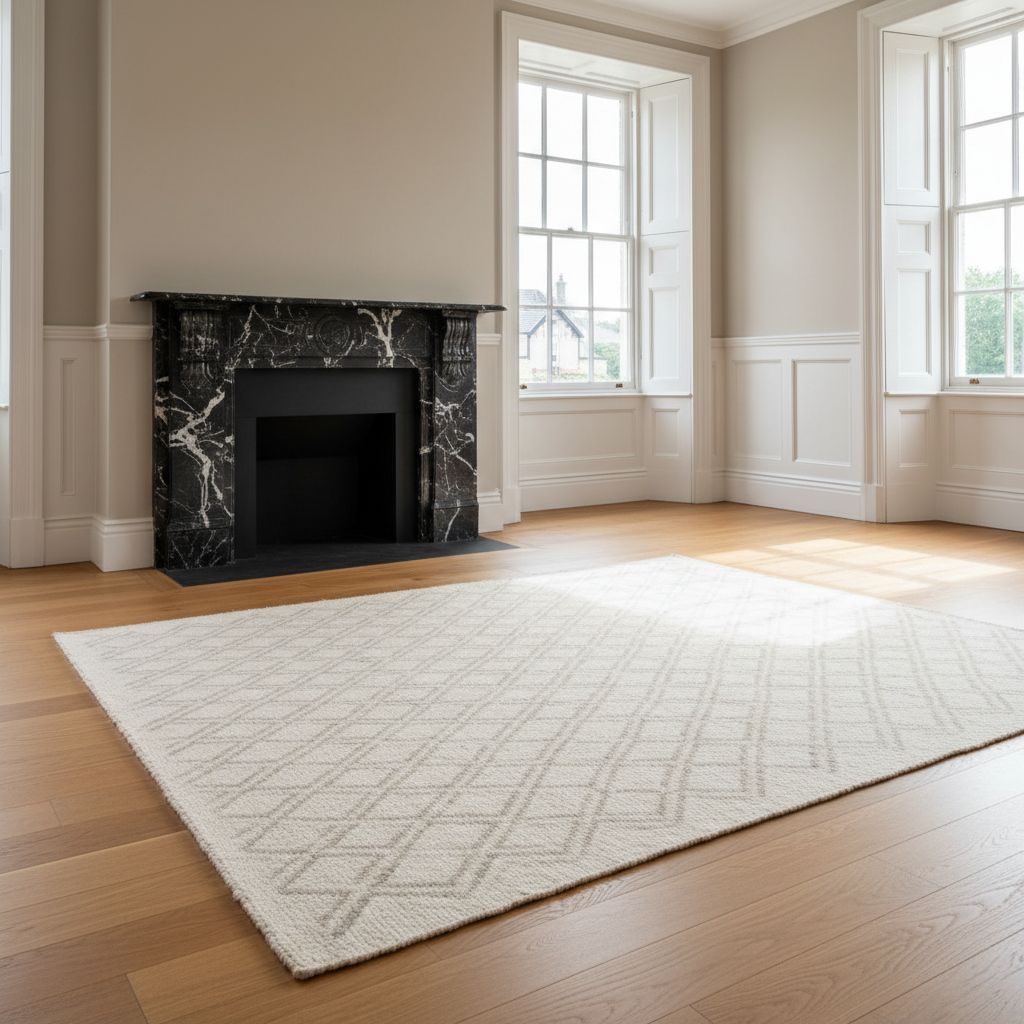
There is nothing more alluring than a black marble surround against white walls, light plaster, pale oak floors or a white marble hearth. This contrast causes the firebox area to read as the visual anchor of the room.
You can use that anchor to show off other features. For example, a white marble mosaic wall above the mantel or light terrazzo tiles beside it will look brighter when framed by the black stone. Even warm metals, like brushed brass or copper, catch more light when they are set against the dark base.
The jet-black field does more for surrounding colors, so golden amber tones in wood furniture or subtle lilac undertones in a rug feel a little bit more lush. This can come in handy when you desire a serene palette that nonetheless feels textured and vibrant.
When planning, it aids to write down materials that contrast, such as matte plaster, light oak, brass, or white mosaic tile, and determine which sit beside, above, or on top of the mantel for the most potent focal point.
3. Unique Veining
Each black marble displays unique patterns. Silver Wave has sweeping linear bands. Nero Marquina has sharp white veins on a deep black ground. Panda marble brings bold black and white ribbons that almost look drawn with ink.
When you choose slabs or blocks, you can search for dynamic movement, more gentle tonal shifts, or a combination of the two. Whatever tone you want your fireplace to have, whether quiet or dramatic, large, continuous pieces across the header and legs assist that movement to read as one connected composition.
For inspiration, most individuals examine stones such as a Monroe Marquina marble mosaic wall or a Silver Wave hex marble wall, as these installations illustrate the interplay of smaller forms and intense veining. The same reasoning applies when you install the fireplace faces and returns.
Because no two pieces of stone are alike, the veining design ensures that not even two black marble fireplaces are identical. This brings a bespoke, one-of-a-kind feel without additional decoration.
4. Increased Value
Luxury black marble fireplace mantel typically increases the perceived value of a home because buyers tend to interpret natural stone as a permanent, top-tier enhancement. The reality that black marble is incredibly resilient and reasonably low-maintenance, washed with simple pH-neutral detergents and revived with natural stone polish, reinforces this feeling.
Price typically begins at $7,850.00 and scales up with thicker profiles, rare stones, or custom details. It’s helpful to position this as a thoughtful investment. By listing the product price range with the exact stones—black marble, black granite, or mixed marble-granite surrounds—future buyers can see exactly what they’re getting.
That precision breeds confidence and care in the home overall.
5. Design Versatility
A black marble fireplace can nestle into a modern living room with low sofas and secret cupboards, a spare white and grey interior, or even a Georgian-style panelled sitting room with mouldings. The black marble fireplace is alluring in both instances.
To expand your style possibilities, combine the mantel with mosaic floor tile in gentle neutrals, warm travertine on adjacent walls, or a keely hex marble wall pattern for graphic interest. Each combo alters the vibe with the fireplace as a constant.
If you enjoy planning, it can help to map design visions in a simple table: for example, one column for themes like “minimal,” “classic,” or “bold,” and another for pairings like Bette Marquina marble mosaic floor tile or Carrara Bellagio marble inserto mosaic wall tile. This allows you to experiment with concepts before you invest.
Routine maintenance, including a yearly inspection and periodic natural stone polish, preserves the shine and richness of the finish. This ensures the hearth remains purposeful and sculpted in any aesthetic palette.
Choosing Your Black Marble
Selecting black marble for a fireplace really comes down to texture, shade and durability. It will determine the amount of contrast you have against your walls, the heat resistance around your firebox and the frequency with which you need to clean and seal it.
Marble Types
Nero Marquina, Panda marble, and Silver Wave (and “picket” formats used in mosaics) are three of the most popular black marbles for mantels and surrounds. Nero Marquina is deep black with bold white veining that can appear like lightning strikes, perfect for minimal living rooms that use lots of white paint and thin black frames.
Panda marble flips the balance, with wide white bands and gentler black fields, so it harmonizes well in a space where you already have light terrazzo or bleached oak floors and you want your fireplace to read as a feature but not as a black block.
Silver Wave and the other stones of its ilk possess streaky grey, silver and occasionally golden amber hues that traverse a charcoal canvas, which can mimic the veins of dark wood grain or large-format porcelain tiles. Some exotic black marbles even come with lilac or indigo undertones in the veining.
These are a great match for cool metal finishes like brushed nickel as opposed to warm brass. In walls or floor tile that is mosaic, it helps to compare the scale of the marble veins to the grout grid since fine mosaic usually pairs best with calmer, low-contrast stone.
Each slab of natural marble has its own crystal matrix and veining pattern, so no two are alike. It will etch and stain if you drop acidic drinks onto the hearth. Engineered “marble” or sintered stone mimics the appearance, usually with more controlled veining, higher scratch resistance and lower water absorption, which can be a lifesaver in rentals or communal settings.
For a bustling little flat, an engineered black that resonates with Nero Marquina or Pietre Nere will provide the same heft, but less maintenance.
Sourcing
Most local stone yards and fireplace showrooms make off-cut slabs of nero marquina or pietre notte available — an economical option for a small surround. Top brands and master artisans could sell carved mantels with hand-cut moldings, matched corner details and dry-laid book-matched veining for consumers wishing for tighter control of color and pattern.
Virtually and on brand sites, you can often see entire collections, so you can compare black marble, black granite and engineered elements from one catalog without driving around town. For custom work, it’s generally best to speak with the vendor rather than just rely on a cart system.
Contact forms, e-mail, or a brief phone call can assist you in confirming slab thickness, inner opening size, and safe clearances from the firebox. A lot of sites let you filter by finish (polished, honed, leathered) and edge profile, then see close-ups of actual stock rather than stock renders.
Because most orders are high-value, you’ll want to skim the service terms, such as who pays for return freight if a slab breaks in transit and how long replacements take. If you order online, verify that the site utilizes secure network standards.
Check for https in the address bar, easy captcha steps, and visible IP logging in security text or privacy policy. This matters if you deposit by wire transfer or card, as fireplace packages run several thousand euro. Good vendors will provide complete company information, VAT or tax ID, and brick-and-mortar warehouse addresses, which you can confirm with a quick search.
Finish Options
-
Polished finish. A polished black marble surface is ground and buffed until it’s glossy and highly reflective. This enhances the stone’s inherent shine, intensifies the black, and makes white or golden veining almost mirror-like in sharpness. In dimly lit rooms or small studios, polished nero marquina can lend the fireplace a sense of passage-like formality and brightness, but it’s prone to fingerprints, dust, and fine scratches.
It is a good fit for low-traffic mantels where you don’t drop hot pots and pans or rub rough items on the lip.
-
Honed finish. Honed is smooth and matte, with a soft reflection instead of a mirror shine. This reduces glare from the fire and from artificial lights, so the surround feels more hushed and understated, which is a plus if you work from home in the same room and fixate on screens for long stretches.
What’s more, honed black marble conceals small etches and micro-scratches better than polished stone, offering a practical option for young families who utilize the hearth as a bench or shelf.
-
Leathered or brushed finish. A leathered finish employs brushes to impart a slight texture over the surface, maintaining the color saturation while reducing shine. On black marble with strong veining, this texturing adds even more depth since the veins reflect light differently as you walk through the room.
It provides more grip on level hearths, which is useful if the surrounding floor is smooth porcelain or polished concrete. Others think leathered stone is simpler to live with in busy locations, as it camouflages dust and slight damage.
-
Tumbled and specialty finishes. Tumbled or antiqued black marble has softened edges and a worn-in feel, so it complements older structures or spaces with reclaimed wood beams and rustic metal hardware. These types of finish cut down on the “new build” gloss and often harmonize better with mosaic floors that already have patina.
Before you choose, it’s savvy to check out high-resolution photos on product pages and, if available, sample swatches. Then take them home and hold them up next to your wall paint, floor tiles, and metal trims.
Design and Installation Insights
A black marble fireplace imparts serious visual heft, which means its design and installation require definite planning, solid structural support and thoughtful material selections to remain safe, long-lasting and livable.
Structural Needs
A black marble surround or mantel is dense and heavy, particularly if you opt for thick slabs or carved pieces. The wall and floor need to support that weight without bowing or splitting down the road. Ensure the subfloor beneath the hearth area is level and reinforced. Concrete slabs tend to be ideal, whereas timber floors may require additional joists or a load‑spreading plate.
Since marble is non‑combustible and code‑compliant, it’s really all about structure and how the heat gets transferred to adjacent framing, not the marble.
Careful design before you drill a hole is the secret. Trace a line for your mantel shelf, side legs, and hearth stone with a laser level or chalk line. Then install heavy-duty steel brackets or hidden anchors right on those lines. Each bracket should be secured into solid framing or masonry, not just drywall plugs, and sized for the given load specified in the product’s installation guide with a safety margin.
When you’re retrofitting a black marble fireplace into an existing wall, a professional comes highly recommended even in older or historic homes where marble preserves the original integrity. A structural engineer or seasoned installer can look for hidden problems like weak studs, uneven brick or old DIY that wouldn’t safely hold heavy marble blocks.
Material Pairing
Black marble pairs wonderfully with light and tactile materials that prevent the surround from appearing too dark or flat. Mosaic floor tiles in soft grey, travertine slabs or brushed silver trims can frame the fireplace and keep it legible in tiny city chambers.
Good contrast assists. Throw in white marble like Carrara, Calacatta, Statuario, or White Thassos on adjacent surfaces, or just plain light walls, and the black veins really pop and the room stays bright. This blend works well with super clean, modern rooms and more traditional ones.
Use finishes that feel consistent in quality: natural stone, polished metals, and simple, well-made accessories such as a slim black metal screen or a stone hearth bench.
|
Element |
Recommended Materials |
Finish Notes |
|---|---|---|
|
Surround / Mantel |
Black marble, Calacatta, Statuario, Carrara |
Honed or polished, sealed annually |
|
Hearth |
Black marble, travertine, neutral porcelain stone |
Matte or honed for better slip resistance |
|
Wall Finish |
Light paint, white marble panels, limewash |
Low sheen to balance polished stone |
|
Accents |
Brushed silver, black steel, glass, soft textiles |
Keep forms simple, avoid heavy patterns |
Common Pitfalls
Unsealed marble around a firebox collects soot, ash, and drink or candle spills that stain and matt the stone. A yearly sealing with a good penetrating sealer, coupled with gentle cleaning, is generally sufficient and remains a low-maintenance regimen in comparison to much more porous stone.
Improper handling topples damage. The long skinny pieces of marble will crack if lifted by one end, so they must be carried up the mountain in an upright position by two guys or suction cups. Then, they should be laid down on a series of padded blocks until secured.
Do not over-tighten mechanical fasteners during installation. Let the stone rest on a bed of appropriate adhesive or mortar with complete, even support.
Visual blunders are frequent, too. If you combine a sleek, high-gloss black marble with cheap mosaic tiles or plastic-looking trims, the entire fireplace can seem out of whack, even if the stone is lovely.
Design and Installation Tips: Attempt to coordinate sheen, color temperature, and quality so the surround, floor, and wall feel like a single composition.
Enhancing the Ambiance
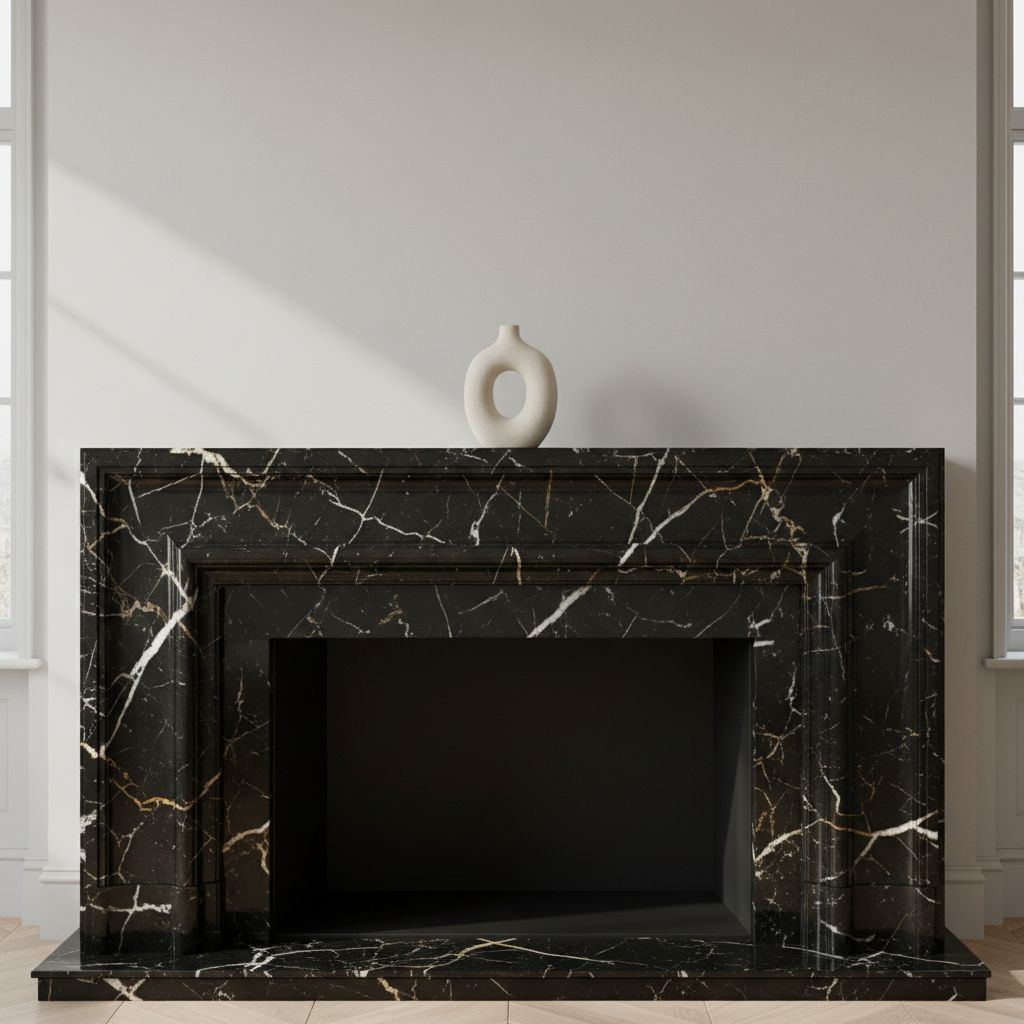
Black marble fireplace, which sets the tone for the whole room. Its dark surface, bold veining, and light-play effects can enhance a space from basic to understatedly elegant. Minor style nudges in its vicinity can tip the mood toward serene, theatrical, or warm-comfortable, depending on your preference.
Strategic Lighting
LIGHTING determines how the black marble reads in real life. If you position ceiling spots or track heads approximately 40 to 60 centimeters in front of the mantel and angle them down, the beam grazes the surface, catches the veining and reveals the depth of the stone rather than painting it as a flat dark block. This plays beautifully on high-ceilinged fireplaces, where a couple of vertical light pools can emphasize the height and add a feeling of muted majesty rather than glare.
By night, dimmable spotlights or wall sconces on either side of the opening can bathe the marble in a warm, glowing rim even when the fire is extinguished. Dimmable fixtures come in handy here. A lower setting keeps the room relaxed and a brighter level reveals more detail when guests arrive. Warm color temperature LED fixtures prevent the stone from becoming cold and make the space feel more like somewhere you want to sit and read.
If you continue marble or a mosaic tile field onto the wall or floor, direct a thin spotlight along the grout lines or texture. Even a simple monochrome mosaic next to sleek black marble can gain dimension when side-lit, so the two textures complement rather than compete. It is the stone’s capacity to reflect and refract light in those little highlights that lends that subtle glow to the fireplace people are always referring to as ‘warmth’ even before the fire’s started.
Complementary Decor
Décor surrounding a black marble fireplace needs to accentuate it, not battle it. Metal accents are perfect because they mimic the stone’s opulence without appearing gaudy. Slim silver candleholders, a brushed brass picture frame, or a low gold-toned tray on the mantel can draw out the marble’s lighter veins. In rooms with warm toned marble like Sunset marble in close proximity, these metals absorb the soft, amber notes and amplify the welcoming vibe on chilly nights.
In a living room or suite, matching the fireplace with one obvious statement piece keeps the space from feeling accidental. This could be a sculptural chair or a standalone bathtub in an en-suite, or a huge piece of art with clean lines and limited colors. The goal is a shared rhythm: bold but not busy, so the eye moves from the fire to the art or object and back again.
Plush things prevent the room from feeling like a marble gallery. A high quality, low pile rug in natural fibers, a couple of toss pillows in cotton or wool, and minimal additional décor on the hearth maintain the warm ambiance without the visual clutter. Even in small apartments, this combination can transform the fireplace into a beacon of cozy sophistication, not merely a fixture to admire from the couch.
- Slim metal candleholders in silver, gunmetal, or brushed brass
- Low-profile vases in matte ceramic or smoked glass
- Some neutral rugs made of wool, jute, or cotton blends in light or mid tones.
- Simple framed art with strong shapes, limited color palette
- Understated fire tools in black or dark metals, and crisp lines.
Textural Balance
Black marble by itself can feel very stiff, so it’s nice to mix it with other textures. A band of textured mosaic tile, a rougher natural stone on the adjacent wall or a honed stone hearth in a softer gray, for instance, can add layers without detracting from the main surround. The variegation and veining in the marble already provide visual interest. The other materials just have to complement it, not compete with it.
Soft furnishings act as a counterbalance to all this hard surface. A fabric sofa with open weave, a wool throw, and loosely falling curtains all absorb sound and light and quiet the room, making the glow of fire even more pronounced. Even one upholstered bench by the hearth transforms how we use the space, making it a true gathering point instead of a pass-through zone.
Sprinkling wood, metal, or glass in just the right amounts prevents the design from becoming stuffy. A plain wood mantel shelf above the marble, a metal-framed coffee table, or a clear glass screen in front of the fire all add different tactile notes. When you put them in a consistent beat—strong marble lines, then softer fabrics, then some sleek metal accents—the space reads balanced and cohesive instead of heavy or austere.
Preserving Your Fireplace’s Beauty
Your black marble fireplace can remain crisp and elegant for decades when you combine quality design with consistent maintenance, not stopgap solutions or abrasive chemicals.
Daily Care
Dust your marble with a soft, dry cloth at least once a week and more if you live in an active household or close to an open window. This light step prevents grit from accumulating, which can cause fine scratches that eventually dull the polish. For most, a swipe when you’re cleaning the living room is good enough.
For regular cleaning, we recommend a soft, barely damp cloth with pure water. Skip scrub pads, harsh sponges, and any cleaner that boasts of ‘heavy-duty’ strength, as they tend to include abrasives that can slice into the polish. Avoid vinegar, lemon-based sprays, and most all-purpose cleaners. The acids in them can etch black marble and deposit pale stains that don’t wipe away.
Spill control is more important than extended cleaning marathons. If candle wax, wine, coffee, or oil drips on the hearth or mantel, blot it immediately when you notice it rather than rubbing. Fast is best because it lowers the chances of a stain taking hold and helps maintain that intense, uniform color that makes black marble so dramatic.
Little habits guard the surface. Place coasters under vases, planters, and diffusers, and use felt pads beneath metal or stone decor so they don’t scratch when you slide them. If you utilize the hearth edge as additional seating, think about a thin pillow or throw to minimize abrasion in that high-contact area.
Deep Cleaning
For more heavy duty cleaning, apply a pH-neutral cleaner designed for natural stone, diluted according to directions on the label. These clean soot, skin oils and light film without stripping the sealer or roughening the surface, which keeps the marble’s reflection sharp, not cloudy.
If your surround has mosaic pieces or grout lines, scrub those areas with a soft brush and gentle force. It’s great for loosening soot and dust that settles in the joints but not for digging into the grout or scratching polished tiles! Rinse with clean water and dry with a microfiber cloth so no water spots remain, which are very visible on black stone.
A deep clean once a month works for most living rooms, though a seldom-used formal room may only require it every few months. Combine this with re-sealing every 6 to 12 months, or at a minimum, every 1 to 2 years to aid in repelling moisture and stains and maintain that fresh-from-the-quarry appearance with minimal effort.
Professional Help
While we all have careful care routines, there are some things that are best left to the stone care specialists who work with marble every single day. If you notice dull spots, etched rings from spills gone by, or chips along the edges, a professional can hone, polish, and re-seal the fireplace with tools and compounds that are much more exact than over-the-counter kits.
Several companies sell this type of service every few years. They’ll inspect the sealer, the joints, and the surround shifting. This comes in handy if your fireplace is a focal design point or if you rent the property and want an easy proof of maintenance. While you’re there, get custom recommendations on cleaning products and safe heat levels for your specific stone.
So it’s savvy to maintain a simple service log, even a digital note, where you record sealing dates, deep cleans and any professional work. It backs warranty claims, can assist with insurance if damage ever occurs, and comforts any future buyer that the fireplace has been treated as a long-term asset.
Thermal Performance Considerations
Thermal performance in a black marble fireplace is about more than just how warm the room feels. It addresses the stone’s thermal performance, safety of build-up around the firebox, and the maintenance required to maintain the surface’s integrity and cleanliness.
Black marble is appropriately heat resistant with decent thermal conductivity, so it can handle standard fireplace temperatures if used as a surround or mantel, not a firebox lining. It has a tendency to soak up heat near the fire opening and radiate it off slowly, but is still less effective at heating a room than a cast-iron insert, soapstone, or a high-mass masonry heater.
Certain marbles have finer grain and fewer veins, so they can better withstand thermal stress and are less susceptible to micro-cracking. Other woods, particularly extremely veined or resin-packed types, are more delicate and can display heat rings or subtle curling lines earlier. Dark stone soaks up more radiant heat than white marble, but the net room heating gain is modest, so you generally select black marble for its appearance, not its maximum thermal output.
Since marble is cool-toned, a big black surround can veer cold or super formal even with the fire blazing, so we counterbalance that by pairing it with warm lighting and softer textures.
Mounting has an impact on thermal survivability. There has to be a little intentional gap and loose high-temperature glue between the firebox and the marble so the metal insert can expand without exerting force on the stone. Rigid fixing or tight joints will cause cracking at corners or veins after repeated heat cycles.
Sealing black marble every 1 to 2 years, and sometimes annually by a pro if the stone is more porous, limits soot absorption and moisture intrusion that can alter how evenly the surface takes and sheds heat. A well-sealed face is easier to clean, thereby minimizing residue build-up that can discolor under heat or create hot spots.
Behind and under the marble, fire‑resistant materials do most of the actual safety work. Cement board rated for high temperatures, mineral wool insulation, and non‑combustible brackets or steel frames prevent heat from hitting wall studs or storage niches. They distribute thermal loads away from individual anchors, so the marble is less prone to chip, bow, or loosen at fixings.
Keeping an eye on the surface temperature while in use is a straightforward precaution to safeguard both your marble and your surrounding decor. An infrared thermometer can indicate whether portions of the surround are trending hotter than the manufacturer’s suggested threshold, frequently near 80 to 90 °C for decorative stone.
If a section runs too hot, you can lower burn intensity, increase clearance for items like artwork, or have an install check insulation or gaps. Regular cleaning with a soft cloth and pH-neutral cleaner once the stone is thoroughly cool, along with routine sealing, prevents soot, moisture, and light staining from altering how the surface reacts to heat over time.
Conclusion
A black marble fireplace is more than just a hole filler. It establishes the atmosphere for the entire space. The stone provides heft, crisp lines, and a distinct focal point. The fire provides movement, illumination, and heat. The combination is serene, yet powerful.
Armed with what you’ve read, you can now select the right marble, design a proper install, and maintain the stone intelligently. It will go great with light walls, soft fabric, or bold art. They’re functional too; you can think through heat output and safety, not just looks.
So go to the next step. Choose a room in your house, make a rough sketch of the layout and experiment with how a black marble surround would transform that room.
About the Author