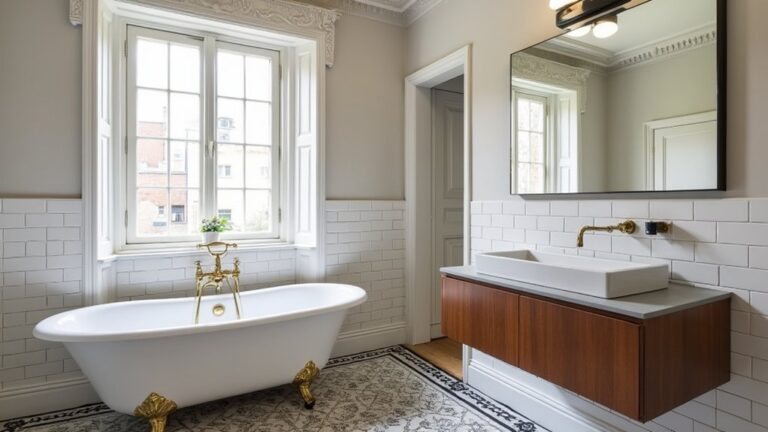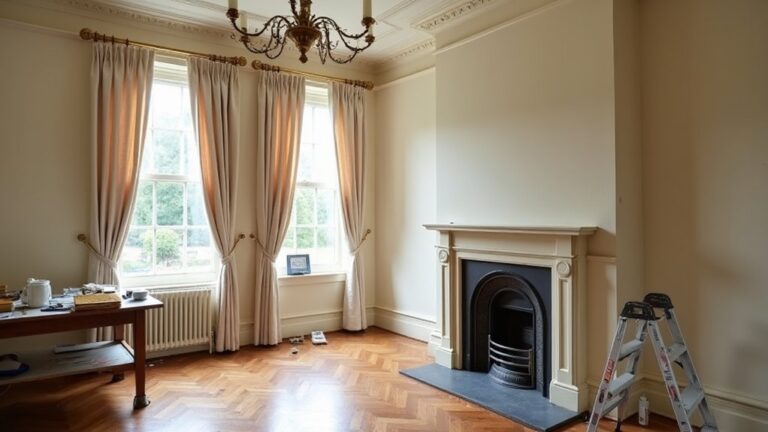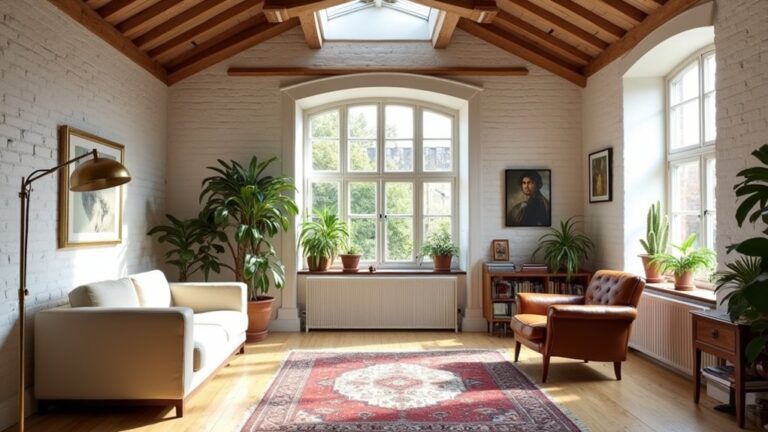
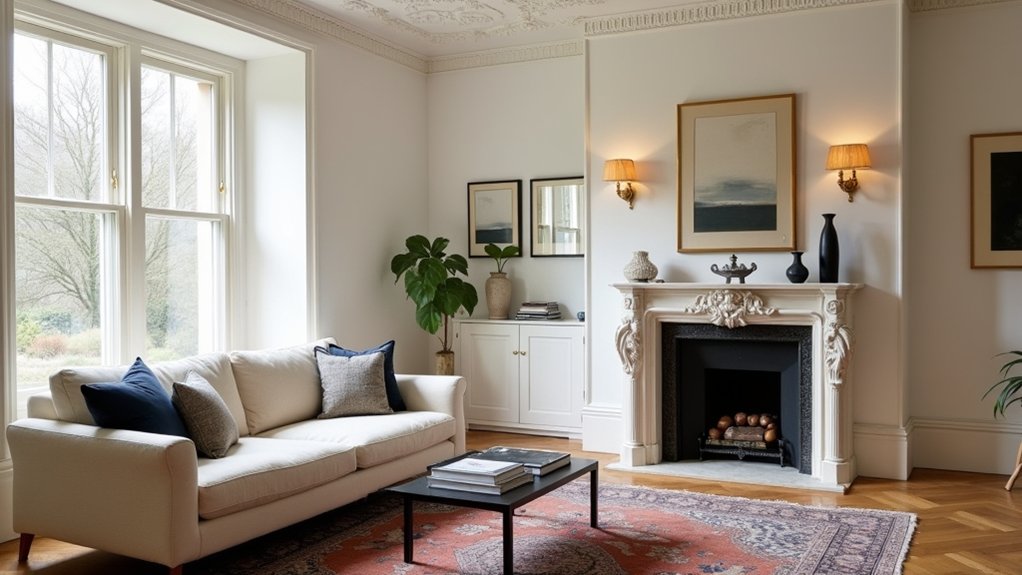
Like a quietly updated Georgian terrace, you can make a period home feel current without stripping its character. You start by spotting what’s original—sash windows, cornices, ceiling roses, fireplaces—then you decide what to restore, what to replace, and what to leave with honest wear. You set a calm, heritage-led palette and choose finishes that respect age. But the real shift happens when you plan lighting and furniture properly…
Key Takeaways
- Survey, photograph, and map original features and later alterations to identify what’s historically significant and worth preserving.
- Triage fabric: repair structure first, then restore original elements with matching materials, conserving patina where it adds character.
- Build a heritage-led palette using soft neutrals and low contrast, adding one or two muted accents based on light and period context.
- Choose furniture that respects proportions and sightlines, float key pieces, and limit finishes to three repeating materials for cohesion.
- Accessorize deliberately: one hero object per zone, contemporary art in clean frames, and keep surfaces at least 30% clear.
Start by Spotting Your Original Period Features
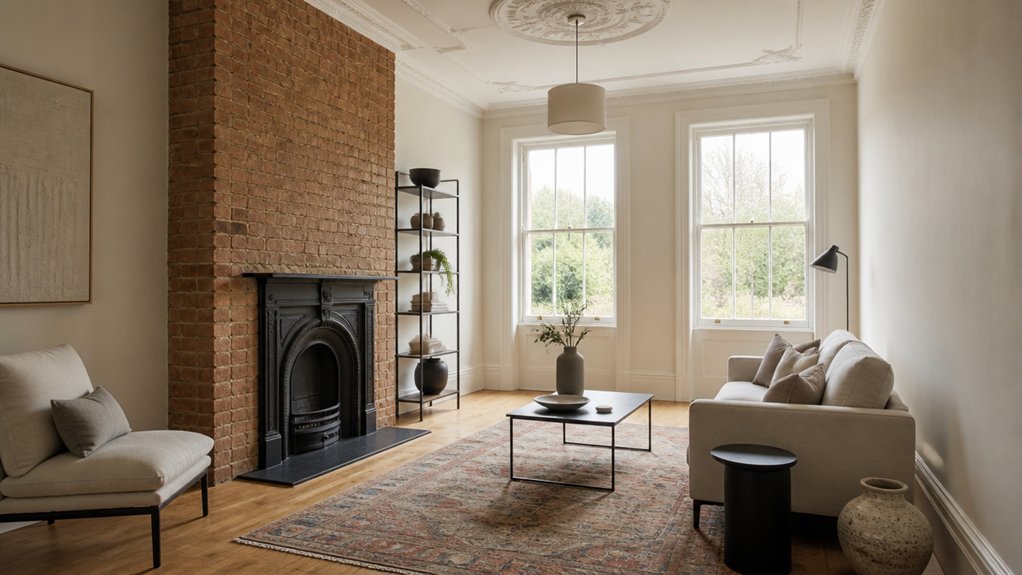
Before you choose paint colours or furniture, walk through your home and identify the original features that define its period character—because they’ll set the boundaries for any modern-heritage scheme.
Start room by room, noting elements that are fixed, proportion-setting, or materially distinctive: sash windows and glazing bars, picture rails, cornices, ceiling roses, original floorboards, encaustic tiles, fireplaces, panelling, and joinery profiles.
Check details up close for Authentic craftsmanship: hand-planed tool marks, lime plaster softness, pegged joints, old-growth timber grain, and uneven glass ripples.
Place each feature in its Historical context by dating it (Georgian symmetry, Victorian exuberance, Edwardian light, Arts and Crafts honesty) and mapping later alterations.
Photograph, sketch, and label everything so you can design around what’s genuinely there.
Decide What to Restore, Replace, or Leave Worn
You’ll need to judge what’s historically significant—original cornicing, sash windows, encaustic tiles—and treat those as non-negotiables.
Prioritise structural essentials first, so you’re repairing rotten joists, failed lintels, and damp issues before swapping finishes.
Then preserve patina strategically: keep honest wear on floorboards and door furniture where it adds character, but replace tired elements that compromise comfort or performance.
Assess Historical Significance
Start with three categories: elements that define the house’s period character, later alterations that add value, and purely worn-out fabric that’s safe to change.
Then test each item against architectural preservation and its historical context, not your taste alone.
In UK period homes, look for original joinery, fireplaces, cornices, sash boxes, floorboards, and early tiling; these usually anchor character and deserve careful repair.
Use a quick triage:
- Period-defining: keep, restore, or reinstate using like-for-like profiles and traditional finishes.
- Positive layers: retain quality Victorian/Edwardian upgrades or well-made mid-century fittings that tell the building’s story.
- Neutral wear: replace threadbare carpets, damaged plasterboard patches, or poor modern trims that dilute proportion.
Prioritize Structural Essentials
Although paint, tiles, and fittings grab attention, your modern-heritage scheme will only feel “right” if the bones of the house are sound. Start with a proper survey: check roof coverings, lead flashings, chimneys, gutters, and downpipes. Then trace damp to its source—failed pointing, bridged air bricks, or leaking valleys—before you touch finishes.
Prioritise safe electrics, compliant gas work, and insulation that won’t trap moisture in solid walls. Restore what’s structurally sound and original: lime mortar, timber joists, sash cords, and glazing bars often repay repair. Replace only where failure is proven, matching profiles and materials to protect architectural authenticity and the home’s historical context.
If something’s merely scruffy yet stable, leave it for later. Document every decision clearly.
Preserve Patina Strategically
Once the house is weather-tight and safe, treat patina as an asset, not a flaw, and decide room by room what earns conservation, what needs restoration, and what must be replaced. In a UK period home, good patina preservation keeps joinery crisp and surfaces honest while preventing decay. Use light-touch methods first: vacuum with a soft brush, wipe with pH-neutral cleaner, then wax or oil only where timber’s drying.
- Conserve: keep vintage patina on original floorboards, stair treads, and brass ironmongery; stabilise loose veneer and seal bare end grain.
- Restore: repair sash cords, refit beads, and strip paint selectively to revive mouldings without erasing tool marks.
- Replace: swap failed electrics, rotten sills, and delaminated plaster; match profiles and species exactly.
Choose a Calm Modern-Heritage Colour Palette
Start with heritage neutrals—chalky whites, warm stone, putty and soft greys—so your period features read cleanly against a calm backdrop.
Keep accent colours restrained: one or two muted tones (think smoky green, inky blue, oxblood) applied to joinery, a single wall, or upholstery rather than every surface.
You’ll get a modern-heritage look that feels considered, not themed, and it’ll sit comfortably with the UK’s often changeable light.
Heritage Neutrals First
Before you pick pattern, panelling, or provenance pieces, lock in a calm, heritage-leaning neutral palette that suits your home’s natural light and period features. Start by reading the room’s undertones: north-facing Victorian terraces often suit warmer stone and putty, while bright Edwardian bays can take cooler chalk and soft grey without feeling stark.
You’ll get timeless elegance by keeping contrast low and finishes consistent across walls, woodwork, and ceilings. Build in vintage charm through slightly muddied pigments rather than crisp modern whites.
- Walls: choose limewash-style off-whites, oat, or fawn.
- Woodwork: match with a deeper shade of the same family.
- Ceilings: go one step softer to lift cornices and plasterwork.
Accent Colors With Restraint
Where do accent colours belong in a modern-heritage scheme? You’ll use them as punctuation, not as wallpaper. Keep your base calm—chalky white, warm stone, putty, or softened greige—then add one or two muted accents drawn from period references: inky navy, sage, oxblood, or a dusty teal.
Apply them in small, deliberate zones: a pantry door, skirting detail, a single alcove, or the inside of glazing bars. Let Vintage textiles do the heavy lifting through cushions, runners, and lampshades, so colour reads layered rather than loud.
Echo those tones in Antique hardware—aged brass, blackened iron, or unlacquered bronze—so the palette feels intentional. If it competes with your cornice lines, you’ve used too much.
Pick Period-Friendly Finishes (Floors, Trim, Metals)
Although you can layer in modern pieces later, the finishes you choose now will set the tone for a modern-heritage look that feels right in a period UK home. Keep original boards where you can; if you must replace, choose oak or pine with a matte oil, not high-gloss lacquer.
For skirting, architraves, and picture rails, repair profiles rather than “updating” them, then paint in a soft heritage white or clay tone to sharpen shadow lines. Metals should feel honest and tactile, so match them across the house.
- Floors: wide boards, natural grain, muted sheen.
- Trim: crisp repairs, traditional profiles, breathable paint.
- Metals: aged brass, blackened steel, Classic hardware.
Then add Vintage textiles to soften edges.
Plan Modern-Heritage Lighting (Ambient, Task, Accent)
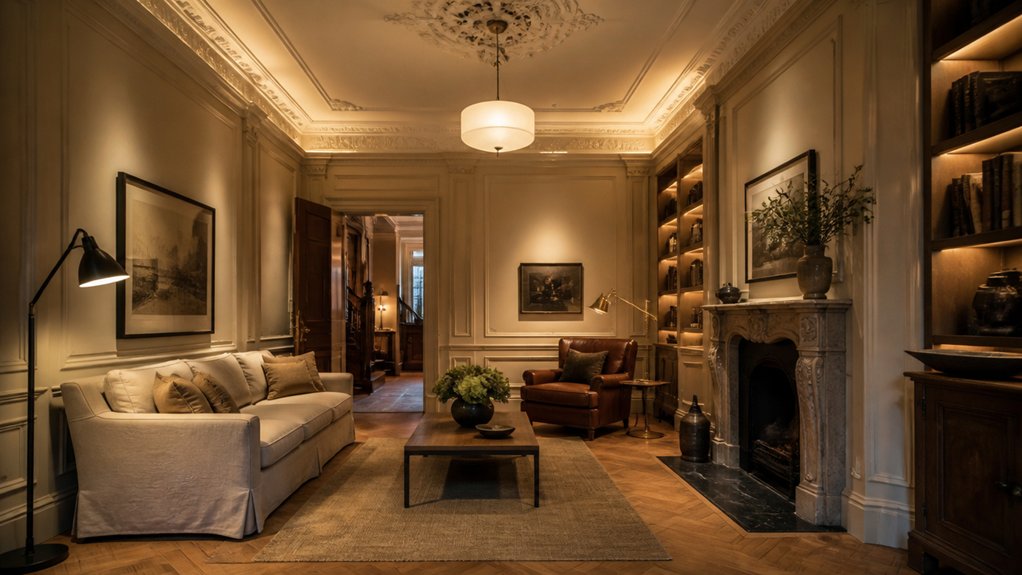
Once your floors, trims, and metals feel consistent, get the lighting right and the whole modern-heritage scheme clicks into place.
Start with ambient light: a central pendant or discreet downlights on dimmers, set to warm 2700–3000K, so plasterwork and joinery read soft, not stark.
Layer task lighting where you work and read. Use adjustable wall lights by beds, a shaded table lamp on a console, and under-cabinet strips in the kitchen—aim for glare-free pools, not exposed LEDs.
Finish with accent lighting to celebrate period details. Uplight chimney breasts, wash panelling, and pick out art with picture lights.
Mix Vintage fixtures (opal globes, brass sconces) with contemporary fixtures (slim spots, linear LEDs) so old and new feel deliberate.
Mix Modern Furniture With Period Architecture on Purpose
Because period architecture already brings cornices, sash proportions, and chimney breasts into the room, you’ll get the cleanest modern-heritage result by choosing contemporary furniture that either echoes those lines or deliberately contrasts them—never by accident.
Treat the building as the anchor: keep sightlines to the fireplace, respect original skirting heights, and float pieces so you don’t ‘hug’ walls that were meant to breathe.
- Match geometry: pick a low, square sofa to sit beneath tall sash windows, or a slim dining table that tracks the room’s long axis.
- Use Contrasting textures: pair oak or walnut with lime-plaster walls; add steel against worn boards.
- Edit scale: in terraces and villas, go generous but leggy to keep light moving.
That’s Blending eras with intent, not compromise.
Add Modern-Heritage Accessories: Keep It Edited
When you keep accessories tight and purposeful, a period room reads modern-heritage rather than cluttered or “done”. Start by choosing one hero object per zone: a sculptural lamp on the sideboard, a single ceramic vessel on the mantel, or a brass tray on the coffee table. Then edit hard—store the rest.
Use Vintage textiles with restraint: one Welsh wool throw, a Kilim cushion, or a framed fragment of embroidered linen. Let texture do the work without pattern overload.
Balance it with Contemporary art in clean frames; hang it slightly lower than you’d expect so it converses with skirting and cornicing. Repeat finishes—aged oak, blackened steel, patinated brass—across three touches only, and keep surfaces 30% clear.
Conclusion
You’ve now shaped a modern‑heritage home by spotting period features, selecting what to save, and settling on a soothing, sensible palette. You’ve chosen faithful finishes, planned layered lighting, and placed purposeful pieces that respect cornices, sash windows, and fireplaces. Keep it curated: edit accessories, favour patina over polish, and avoid fussy fuss. With each careful choice, you’ll balance character and comfort—crisp contemporary lines alongside cherished, timeworn tradition.
About the Author