Nearly a quarter of UK homes were built before 1919, so you’re often working with cornices, ceiling roses, and original joinery whether you planned to or not. You’ll get the best result by documenting what’s worth keeping, then setting a clear Victorian-to-modern ratio room by room. Choose a tight palette, keep proportions aligned with period rhythms, and detail junctions with crisp shadow gaps. Next, you’ll need to decide which modern materials can sit beside plasterwork without shouting…
Key Takeaways
- Document and restore original Victorian details first, treating cornices, roses, fireplaces, and skirting as the fixed framework for all new work.
- Set a modern-to-Victorian ratio per room and check every new finish, fixture, and furniture choice against that balance.
- Match modern material scale to period proportions by measuring moulding depths and aligning tile, board, and cabinetry modules to Victorian rhythms.
- Use Victorian trim to frame modern elements, specifying flat modern doors with period-appropriate architraves, consistent reveals, and clean shadow gaps.
- Unify the scheme with a disciplined palette and coordinated finishes, balancing cool metals with warm timber and specifying warm-white dimmable lighting.
Identify Victorian Details Worth Preserving First
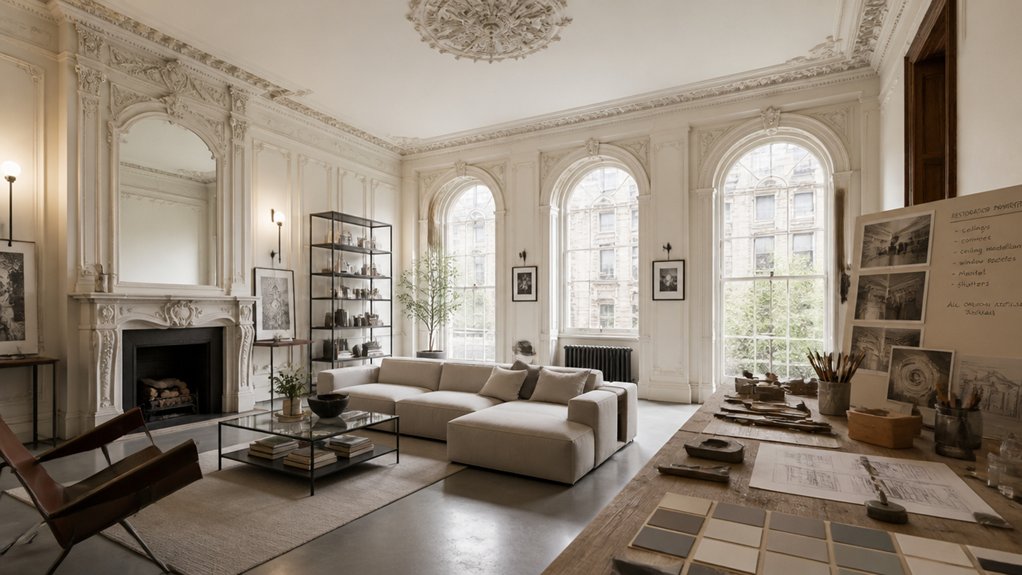
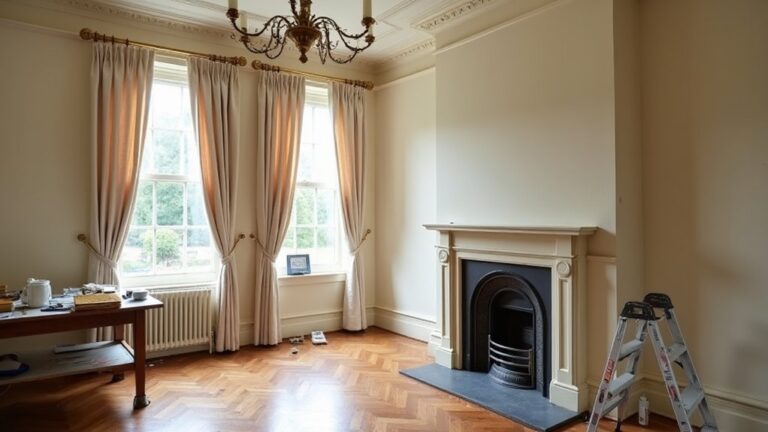
Before you introduce any modern pieces, walk through the house and pinpoint the Victorian features that give it architectural value and are costly (or impossible) to replace: original cornicing and ceiling roses, plasterwork, fireplaces and tiled surrounds, encaustic hallway tiles, sash windows, panelled doors, skirting and architraves, stair balustrades, and any built-in joinery.
Photograph each element, note damage, and check for missing sections. You’ll often find later paint obscures crisp Victorian ornamentation; strip carefully where appropriate and repair with like-for-like lime plaster or timber profiles.
If you’re in a conservation area or the property’s listed, confirm what needs consent before altering anything. Treat these details as the fixed framework of your period architecture, then plan interventions around them.
Set a Modern-Victorian Ratio for Each Room
Once you’ve logged the Victorian fabric you’re keeping, decide a clear modern-to-Victorian ratio room by room, because a whole-house “mix” rarely lands well.
Start with function: reception rooms can carry 60/40 Victorian ornamentation to modern, while kitchens and bathrooms often need 70/30 modern for hygiene, storage, and clean lines.
Set the ratio by surface area and visual weight: keep cornices, ceiling roses, and architraves as your Victorian “frame”, then specify simplified joinery, large-format tiles, or flush fronts to deliver Modern minimalism within it.
In bedrooms, aim for 50/50 so the detailing feels calm, not fussy.
Write the ratio into your brief for each space, and check every new item against it before you buy or build.
Choose One Color Palette to Unite Old + New
Choose a single, disciplined colour palette so your Victorian details and modern lines read as one scheme, not competing eras.
Start with reliable neutrals—chalky whites, warm greys, or soft taupes—as the anchor across walls, large upholstery, and flooring.
Then repeat one or two accent colours (think deep green, navy, or oxblood) in both periods’ pieces—painted woodwork, cushions, artwork, and ceramics—to lock the mix together.
Anchor With Neutrals
Although Victorian rooms often lean into rich pattern and modern schemes favour clean lines, you’ll get the best of both by anchoring everything with a tight neutral palette that runs through the whole space.
Start with a consistent base: warm off‑white on walls, putty or stone on larger upholstery, and a mid‑oak or walnut tone for timber.
Then use blackened steel, aged brass, or matt nickel to bridge old joinery with modern fittings without fighting the architecture.
Keep ceilings, skirting, and architraves in the same family, shifting only by one shade to protect the period proportions.
Add neutral accents in linen, wool, and unglazed ceramics, and rely on subtle contrasts—chalky vs satin, smooth vs textured—to keep it crisp, not flat.
Repeat Accent Colors
A disciplined neutral base does the heavy lifting, but repeating a single accent palette is what makes Victorian detail and modern simplicity read as one scheme.
Choose two or three accents max—say, bottle green, oxblood, and warm brass—and commit.
Use Accent color repetition across eras: pick out ceiling roses and cornices in the same green you use on a modern kitchen island, or echo oxblood in a runner, lampshade trim, and artwork.
Keep colour consistency by matching undertones (cool with cool, warm with warm) and specifying finishes: eggshell on woodwork, matt on walls, satin on metal.
In UK terraces, repeat the palette from front hall to sitting room so sightlines feel deliberate, not accidental.
Pick Modern Materials That Fit Victorian Proportions
When you introduce modern materials into a Victorian room, you’ve got to scale them to the existing mouldings, cornices, and skirting so everything reads as intentional.
Choose larger-format tiles, wide boards, or big-panel cabinetry only where the trim can carry the visual weight. Keep finer materials for tighter bays and niches.
Balance hard textures like concrete, glass, or steel with painted timber trim and crisp junctions, so the period proportions stay in charge.
Scale Materials To Moldings
If you want modern finishes to sit comfortably in a Victorian room, you’ve got to scale them to the mouldings, not the other way round. Start by measuring the deepest cornice projection, architrave width, skirting height, and picture rail drop.
Use those dimensions to set a grid for modern inserts: slab fronts, panels, tiles, and glazed screens should align to existing reveals and shadow gaps. Keep junctions crisp and legible so you preserve historical accuracy while introducing new work.
Watch material scale: oversized porcelain, extra‑wide boards, or chunky stone edges will dwarf delicate ovolo profiles. Instead, choose narrower modules, thinner edges, and repeatable set‑outs that echo Victorian rhythms.
In UK terraces, check door heights and chimney breasts before you order anything.
Balance Texture With Trim
Because Victorian rooms already carry a lot of visual “noise” in their trims, you’ve got to treat modern textures as supporting players, not scene-stealers. Keep your skirtings, dado rails, and cornices as the dominant rhythm, then choose wall textures and finishes that read as calm fields at typical UK viewing distances.
If you want concrete-look plaster, microcement, or large-format porcelain, scale the patterning so it doesn’t fight the joinery lines. Likewise, modern fabric patterns should echo period geometry—stripes, small checks, tight repeats—rather than oversized abstracts that swamp a bay window.
- Use matte or eggshell on walls; save gloss for timber.
- Limit to two textures per plane: wall, floor, soft furnishings.
- Match repeat size to trim spacing, not room size.
Match Modern Materials to Each Room’s Use
Although Victorian detail loves a bit of theatre, you’ll get the best results by choosing modern materials according to how each room actually works day to day.
In halls and stairs, specify sleek flooring like porcelain or engineered oak with a hardwearing matte finish; it copes with grit, umbrellas, and prams.
In kitchens, you’ll want quartz or sintered stone worktops, wipe-clean splashbacks, and tough paint above; keep grout lines minimal.
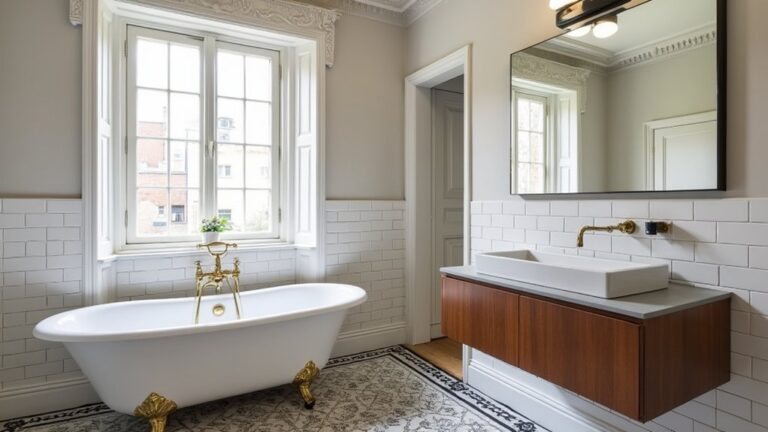
For bathrooms, use large-format tiles, microcement, and properly tanked wet areas to suit UK humidity and extractor realities.
In living rooms, choose acoustic underlay, low-sheen walls, and a robust sofa textile, then hang contemporary art to sharpen the contrast.
In bedrooms, prioritise warmth: wool carpet, lined curtains, and quiet, durable joinery finishes.
Use Victorian Trim to Frame Modern Doors and Openings
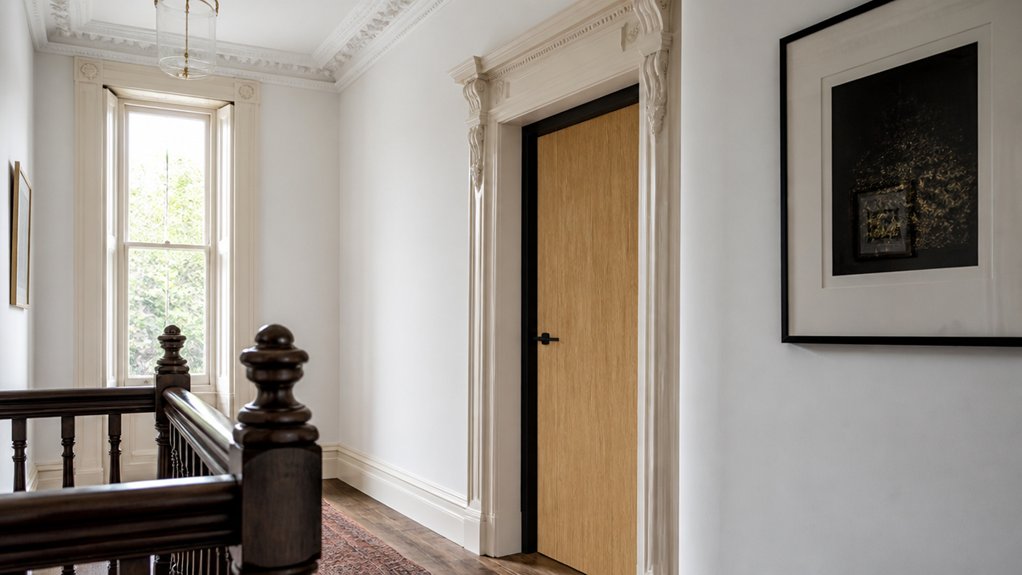
When you keep the openings crisp and contemporary, Victorian trim can do the heavy lifting by adding depth, hierarchy, and a sense of “original” architecture. Specify Modern doors with flat slabs, then let architraves, plinth blocks, and a bold head casing provide the period punctuation.
Keep proportions disciplined: in UK terraces, a 94mm–120mm architrave often reads right, while taller ceilings can take 150mm without looking cartoonish.
- Square the reveal: pack and plane linings so gaps stay even, then run trim true.
- Create a shadow line: set Victorian trim proud with a backband to sharpen contrast.
- Match the skirting logic: align architrave bases with skirting height and returns for continuity.
Pair Modern Lighting With Medallions and Molding
Door casings and skirtings set the linework at eye level; lighting lets you carry that Victorian hierarchy onto the ceiling without giving up a clean, modern feel.
Start by checking your ceiling rose or cornice depth and centre points, then choose fittings that respect that geometry. Contemporary chandeliers work best when their drop aligns with the room’s proportions and sightlines from the doorway.
If your plasterwork is ornate, keep the luminaire simple, with crisp metalwork or opal glass, and let the ceiling do the decoration. If the ceiling is plain, install minimalist medallions and a modest run of coving to frame the fitting.
Specify warm-white LED (2700–3000K) and put it on dimmers to suit UK evening light.
Soften Steel and Glass With Warm Wood Tones
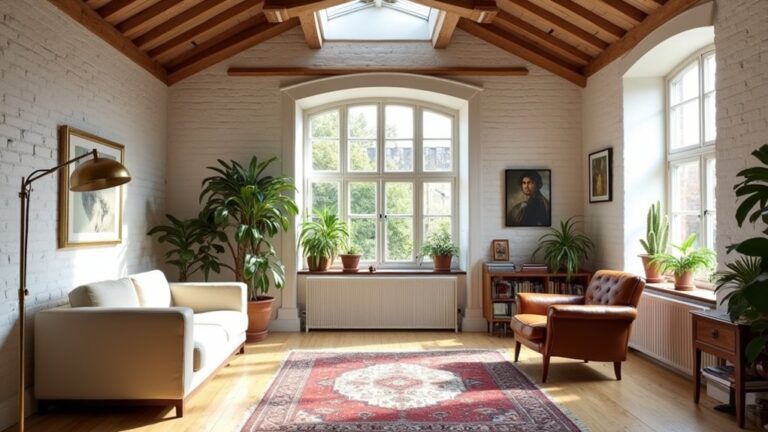
When your scheme leans on cool steel and crisp glass, you’ll need warm timber to keep the room from feeling stark. Balance those metals by layering wood finishes—think oak, walnut, or stained pine—across key pieces like sideboards, shelving, and flooring.
Keep tones consistent with your Victorian palette. Blend textures with painted skirting, architraves, and dado rails so the joinery ties modern surfaces back to the period detailing.
Balance Cool Metals
Although steel frames, chrome taps, and glass partitions deliver a crisp modern edge, they can read cold if you don’t counterbalance them. Keep your Victorian envelope feeling intentional by curating metal finishes across the room, then punctuating them with tactile decor accessories that add depth without visual clutter.
Aim for two primary finishes and one accent; repeat each at least twice so nothing looks like an afterthought.
- Choose a lead finish (brushed nickel, satin brass, or blackened steel) and stick to it for big-ticket hardware.
- Add a secondary finish on lighting, curtain poles, or radiator valves to echo period rhythm.
- Use an accent finish in small hits—frames, trays, and mirror trim—then stop before it looks fussy.
Layer Warm Wood Finishes
Where do steel frames and glass screens start to feel stark in a Victorian room? You soften that edge by introducing warm timber with deliberate finish layering, so the modern elements read as intentional, not clinical.
Start with one hero piece in oak, walnut, or smoked ash—think a console, desk, or built-in shelf—and choose a tone that complements existing stained joinery. Keep wood grain visible; it gives the eye a resting place against hard reflections.
Then repeat the colour in smaller notes: a picture frame, a window seat top, or chair arms. In UK homes, aim for mid-sheen: dead matt can look dusty, high gloss can fight period character.
Seal with a hardwax oil for durability and depth.
Blend Textures With Trim
Because steel and glass read as crisp, continuous planes, they can jar against ornate cornicing and deep skirting unless you “buffer” them with timber trim. Use warm oak, walnut, or painted tulipwood to create textural contrast without diluting Victorian character. Keep profiles simple—square arrises or a slight ovolo—so the join looks intentional, not pastiche.
Aim for trim integration at every junction where modern meets period: edges, reveals, and thresholds.
- Line steel-framed glazing with a 15–25mm timber stop to soften reflections and protect plaster.
- Wrap kitchen islands in a timber plinth that echoes skirting height, typically 150–200mm.
- Finish transitions with matching architraves around pocket doors and media walls, then colour-drench for cohesion.
Mix Modern Furniture Around One Victorian Focal Point
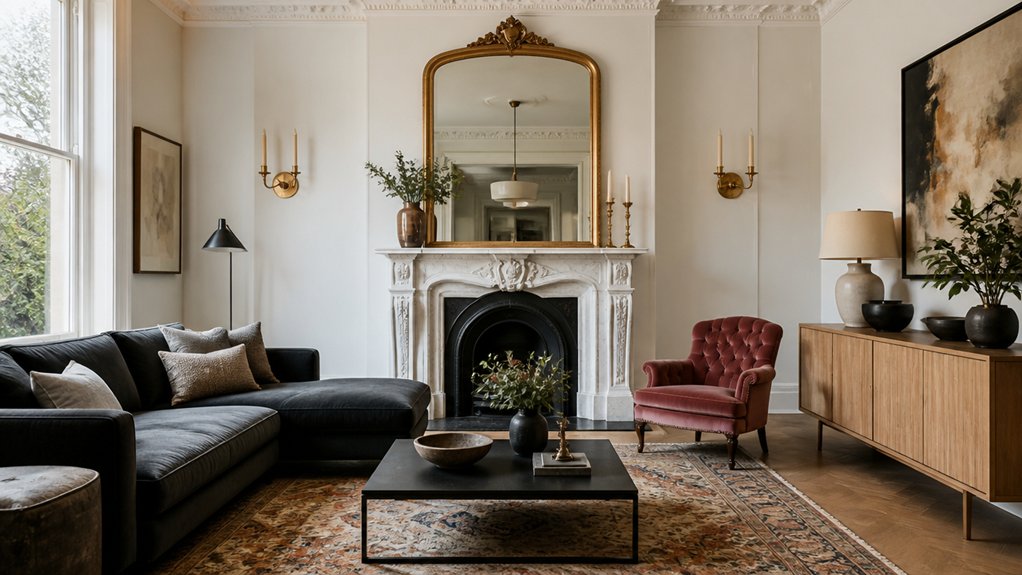
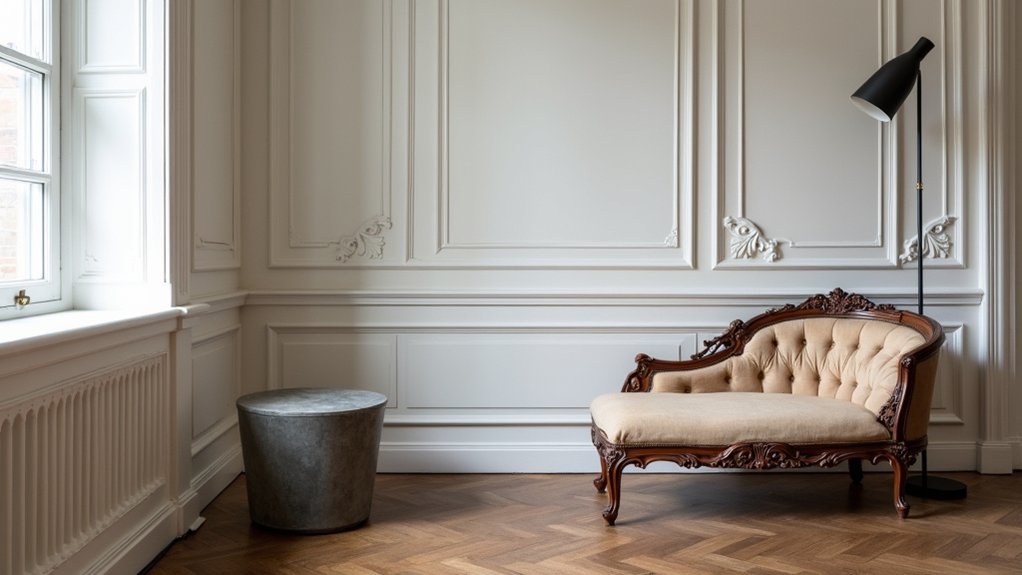
To keep a modern-and-Victorian scheme looking intentional, anchor the room with a single Victorian focal point—such as an original fireplace, a button-tufted sofa, or an ornate mahogany sideboard—then build outwards with modern pieces that echo its scale and lines.
Measure the focal piece first, then choose a low-profile sectional, slim lounge chairs, or a clean-lined dining table that won’t compete with Victorian architecture.
Keep circulation generous, as UK terraces and conversions often run narrow.
Repeat one or two details: pick brushed brass hardware to nod to aged fittings, or select ribbed glass to mirror period glazing.
Let Modern aesthetics do the heavy lifting with restrained forms, while you keep the Victorian element visually dominant.
Add a single contemporary artwork above the hearth.
Avoid These Common Modern-Victorian Style Clashes
Even when you balance a single Victorian showpiece with modern furniture, a few predictable clashes can make the room feel like a showroom mash-up rather than a coherent UK home. Avoid the usual culprits by controlling scale, sheen, and colour temperature, especially in period terraces with high ceilings and bay windows.
- Wrong proportions: Don’t pair a skinny flat-pack sofa with an oversized tufted chaise; match seat heights and visual weight.
- Competing statements: If you hang Contemporary artwork, keep frames slim and let one wall lead—don’t fight ornate cornices with busy prints.
- Cold finishes everywhere: Too much chrome and glossy lacquer cheapens heritage joinery; use Minimalist accessories in brushed brass, oak, or matte black.
You’ll keep the room calm, layered, and believable.
Conclusion
When you blend modern materials with Victorian detailing, you’ve got to measure twice and cut once. Start by preserving the cornicing, ceiling roses, and plasterwork that set the rhythm, then decide how contemporary each room should feel. Keep one disciplined palette, respect period proportions, and use crisp junctions, shadow gaps, and well-chosen hardware to bridge eras. Layer lighting, steel, and glass with warm timber so everything reads intentional, not confused.
About the Author