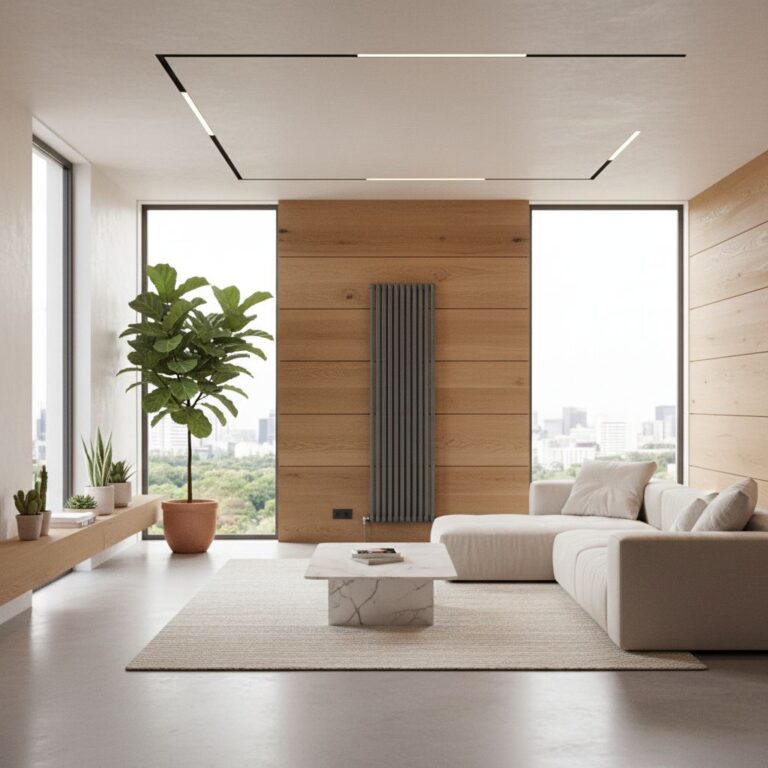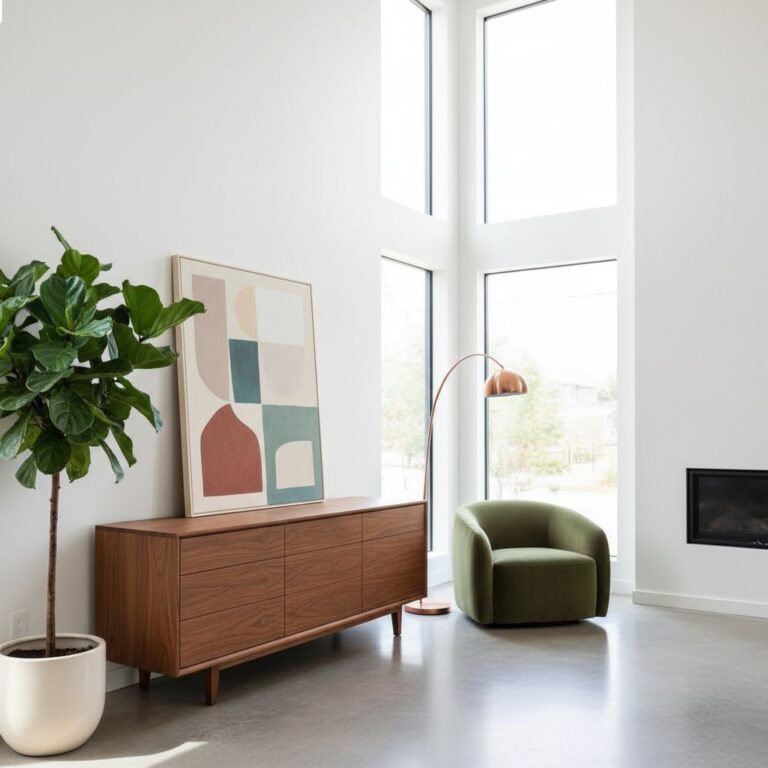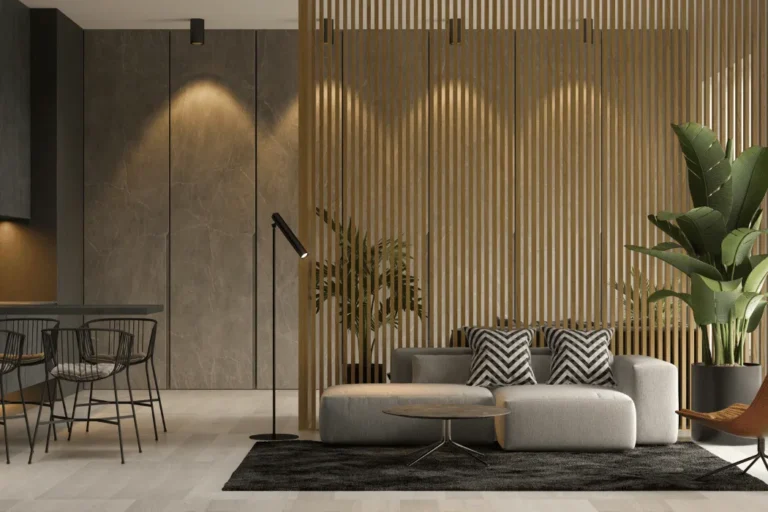
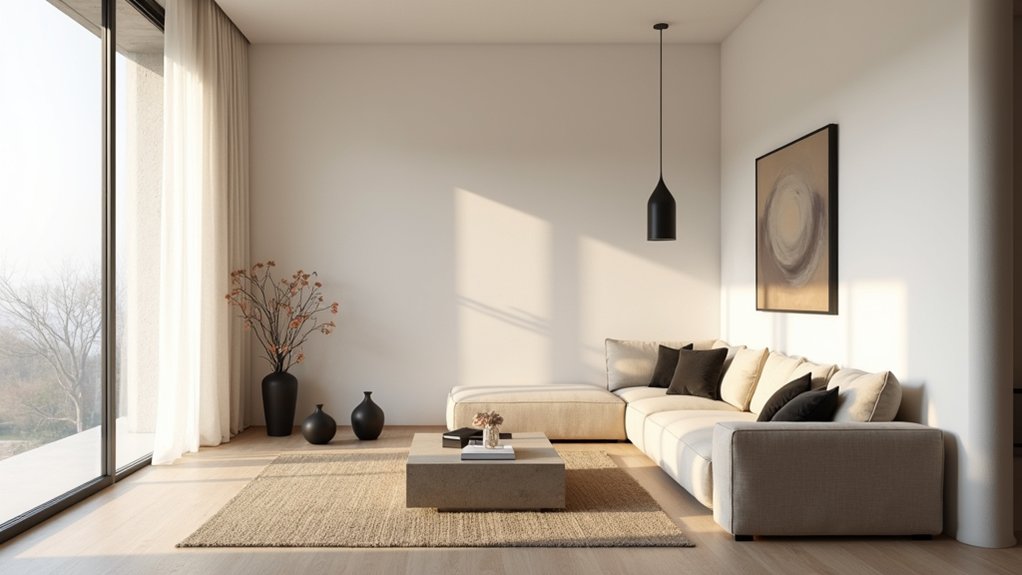
You’re not chasing a showroom look, just modern interiors that inspire. You’re shaping a home that feels calm, polished, and easy to live in. Start by setting your mood and constraints—light, noise, storage, and how you actually use each room—then plan zones that flow without wasting space, especially in typical UK layouts. Keep to three to five neutral tones, add warmth with oak, linen, and stone, and choose one statement piece that earns its place… but the real shift comes next.
Key Takeaways
- Define the desired ambiance, then limit the palette to three core colors and one accent with consistent finishes for cohesion.
- Plan zones by function and protect flow with clear 900mm walkways, using rugs and height changes to anchor each area.
- Build a calm base with warm neutrals, then add muted midtones and keep accents to 10–15% for a modern, restful feel.
- Layer honest textures and materials—linen, oak, stone, steel—balancing smooth and nubby surfaces to add depth without clutter.
- Use one scaled statement piece, warm dimmable 2700K lighting layers, and hidden storage to maintain sleek lines and visual calm.
Set Your Modern Interior Mood and Constraints
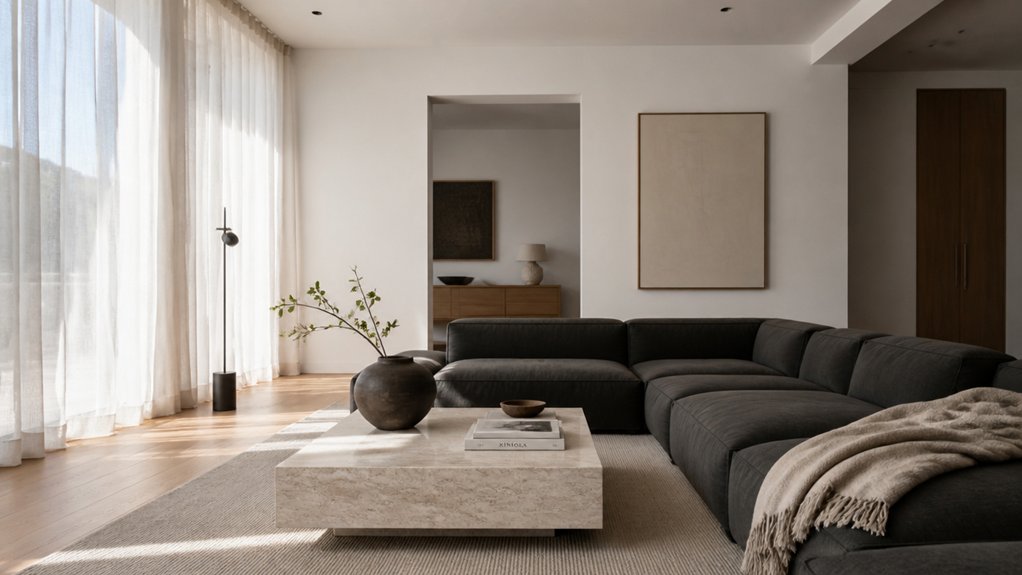
Before you buy a single sofa or choose a paint shade, pin down the mood you want—calm and minimal, warm and textural, or bold and gallery-like—and set a few real-world constraints to keep the look modern rather than messy.
Decide your palette using Color psychology: soft greys and chalky whites lower visual noise, inky blues feel confident, and olive or terracotta reads grounded in UK light. Limit yourself to three core colours plus one accent, and stick to a tight sheen range (matte walls, satin woodwork) for a crisp finish.
Then choose material textures with intent: boucle, brushed oak, microcement, and blackened steel add depth without clutter.
Set a budget, lead time, and maintenance level, and you’ll edit ruthlessly.
Map Your Layout: Zones, Flow, Open Space
Start by zoning your space with intention—dining, lounging, work-from-home—so each area earns its footprint, even in a compact UK terrace.
Then you’ll optimise traffic flow by keeping walkways clear from hallway to kitchen and around key pieces, so the room feels effortless rather than cramped.
Finally, balance open space with well-placed furniture and breathing room, so it reads modern, light, and properly lived-in.
Define Functional Zones
Even if you love an open-plan look, it won’t feel modern unless you define clear functional zones for living, dining, work, and storage. Start with honest space utilization: measure, note plug points, radiators, and sightlines, then assign each area a primary job.
Use zoning strategies that feel intentional, not fussy. Anchor the lounge with a large rug and a low, linear sofa; face it to a media wall or fireplace. Give dining its own pendant and a table centred under it.
Carve out a WFH spot with a slim desk, wall shelves, and task lighting. For storage, build in to alcoves, choose closed-front units, and keep surfaces calm.
Finish with consistent finishes to link zones.
Optimize Traffic Flow
Where do you naturally walk when you come through the front door, head to the kitchen, or grab a brew from the sofa? Track those desire lines first, then make them effortless.
Keep main routes clear at roughly 900mm wide, and avoid sharp zigzags around coffee tables or stools.
Position your Ergonomic furniture to support movement: angle armchairs towards conversation without blocking passage, and choose slimmer profiles for tight London terraces.
Use rugs to signal pathways, but leave enough border so toes don’t catch.
In open-plan UK flats, align dining chairs so they pull out without interrupting circulation.
Finally, consider acoustic design while you plan routes—soft runners in hallways and fabric panels by stairwells calm footfall noise and stop echoes.
Balance Open Space
How much open space do you actually need for a modern home to feel calm rather than cavernous? Start by mapping zones: cooking, dining, lounging, and work.
In UK open-plan terraces and new-build flats, keep a clear spine route (about 900mm) so you’re not cutting through seating. Then “pin” each zone with one anchor: a rug, pendant, or sofa back, leaving breathing room around it.
Aim for negative space at corners and between furniture, not a bare centre. Use height to define edges—slatted screens, tall bookcases, or a kitchen island with stools.
Support minimalist aesthetics with hidden storage and tighter editing. Add nature integration through planters, oak tones, and views to the garden or balcony.
Build a Calm Modern Interior Palette (3–5 Tones)
Start with a neutral base—think warm white, soft greige, or putty—to keep your space calm in typical UK light.
Add muted midtones like sage, clay, or smoky blue across key surfaces (walls, rugs, upholstery) so the palette reads cohesive, not flat.
Then layer warm accents—brass, oak, terracotta, or caramel leather—in small hits to bring modern softness without visual noise.
Choose A Neutral Base
Instead of chasing every new colour drop, you’ll get a sharper modern look by choosing a neutral base of just 3–5 tones—think warm white, soft greige, muted taupe, charcoal, and a clean black accent. This tight palette reads confident in UK light, especially in north-facing rooms where cool daylight can flatten bolder hues.
Use color psychology to keep stress low: warm-leaning neutrals feel welcoming, while charcoal adds quiet structure. Then let furniture ergonomics lead—your sofa, dining chairs, and desk should sit comfortably against the backdrop, not fight it.
- Paint ceilings warm white for lift
- Match walls to greige for continuity
- Ground floors with taupe textiles
- Add charcoal in joinery or rugs
- Finish with black in hardware
Add Muted Midtones
Once your neutral base is locked in, muted midtones bring the palette to life without tipping it into “done up.” Think clay, putty, smoky sage, dusty denim, or a softened terracotta—shades that sit between your greige and charcoal and look especially steady in UK daylight that shifts from bright to flat by mid-afternoon.
Pick one or two Muted midtones and repeat them in small, deliberate hits: a wool throw on the sofa, linen curtains, a painted alcove, or a ceramic lamp base. Keep finishes matte or eggshell so they read calm, not glossy.
Test swatches on north- and south-facing walls, then view them under your evening lamps. You’ll get color harmony when undertones match—green with green, red with red—and contrast stays gentle.
Layer Warm Accents
Although your base and midtones do most of the heavy lifting, warm accents stop a modern scheme from feeling cold in a UK winter. Layer warm accents with restraint: pick one or two tones that echo natural materials, then repeat them in small hits so the room feels edited, not busy.
Think terracotta, caramel oak, aged brass, or oxblood—great against greige, putty, and soft black.
- Swap chrome for brushed brass on taps or pulls
- Add oak or walnut to shelves, frames, or a side table
- Incorporate cozy textiles in rust, camel, or clove
- Choose warm-white bulbs (2700K) and dimmer switches
- Ground it with a clay vase or woven jute tray
Keep accents at 10–15% and you’ll stay calm, contemporary, and inviting.
Warm up Modern Interiors With Wood, Linen, Stone
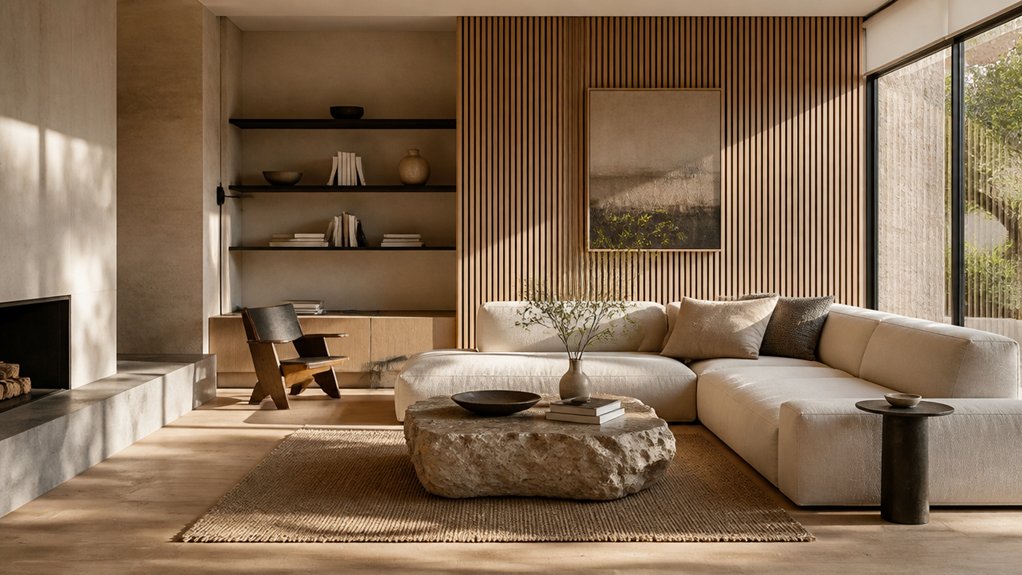
When clean-lined modern rooms start to feel a touch stark, you can soften the look by layering in honest materials like oak, linen, and natural stone. Choose pale oak cabinetry or a slatted wall panel to add warmth without visual clutter, then echo it in smaller touches like a side table or picture ledge.
Bring in linen through relaxed Roman blinds, sofa covers, or an undyed tablecloth; it reads quietly luxe and works brilliantly with UK light. Add stone with a travertine tray, limestone hearth, or a compact marble-topped console for cool, refined weight.
Focus on textural contrast—smooth stone against nubby linen, crisp paint against grained timber. Keep your material pairing tight: two woods max, one stone, and one textile tone.
Pick One Statement Piece (Scale + Placement)
After you’ve dialled in those warm, honest textures, let one statement piece take the lead so the room still reads modern rather than busy. Choose something with confident scale, then place it where your eye naturally lands when you walk in—your instant focal point.
In UK homes, that’s often the chimney breast, the sofa wall, or the view line from the hallway.
- Go oversized on art above a low sofa, not a gallery scatter
- Pick a sculptural chair in bouclé or saddle leather, then give it breathing room
- Anchor a room with a generous rug that clears the front legs of seating
- Use one bold coffee table (travertine, smoked glass) and keep extras minimal
- Centre the statement piece on architectural lines, not the TV
Layer Lighting to Soften a Modern Interior
Even the sleekest modern scheme can feel a bit flat in the UK’s grey light, so layer your lighting to add warmth, depth, and a softer edge. Start with ambient layering: a dimmable ceiling source or slim LED panel for overall glow, then add task lights where you actually live—reading by the sofa, chopping in the kitchen, getting ready at the mirror.
Finish with accents: a sculptural table lamp, picture lights, or discreet uplighters that wash a wall and lift the ceiling line.
Get fixture placement right and everything looks intentional. Hang pendants lower over a dining table, keep bedside sconces at eye level, and use warm LEDs (around 2700K) to flatter paint and timber. Put key circuits on dimmers for easy mood shifts.
Add Hidden Storage to Keep Modern Interiors Tidy
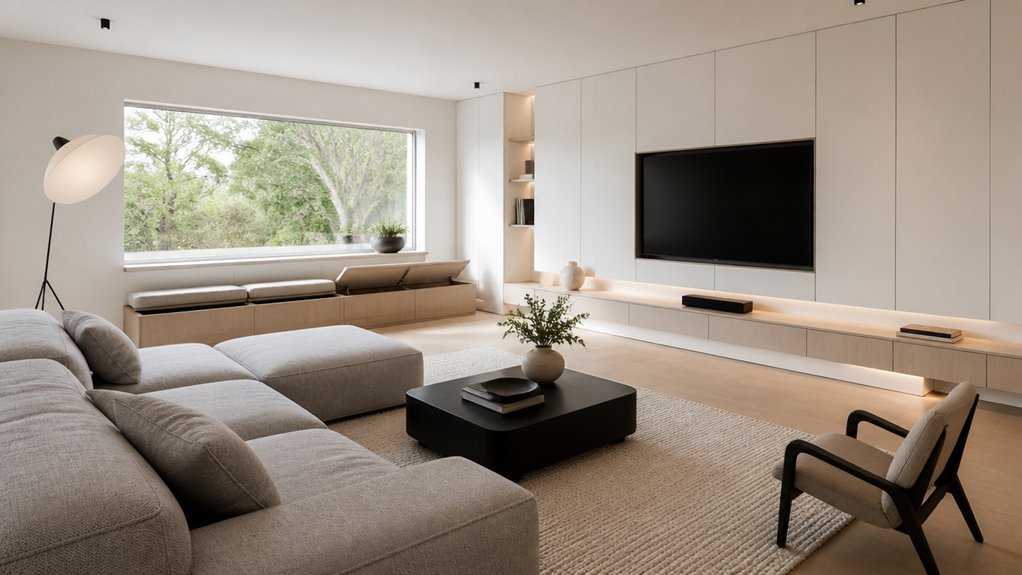
Soft lighting sets the mood, but clutter will still pull focus in a modern room, so build in hidden storage that keeps surfaces calm without feeling clinical. In UK homes where space is tight, concealed storage lets you style like a showroom while living like real life.
Choose joinery with push-latch fronts, match handles to your ironmongery, and keep sightlines clear from sofa to window. Add hidden compartments where you’ll actually use them, not just where they look clever.
- Ottomans with lift-up lids for throws and chargers
- Bed bases with drawers for spare linens
- Hallway benches with flip tops for shoes
- Mirror cabinets to stash skincare neatly
- Plinth drawers in kitchens for trays and foil
You’ll tidy faster, dust less, and your modern lines stay sharp, day to day.
Conclusion
You’ve set the mood, mapped your zones, and kept your palette tight, so your home feels modern without going cold. Warm it with oak, linen, and a hit of stone, then let one statement piece do the talking. Layer lighting—pendants, lamps, dimmers—for that cosy-evening glow. Hide the clutter and keep surfaces clear. Fun stat: UK adults spend about 90% of their time indoors, so these tweaks really pay off daily.
About the Author