- Key Takeaways
- Defining Antique Fireplaces
- Journey Through Fireplace Styles
- The Language of Materials
- The Soul of the Hearth
- Integrating Period Fireplaces Today
- Preserving Your Fireplace
- Conclusion
Key Takeaways
- Antique fireplaces are typically over a century old, and knowing their age, origin and style allows you to separate true period pieces from reproductions and make smarter buying or restoration decisions. Pay attention to construction, motifs and provenance records to authenticate and categorize by period: Georgian, Victorian, Art Nouveau, Art Deco.
- Every era has distinct design elements that you can pick up to read almost like a visual language, from classical symmetry in Georgian mantels to flowing naturalistic forms in art nouveau and strong geometry in art deco. By employing these style cues, you can match a fireplace to your property’s architecture and craft interiors that feel cohesive rather than haphazardly pieced together.
- Material selection plays a big role in the design, functionality and maintenance requirements of an antique fireplace, be it marble, stone, wood, cast iron, or ceramic tile. By knowing durability, heat behavior, maintenance and original patina, you can determine which materials complement your climate, lifestyle and maintenance willingness.
- Antique fireplaces continue to be cultural and emotional centers of gravity in a room, emanating the social life, values, and status of previous generations. By making the fireplace the heart of your space and surrounding it with the right accessories, lighting, and decor, you can recapture that same feeling of warmth and presence in a contemporary environment.
- Period fireplaces can be successfully integrated into today’s homes. Safety, compatibility, and design harmony are paramount, including chimney inspections, building code compliance, and consideration of existing finishes and furnishings. Thinking about contemporary fuel sources like gas or electric inserts allows you to preserve the period charm without sacrificing modern day comfort and efficiency.
- What gives it long-term value and enjoyment is consistent care, gentle cleaning, expert restoration where needed, and careful documentation of features and history. Routine inspections, material-specific products and professional assistance with complex repairs safeguard not only the fireplace’s structural integrity but its monetary and heritage worth.
Antique fireplaces are genuine heating fixtures from previous eras, frequently preserved for their workmanship, design, and heritage. Most date from the 18th, 19th, or early 20th century and are mainly stone, marble, cast iron, or wood.
Some still function as heat sources, while others serve as a focal point in a room. To steer savvy decisions, the bulk of the post tours designs, essential elements, maintenance, and fundamental precautions.
Defining Antique Fireplaces
Antique fireplaces are generally accepted to be those which are more than 100 years old, constructed for solid fuel and linked to distinct design periods like Georgian, Victorian, Edwardian or early Art Deco. They are distinguished by their proportions, materials and details, all of which indicate a certain period, location and lifestyle.
1. Age & Origin
Age reveals itself first in a fireplace’s construction. Early Georgian pieces frequently feature deeper wood fireboxes, with plain stone or timber surrounds and hob grates inset to the sides. Later Georgian and Victorian examples trend toward cast iron register grates or full inserts, tighter openings for coal, and more refined brickwork in the flue.
If the opening has been made significantly smaller, that can indicate a 1950s to 1960s renovation rather than an original layout. Age is tied to specific named eras. Georgian fireplaces are characterized by serene proportions, straight lines, and classical restraint.
Victorian designs are more elaborate, with corbels, heavy shelves, and lush decoration. Edwardian work often appears lighter, blending clean lines with tiled inserts and cast iron combinations. Early Art Deco moves once again to geometry and smooth surfaces.
They count when you need evidence. Old building permits, architects’ drawings or sales records can support what the eye indicates, particularly in grand townhouses and mansions that used French styles like Rococo or Louis XIV and XV. You can recognize these French style fireplaces by their serpentine shelves, curving lintels and flowing carved work.
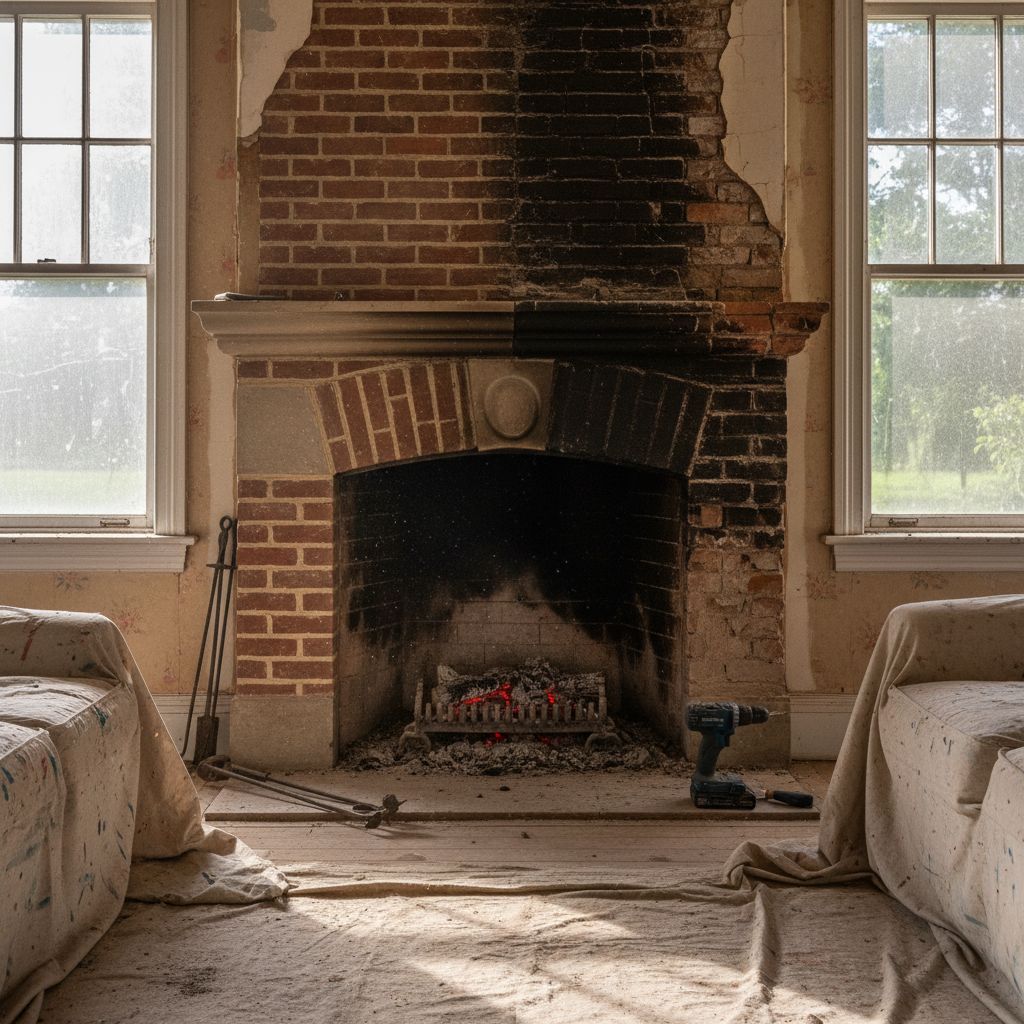
The best way to tell the difference between a true antique, a good period reproduction, and a modern “heritage” piece is to check the back as much as the front. Machine-cut edges, contemporary fixings, or extremely sharp, uniform casting tend to indicate a later reproduction, while uneven tool marks and wear commensurate with age suggest authenticity.
2. Design & Motifs
Design and motifs provide quick visual hints. Acanthus leaves, simple bead-and-reel borders, and fluted pilasters lean Georgian. Heavier floral swags, corbel brackets, and bold columns feel more Victorian.
Corbel fireplaces have a strong connection to the Victorian period. They frequently repeat the same corbel shapes in stair brackets or exterior brickwork in those houses, so you can cross-check inside and out. By late Victorian and into the Edwardian years, tiled inserts became common, adding patterned ceramic panels around a cast iron center.
Edwardian designs tend to retreat from clutter, with slimmer lines and more white or pale stone, while Art Nouveau pieces emphasize organic curves, plant forms, and flowing metalwork. These shifts assist in dating even a loose mantel.
|
Era |
Typical motifs and cues |
|---|---|
|
Georgian |
Symmetry, classical columns, hob grates, simple leaf borders |
|
Victorian |
Corbels, heavy floral carving, cast inserts, dark marble |
|
Edwardian |
Tiled inserts, cast iron combinations, lighter proportions |
|
Art Nouveau |
Curving lines, stylized flowers, whiplash metalwork |
|
French Louis |
Serpentine shelves, shells, scrolls, rich carved ornament |
3. Materials & Craft
Material selection frequently signifies both era and excellence. Early and high-status pieces may use marble or fine limestone with clean joints. Later mass-market Victorian and Edwardian fireplaces embrace cast iron combinations with ceramic tiled sides.
Timber surrounds are prevalent in small houses, particularly on top floors or in bedrooms. Minute detailing is crucial. Hand-carved stone or wood has subtle inconsistencies in leaf edges and grooves. Antique cast iron faces from the late 19th century could feature sharp yet subtly softened designs and casting marks on the rear.
Tiled Victorian and Edwardian inserts, on the other hand, tend to feature transfer-printed or hand-painted ceramic tiles inset into a cast frame. Patina is yet another great hint. Authentic age bestows weathered hearth edges, rounded mantel corners and even the occasional subtle smoke staining that’s difficult to counterfeit.
New reproductions might copy the style but typically do not have that striated surface history. Talented artisans applied slow, manual techniques to fashion and fit each component. When you see chisel marks in the back, dovetailed joints in wooden surrounds, or hand-mortared stone blocks, you’re probably staring at work laid over in the pre-modern mass production era.
4. Function & Form
Antique fireplaces were constructed initially for warmth. Structure follows the needs of wood or coal: deeper, more open boxes for logs; narrower, taller openings and specialized grates for coal. Georgian hob grates permitted pots to be cooked at the side, while subsequent register grates and tiled inserts concentrated on a consistent and controllable coal burn.
The core components remain. The firebox holds the fire, the hearth in front protects the floor, the surround and mantel frame the opening, and the chimney breast carries the smoke up and out. Designers had fun with proportions and detail, all within these defined roles.
Many period rooms had a single primary fireplace as both a heat source and focus, so its location on a principal wall, frequently across from an entrance or beneath a mirror, dictated how the space was used. Less efficient than central heating or modern stoves, these open fires create a powerful visual and social focus that is impossible to replicate with a boring radiator!
5. Cultural Significance
In times gone by, the fireplace served as a social hearth. Families gathered around them to cook, heat, and converse. Even in stately drawing rooms, the mantel was often home to important items like clocks, portraits, or family keepsakes.
Fireplaces were a sign of status and taste. A rustic timber surround in a cottage spoke one tale, a richly carved marble Louis XV fireplace in a mansion another, often referencing French court styles that owners sought to emulate. All over Europe and the US, from brick townhomes to country cottages, the style and size of the fireplace closely tracked the affluence and aspirations of those who constructed or lived in the property.
Today, interior designers and heritage specialists still gaze fondly back at these shapes. Whether they repurpose original mantels in new construction, preserve tiled Edwardian inserts through remodels, or create contemporary pieces that subtly reference Georgian balance or Victorian corbels, these older motifs still aid rooms in feeling solid and inhabited.
Journey Through Fireplace Styles
Fireplaces follow an unmistakable route from hearth to style statement, molded by changes in style, construction codes, and fuel technology. Through Georgian, Victorian, Art Nouveau, and Art Deco times, the mantel, surround, and insert evolved in tune with new notions of coziness, prestige, and how we inhabited our homes.
-
Georgian fireplaces emphasized symmetry, classical balance, and improved burning efficiency, pioneered in part by early engineers Benjamin Franklin and Count Rumford.
-
Victorian styles opened up selection and ornamentation as the Industrial Revolution made possible mass-made cast iron inserts, decorative tiles, and a gamut of sizes for various rooms.
-
Art Nouveau saw the fireplace as a flowing piece of art with handworked tiles, curved iron, and motifs inspired by nature and the arts and crafts movement.
-
Art Deco took things in the direction of sleek geometry and modern materials such as black granite and chrome, straddling the line between open fires and modern solutions.
Throughout all of these periods, the fireplace remained a social and aesthetic centerpiece in many homes, whether it was in an 18th-century European parlor or a blazing hearth for warmth, cooking, and gathering in early America.
Georgian Era
Georgian fireplaces are generally simple to identify because of their rigid symmetry, distinct proportions, and limited carving. Mantels tend to sit quite high, with a powerful horizontal shelf, upright jambs, and a fire opening that feels upright and formal rather than low and wide. There’s decoration but it’s restrained, more about equilibrium than theatricality.
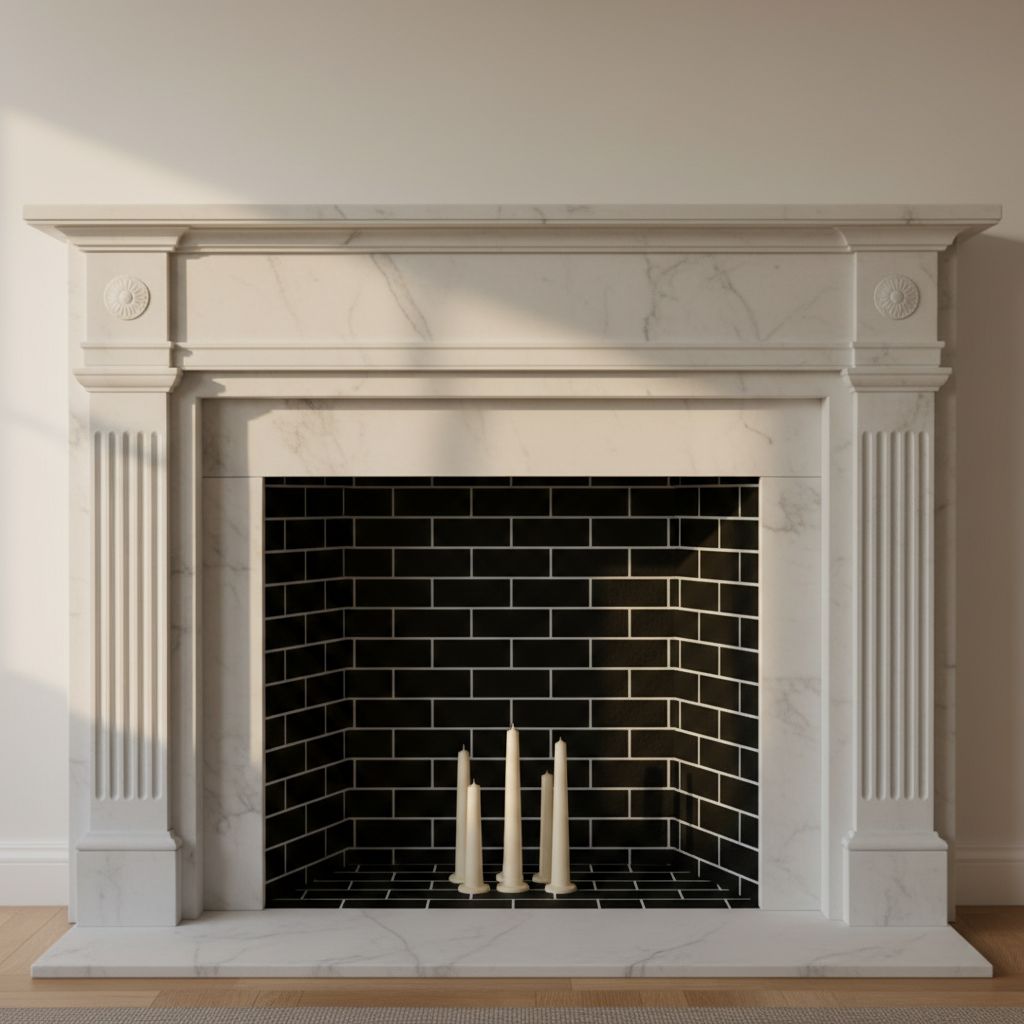
Marble surrounds abound, particularly in more elevated status chambers, usually white or pale hues, with statuary finishes reminiscent of classical sculpture. Palladian and later neoclassical influence appears in the use of pilasters, entablatures, and friezes derived from ancient Greek and Roman examples, miniaturized for the domestic interior.
Common carved or cast motifs are urns, roundels, husk garlands, and crisp geometric borders arranged in repeating schemes. Two technical leaps in the 18th century altered how these fireplaces operated. Benjamin Franklin’s convection chamber made air flow more efficient and increased heat output.
Count Rumford’s tall, shallow firebox from 1796 pushed smoke up the chimney more cleanly and reflected more radiant heat back into the room. Meanwhile, French tastes resulted in lower, deeper fire openings. Eighteenth-century French fireplaces sometimes sit closer to the floor and project further out than their Georgian cousins, demonstrating how fashion and function could divide by region even within the same general era.
Victorian Era
Victorian fireplaces gravitate toward denser and more ornate decoration, which is part of why so many endure as powerful visual declarations to this day. The mantel itself was often more sculptural, with corbels, shelves and panels that framed the fire as a display point for ceramics, clocks or framed photos.
Cast iron inserts became the norm, a direct result of the Industrial Revolution, which delivered more consistent sizing, better draft control and safer options than previous brick interiors. A classic Victorian stylization will use decorative tiles around the insert, often with floral motifs, Gothic arches, birds or simple repeat patterns.
Briefly, these tiled combination fireplaces, in which the mantel, surround and insert were all one integrated unit, made their way into even smaller city homes and bedrooms, featuring colored glazes that popped even in fires that burned low. It’s a broad scale, from grand marble pieces in formal drawing rooms to narrow cast iron bedroom fireplaces only a couple dozen centimeters wide.
Post-1840 Gothic Revival taste adds another layer. Polished English limestone mantels in greys, browns, and Belgian reds introduce pointed arches, tracery, and more vertical emphasis, borrowing from the form of medieval churches. Within Queen Victoria’s reign, styles split into two broad categories: early-Victorian fireplaces with intricate foliage, layered carving, and busy tile scenes, and late-Victorian designs that shift toward simpler, more geometric layouts, setting up the move into the 20th century.
Art Nouveau
Art Nouveau fireplaces shift the tone from historical mimicry to more organic, nature-inspired design. Lines are soft and flowing instead of hard, and surfaces are more like a sketch in three dimensions than a precise architectural frame. You frequently notice stylized blossoms, vines, and seed pods incorporated into the tiles, metalwork, or carved stone.
Most employ colorful tiles, in these cases soft greens, blues and creams, paired with curling ironwork that arcs around the fire opening. Asymmetry is fine now, so one side of the surround could be different from the other. It appears to have grown rather than be rigidly ordered.
This is a distinct departure from the strict symmetry of Georgian and the weight of Victorian Gothic. Both nature and the arts and crafts movement influence these selections. Designers love handworked surfaces, visible tooling, and materials like glazed earthenware, copper, or lightly carved stone.
Signature touches are whiplash curves that loop and twist, naturalistic panels of reeds, lilies, or trees, or sections of mosaic tilework that catch and scatter light, turning the fireplace into a sort of mural that still manages to do the simple work of heating the room.
Art Deco
Art Deco fireplaces lean toward a cleaner, more modern line and retain a sense of display. The common denominator is assertive geometry, dramatic verticals and horizontals, and minimalist, stepped shapes that gather like a mini skyline around the fire opening. Ornament is cut back, and what remains tends to be abstract: zigzags, chevrons, and sometimes a sunburst above the mantel.
Materials shift to correspond to early 20th-century concepts of advancement. Black granite, chrome accents, high-contrast stone, and even colored glass enter the picture, often buffed to a sleek shine that mirrors light and flame. Mantels could be flattened and extended or shaped into sharp steps, imparting the surround with a tiered, quasi-mechanical cadence that aligned with then-modern architectural styles.
These fireplaces represent a crossroads from hearth culture to smaller, frequently fuel-efficient heating options. Standardization, which started with the Industrial Revolution, now carries to gas fires and more controlled inserts. The fireplace becomes less about primal survival and more about controlled ambiance.
In both city apartments and suburban homes, Art Deco designs provide a transition between the traditional concept of a room centered on flame and the newer, more modern interiors where warmth could be sourced from radiators or concealed systems.
The Language of Materials
Materials dictate the experience, function and wear of an antique fireplace. Stone, marble, wood, cast iron and tiles all have their own ‘language’ from heat characteristics to maintenance and they help determine how ‘real’ a reclaimed chimneypiece or mantelpiece will appear in a contemporary setting.
|
Material |
Performance |
Appearance |
Maintenance needs |
|---|---|---|---|
|
Marble |
Good heat resistance, can crack with shock |
Smooth surface, visible veining, light to deep colors |
Seal, avoid acids, gentle cleaning |
|
Limestone |
Moderate heat resistance |
Softer tones, matte feel, light beige and gray |
Protect from stains, brush dust, seal if needed |
|
Wood |
Doesn’t face direct flame, can scorch |
Warm tones, visible grain, carved details |
Wax or oil, avoid high humidity and direct heat |
|
Cast iron |
High heat retention, very durable |
Black or dark finish, relief patterns and motifs |
Remove rust, season with stove polish if desired |
|
Tiles |
Handle heat well, can crack if hit |
Glazed colors, painted scenes, repeating patterns |
Non‑abrasive cleaning, protect grout and edges |
Nothing more enhances the allure and worthiness of a mantel than original patina, scorch marks, faint soot shadows, or worn edges. These marks indicate age, use, and genuine wear, all of which many collectors interpret as evidence of authenticity, not flaws.
Marble & Stone
Marble and limestone surrounds are simple to identify after you learn what to look for. Marble has a dense, smooth finish and distinct veining that can range from soft gray on white to deep green or even near-black. Limestone is softer in tone with a chalkier, matte surface and more muted specks than striking veins.
Many antique fireplaces in this lot employ timeless color schemes, such as Carrara white, creamy Bath stone, or warm sandstone, which mingle seamlessly with both period plasterwork and crisp, contemporary walls. Stone fireplaces in historic homes would often denote affluence and security.
You see this in English chimneypieces inspired by French Louis XV, Louis XVI or Empire carving schools, where shells, serpentine shelves and fluted jambs emerge. These were occasionally “bespoke,” a term that originated in 17th-century tailoring and subsequently drifted over to mantel making to denote custom-made.
Because stone is hard-wearing and can be re-polished, original surrounds in marble or limestone frequently outlast heavy use and still read as magic in new restoration or even ‘minimalist’ interiors.
Wood & Timber
Wood mantels distinguish themselves through warmth. You spot tone initially—golden pine, honey or dark oak, deep red-brown mahogany—and then grain and hand-cut detail such as reeded pilasters or little floral blocks. In Georgian and Victorian rooms, oak and mahogany were favored for formal chimneypieces, with simpler pine or softwood mantels framing kitchen and bedroom fireplaces.
Timber cuts and joints readily, making it perfect for custom profiles and for reproduction work when a period house is missing its original surround. That same flexibility implies that it requires good care.
Save wood from direct flame, maintain humidity to minimize warping, and apply mild wax or oil, not harsh sprays, so carved edges and original stain remain crisp.
Cast Iron
Cast iron fireplaces tend to be weighty, gothic, and dry. They have a little grainy texture, with jagged relief work. The inserts and hob grates from many Victorian and Edwardian homes feature floral borders, geometric patterns, or even small tiles set into the iron frame.
Sometimes you encounter cast iron firebacks with heraldic shields, Latin mottos, and dates protecting the brickwork from heat while imparting symbolism and narrative to the fireplace. Iron plays well with solid fuel and was easily adapted for gas inserts, since it handles multiple heats and cools.
It captures the heat and releases it gradually, so even after the fire has diminished, the room remains warm. When repurposed, they’re frequently catalogued with words such as “salvage,” “restoration,” or “reclaimed insert,” allowing for a trace of history and pricing accordingly for those who seek genuine early 20th-century or late 19th-century work.
Tiles & Ceramics
Tiles and ceramics transform a fireplace’s mood with color and picture. You may find blue-and-white Delft tiles depicting ships or country scenes, glossy-green and brown Victorian majolica, or sinuous plant forms of Art Nouveau panels. They sit as narrow strips beside a cast iron insert, as full panels around a small bedroom stove, or as a continuous border on a larger chimneypiece, or cheminee, camino, kamine, or chiminea, depending on your language.
A lot of the old tiles were hand-painted or used complicated glazes that run and bloom differently on each individual tile, which is why they’re so difficult to counterfeit en masse. For restoration, matching replacements involves matching in millimetres, glaze depth and even subtle firing imperfections so the new shards don’t appear too pristine alongside faded originals.
Wash them with mild products and don’t scrape grout or corners so the surface and the thin, precious glaze remain unharmed.
The Soul of the Hearth
The soul of an old hearth resides in the way it grounds a room, in life and in the experience of the space. In so many period homes, the fireplace reveals where people gathered, how they warmed themselves, and what they considered sacred enough to carve or cast in stone, brick, or cast iron to endure a hundred years or more.
There’s something about an original fireplace that commands your eye first, even in a room full of sleek furniture and flat-screens. The opening, surround, and mantel establish a forceful visual center line, so the room often ‘clicks’ when you design seating and lighting around it.
In a Victorian parlor, for instance, chairs were arranged to look at the fire and one another, not the window. In a humble laborer’s cottage, the tiny cast-iron range served as both heater and stove. Life revolved around that. When you hold that concept in mind while designing a living room or studio, you consider the fireplace your primary point of orientation, not an inconvenient protrusion on the wall.
Antique fireplaces contribute definite character even when idle. A carved limestone surround in a town house throws shadow and depth on a flat wall. A slender Art Deco mantel with chrome trim provides a sharp line that works with plain built-ins or metal lamps.
A rustic brick inglenook in a farmhouse provides a tactile counterpoint to pristine white walls and bare floors. These pieces already have proportion, pattern, and material contrast, so you can keep your other design choices simple and still have a room that feels layered and complete.
There’s a subtle heartstring tug in authentic period designs. We tend to associate a tiled Edwardian fireplace or marble Georgian surround with family memories, old photographs or the grandmother’s house. Even if you didn’t grow up with a working fire, the soot marks, worn hearthstones or hairline cracks in a cast-iron insert denote age and use, which many interpret as coziness and tradition.
This feeling of time can soothe a room that might otherwise feel too fresh or too sleek. To bolster that function, mantel decor is most effective when it frames, not obscures, the architecture. A modest pair of candlesticks, a small pile of books, or a single framed print placed directly above the opening will suffice.
In compact city apartments, a dormant hearth can still house cluster plants, artful firewood or a stand of pillar candles to maintain that dimension. In bigger rooms, one or two bold pieces, say, a round mirror or a single ceramic vase, help maintain the attention on the mantel’s form instead of transforming it into a catchall shelf.
Integrating Period Fireplaces Today
Period fireplaces can nestle into a postage-stamp city flat or new-build house just as comfortably as a grand old mansion with just a little advance planning around safety, scale and local regulations. The trick is to fit the period piece to the building type, whether you live in a modest Victorian terrace, a clean-lined loft or a quirky Arts & Crafts villa.
Decide early if your fireplace will primarily serve as heat, for aesthetics or both.
- Salvage yards and architectural antiques dealers with written provenance
- Expert fireplace restoration workshops for stone, marble, and cast iron.
- Trusted online marketplaces with vetted professional merchants, no private flips.
- Logistics companies that specialize in transporting heavy, delicate stone and crating in cast iron.
- Certified installers: chimney sweeps, gas-safe engineers and licensed electricians
Safety First
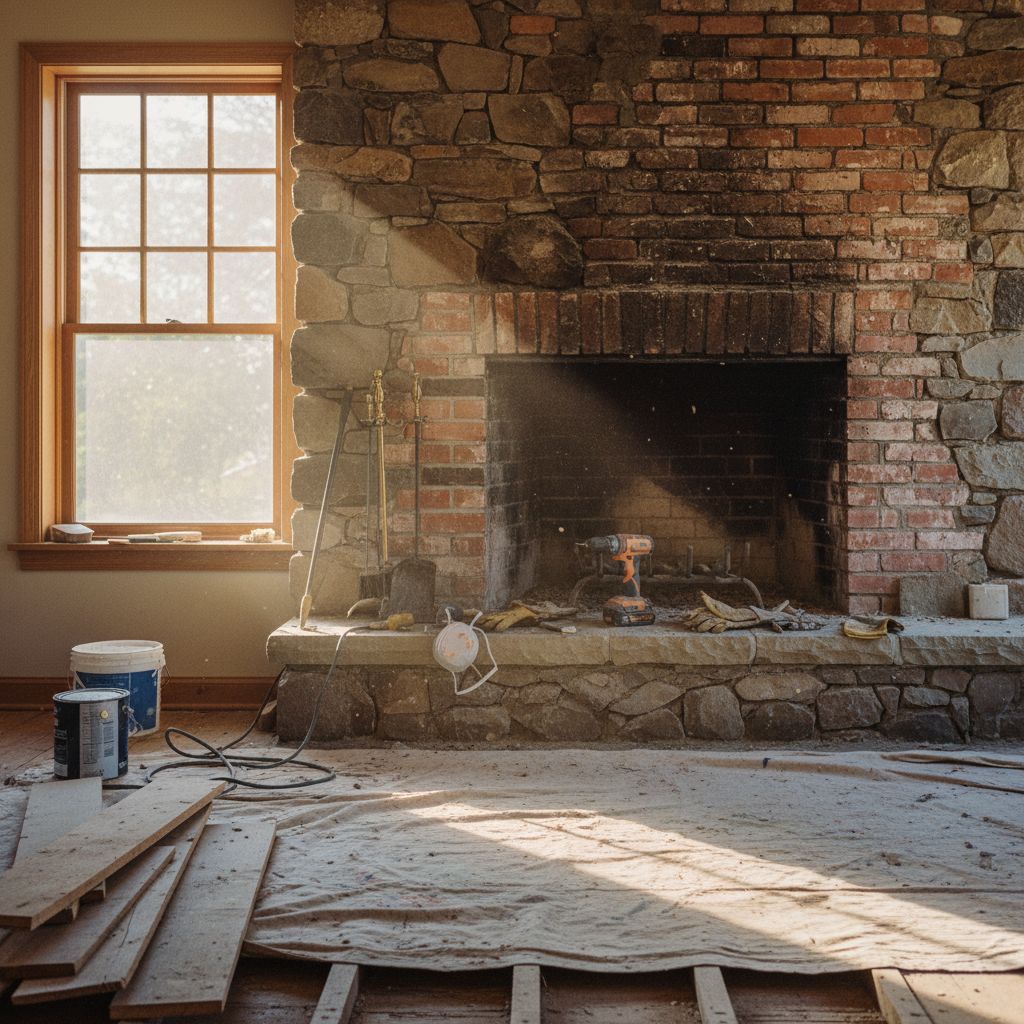
Every chimney and flue requires a full survey by a certified sweep before you light a fire. Many period fireplaces were modified in the 1950s and 60s, with openings made smaller or flues partially blocked. An internal camera inspection and smoke test are essential.
Old brickwork can leak, or a shared flue in a terrace can send smoke or carbon monoxide into a neighbor’s home if not monitored. Fitting period hardware counts as much as the framing. A well-sized fire basket, grate, and fender keep fuel where it belongs, protect flooring, and minimize the risk of sparks.
In late Victorian and Edwardian fireplaces with tiled inserts or cast iron combinations, the grate size tends to be dictated by the tile opening. Pushing bigger fuel loads in can crack tiles or warp iron. Contemporary codes could restrict solid fuel in certain metropolitan regions or require lined flues and carbon monoxide detectors.
Whether new builds or major remodels, your fireplace probably requires a lined stainless-steel flue or a twin-wall metal chimney system to comply with draft and fire separation regulations. Retain all the compliance paperwork because you might need it on resale or for insurance!
Basic safety checklist
- Inspect chimney structure, inside and out
- Run camera survey and smoke test
- Confirm clearances to beams, joists, and finishes
- Line or reline flue where required
- Fit certified basket, grate, guard, and fender
- Install carbon monoxide and smoke alarms nearby
Design Harmony
Selecting the appropriate style begins with listening to the house. A bullseye fireplace with roundel motifs befits a Georgian-style room with high ceilings, whereas a corbel fireplace with more weighty detailing is typically Victorian and corresponds better with deeper skirting and heavier doors.
For an Art Nouveau or Arts and Crafts interior, seek out sinuous lines, minimal tiles and looser symmetry. Try to connect the mantel, surround, and hearth to stationary finishes first. If you select a European marble surround, reflect its shade in the floor or wall color, even if the remainder of the room remains contemporary and understated.
A dark slate hearth in particular can really ground pale timber floors. A light stone hearth can prevent a small living room from feeling claustrophobic. Small touches can increase the effect without transforming the room into a museum. A slim mirror above the mantel can bounce light and accent the fire opening, and one piece of artwork can echo colors from the Victorian or Edwardian tiled inserts.
Keep accessories tight: one pair of candlesticks or a small stack of books often works better than a crowded mantel. It’s easier to mix old and new if you think of the fireplace as the anchor and keep the furniture clean-lined. A period marble surround can sit with a pared down sofa, metal floor lamp, and neutral rug, so the room doesn’t feel ‘set’.
This equilibrium maintains character and grace without rendering daily use cumbersome.
Modern Fuel
A lot of period fireplaces can be refurbished and restored and then converted for use with today’s fuels while still providing sterling service. For living-room warmth, think high-efficiency gas inserts, electric flame-effect fires or managed solid fuel solutions. In cities with tough air regulations, sealed gas units or electric inserts may provide the best combination of safety and convenience.
Gas inserts are great for when you want actual flame and rapid heat at the flip of a remote or wall switch. Electric units assist flats without workable chimneys. They provide flame effect and background heating, and you can still retain the original surround and hearth.
Integrating Period Fireplaces today when flue and local regulations permit, contemporary solid fuel stoves can be inset in a more substantial antique opening while retaining the surround and modernizing combustion. Size and period style restrict what’s going to look good.
A slender, near flush, insert might fit a delicate Georgian or bullseye fireplace, where the detailing is faint. A more robust cast iron gas unit fits late Victorian or Edwardian surrounds with tiled inserts and cast iron combinations because the mass and color are closer to the original intent.
Material choice is a factor in long-term value as well. European marbles and dense stones in many antique surrounds are hard-wearing and can last centuries with just gentle cleaning and repointing. If you’re adding any insert, do your best to not cut original stone if possible.
Use spacer panels or reversible infill so a future owner can return the opening to a more authentic state.
Preserving Your Fireplace
Antique fireplaces possess both design value and social history, so consistent, gentle maintenance counts as much as any one-time restoration. Routine cleansing, loving touch, and immediate restoration safeguard delicate materials, maintain firebox safety, and retain the history of the home — be it a cozy apartment or a grand estate with numerous hearths such as Filoli, which boasts 17 fireplaces that all require continuous attention.
Gentle Cleaning
Cleaning begins with soft tools. Dust mantels, surrounds, and tiles with a dry microfiber cloth or a soft brush, working from top to bottom so dust doesn’t resettle on clean spots. On marble, stone, wood, or tile, use a slightly damp cloth with a mild, pH-neutral soap, then dry so water does not seek small cracks or joints.
Don’t use strong chemicals, bleach, vinegar, or abrasive pads. They can etch marble, remove old wax or shellac on wood, scratch ceramic glaze, or remove original paint layers that assist in dating the piece. Once those finishes are lost, you can’t replace the history.
For soot on cast iron inserts or stone firebacks, utilize fireplace or stove blacking cleaners with a soft nylon brush. Work in small areas and rinse thoroughly so residue does not stain surrounding tile or wood. If the fireplace is still functional, arrange for it to be cleaned of soot more frequently during the winter.
Schedule a deep clean once or twice a year for carved details, metal grilles, and tight corners. A vacuum with a soft brush head, cotton swabs for crevices, and a headlamp reach places you don’t see at first glance, like the underside of mantels or the inner edges of a tiled surround.
Expert Restoration
When parts are cracked, missing or have old unsafe repairs, professional restoration is generally the safer path than DIY patches. That holds for full systems, repointing or rebuilding a chimney or upgrading an insert to be more efficient, as well as one broken tile.
Good restorers look for authentic replacement parts: period-correct tiles, cast-iron grates with matching patterns, or mantels in the right timber or stone. Most rely on salvage yards, specialist dealers, or examples from like houses, such as the recorded fireplaces at Oatlands.
One of the keys is to save as much original material as possible. That could involve stabilizing a hairline crack in a marble shelf instead of replacing it or re-fixing loose bricks instead of relining the entire opening. The idea is to maintain the actual age but make it structurally sound and safe.
When you can, partner with experts who know period styles and old-world techniques. Traditional lime mortar, hand-mixed pigments, or historic joinery can impact not just the appearance of your fireplace but how it deals with heat, moisture, and shifting for decades to come.
Value Protection
Safeguarding worth begins with easy inspections. Check for cracks in stone or plaster, rust on iron, loose tiles, mortar gaps or smoke stains that indicate draft issues. Catching these early can save you from major work down the line and keeps the fireplace safe if you decide to light it up.
Save receipts. Record work with clear before and after photos, date and material notes, and stow away invoices from restorers or chimney sweeps. If it has provenance, like connections to a particular architect or to tough histories like the fireplace at Oatlands that enslaved people used for heat and cooking, keep that safe and share it with underwriters.
Climate and air control are important. Strive to maintain moderate relative humidity and dampen rapid temperature swings, which cause wood to twist and stone to fracture. Good room ventilation and a sound flue lessen moisture and soot accumulation.
Contemporary inserts or more efficient systems can render a working fireplace safer without removing period surrounds or hearths in marble, stone, or wood. Original touches—tile patterns, carved mantels, iron grates—ground the aesthetic and assist in dating the home. Keeping them intact allows the room to maintain its focus and design hints about how folks lived and worked at both stately estates such as Filoli and more modest homes with their single hearth.
Conclusion
Antique fireplaces carry genuine gravitas in a house. Stone, brick, iron, and wood are all used with traces of use, heat, and love. A marble surround in a city flat, a tiled insert in a tiny row house, and a rustic stone hearth in a cottage all recount a precise narrative.
To deal with an antique fireplace requires both intellect and emotion. Inspect the flue, the firebox, and the liner. Match grout, paint, and tile thoughtfully. Wash out smoke with a soft hand. Hang on to the vintage accents that made it special.
To advance, select one little step next. Perhaps, just a rough doodle for your room, a talk with a local mason, or a stroll through a salvage yard to discover your own future fireplace.
About the Author