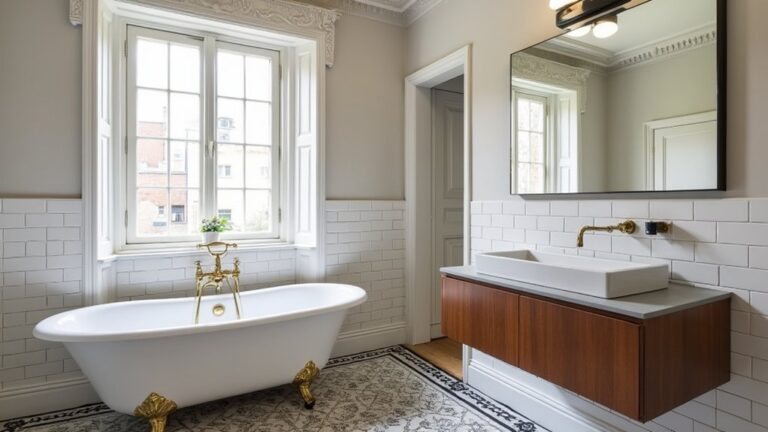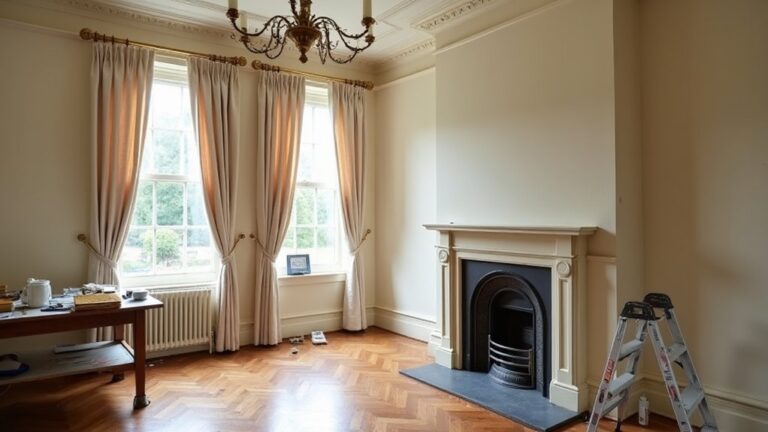
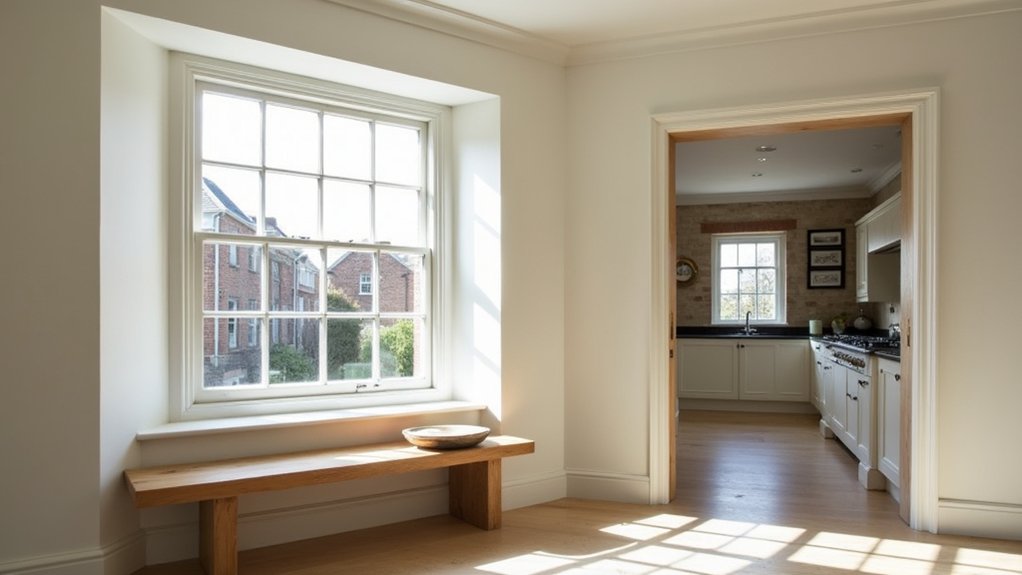
You’d think restoring Georgian sash windows is like performing surgery with boxing gloves on. You start by mapping every fault—racked frames, snapped cords, paint build-up—then decide what you can genuinely keep. You repair the timber and weights, slot in slim double glazing, and add discreet draught-proofing so comfort rises without the profiles changing. Inside, you hold onto period hardware while planning a cleaner room-to-room flow—until one constraint forces a choice you won’t expect…
Key Takeaways
- Survey each sash window for decay, binding, and glass type, photographing profiles to preserve Georgian proportions during modern interior upgrades.
- Repair sound joinery with spliced matching timber, replacing only failed rails or stiles to keep original sightlines and crisp mouldings.
- Improve usability by renewing cords, balancing weights, cleaning pulleys, and fitting discreet locks and lifts without altering period details.
- Boost comfort with draught-proof brush seals, plus secondary glazing or slim double glazing that maintains bar widths, putty lines, and consistent exterior appearance.
- Choose low-sheen, period-appropriate finishes and minimal hardware so restored windows anchor heritage character while open-plan layouts and modern lighting create flow.
Survey Georgian Windows and Spot Common Faults
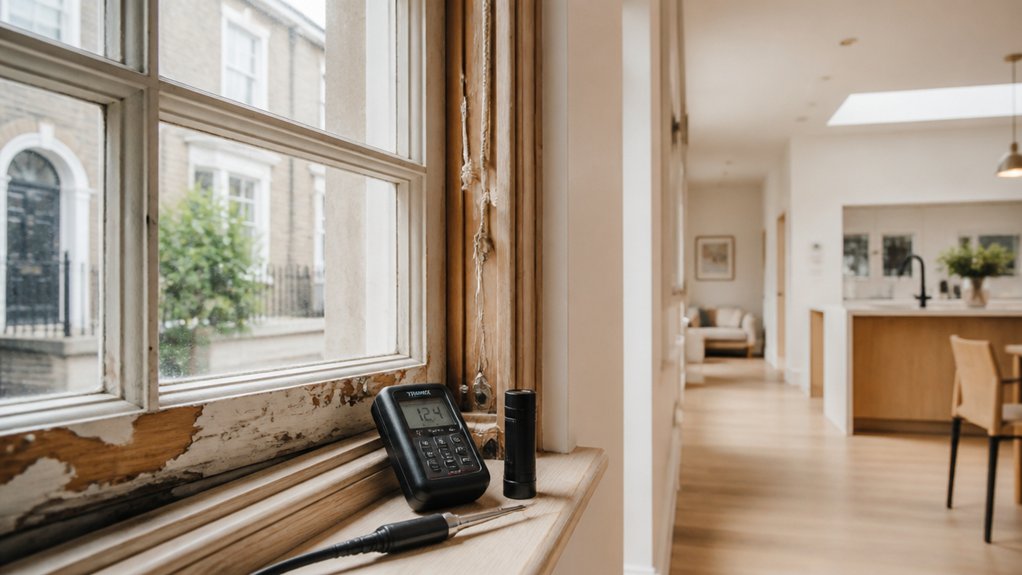
Before you plan any repairs, survey each Georgian window methodically so you can distinguish original fabric worth conserving from later, less sympathetic alterations. Start outside: check sill run-off, paint build-up, open joints, and soft timber at glazing bars. Note glass type—wavy cylinders, crown ripples, or flat replacements—so you can protect Historical accuracy.
Move inside and test operation: lift each sash, feel for racking, binding, or dropped weights. Watch for pulley wear, frayed cords, and misaligned parting beads. Trace drafts with a smoke pencil around staff beads and meeting rails, then inspect putty for cracks and the glazing for movement.
Photograph profiles, horn shapes, and moulding lines; those details guide Modern integration without erasing period character.
Decide Whether to Repair or Replace Sashes
Once you’ve logged the faults, decide sash by sash whether careful repair will preserve historic fabric or whether replacement will deliver a better long-term outcome.
Keep anything with sound joinery, true glazing bars, and only localised decay; you’ll retain profiles that underpin Historical accuracy. If the meeting rails are distorted, the stiles are extensively rotten, or previous over-planing has weakened the section, replacement can be the more honest option than patchwork.
Specify like-for-like timber species and moulding knives, and match horn details and putty lines so new work reads quietly.
At the same time, plan for Modern functionality: slimmer double glazing where permitted, discreet draught seals, and consistent sightlines that support a clean interior flow without visual clutter.
Document decisions for consent and future care.
Repair Timber Frames, Cords, and Weights Properly
Although sash windows look delicate, you can repair the timber box frame, renew cords, and rebalance weights in a way that protects original fabric while making the window run smoothly and seal better.
Start by stripping paint build-up at the staff and parting beads, then probe for soft sections at the cill and pulley stile. Splice in matching, seasoned timber rather than overfilling with resin, and add discreet timber frame reinforcement where joints have opened.
Replace frayed sash cords with pre-stretched cotton or waxed nylon, threading over cleaned pulleys and tying off with proper figure-eight knots.
Check the weights: pair them to each sash, adding make-up weights if needed.
Finish with sash hardware upgrades—new pulleys, locks, and lifts—so operation feels crisp, secure, and aligned.
Choose Glazing: Secondary, Slim Double, or Single
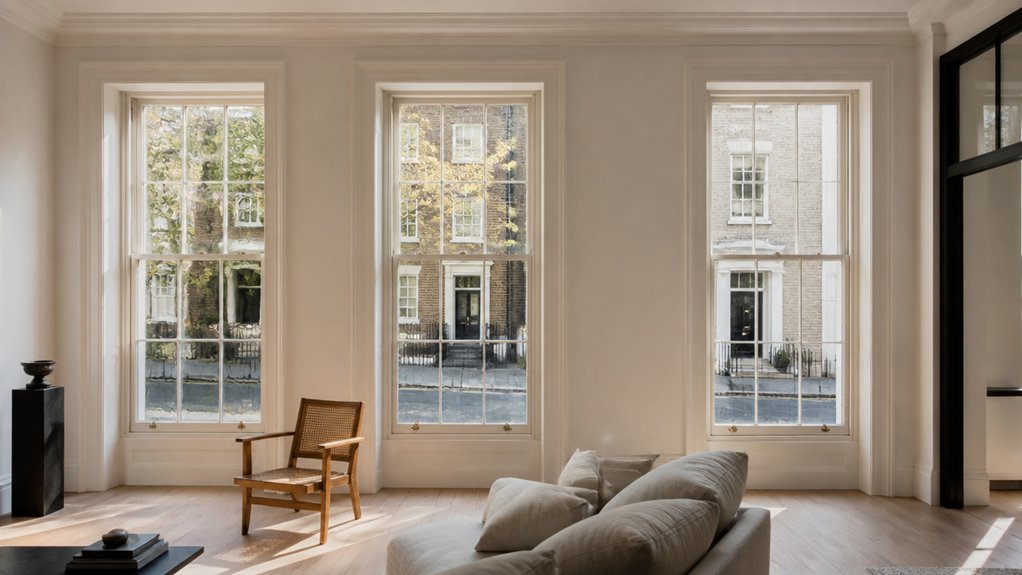
Because the glazing choice sets both the look and performance of a Georgian window, you’ll want to match the solution to the building’s significance, the existing sash profiles, and your target for heat loss, noise, and condensation control.
You can upgrade Glass insulation without flattening Window aesthetics if you choose carefully and detail every junction.
- Secondary glazing: keep original single panes, add an internal, reversible layer; best for listed sensitivity, strong acoustic gains, minimal sash alteration.
- Slim double glazing: specify thin units that suit narrow glazing bars; improve U-values, but check weight, balance, and sightlines.
- Single glazing: retain or replace with like-for-like; lowest risk to profiles, but rely on draught-proofing to cut losses.
- Decision test: compare bar thickness, putty line, reflection, and edge seals against permissions and comfort goals.
Pick Period-Right Paint and Sheen for Windows
After you’ve settled on secondary, slim double, or single glazing, paint becomes the next decision that can either sharpen the Georgian character or make the joinery look wrong.
Start with Color matching: take a protected sample from the inner sash edge, then scan it and compare against mineral pigments typical of the period. For Historical accuracy, avoid bright titanium whites and icy greys; choose softer off-whites, stone, or muted greens that sit comfortably against aged brick and lime mortar.
Pick sheen with intent. Use a low-sheen eggshell on frames for a crisp, contemporary read without plastic glare, and reserve satin only where you need extra wipeability.
Keep the paint system breathable, especially on timber, so moisture can exit and the profiles stay sharp.
Restore Georgian Details: Bars, Ironmongery, Shutters
Once the glazing and paint feel right, you’ll notice the “Georgian-ness” lives in the small things: slender glazing bars, honest ironmongery, and shutters that sit neatly within the reveal. Treat these elements like joinery jewellery: they set proportions, sharpen sightlines, and let a contemporary layout feel anchored rather than themed. Aim for Historical accuracy, but plan Modern integration so everything works day to day.
- Glazing bars: Repair, don’t replace; keep profiles crisp and consistent, and match bar widths across sashes.
- Ironmongery: Choose period-pattern fasteners and lifts in solid brass or iron; align screw slots and keep patina.
- Shutters: Rehang to sit flush; ease edges, rebuild rails, and keep panel geometry true.
- Finishing: Wax, oil, or lacquer subtly; avoid high-gloss hardware shine.
Stop Draughts and Condensation Around Restored Windows
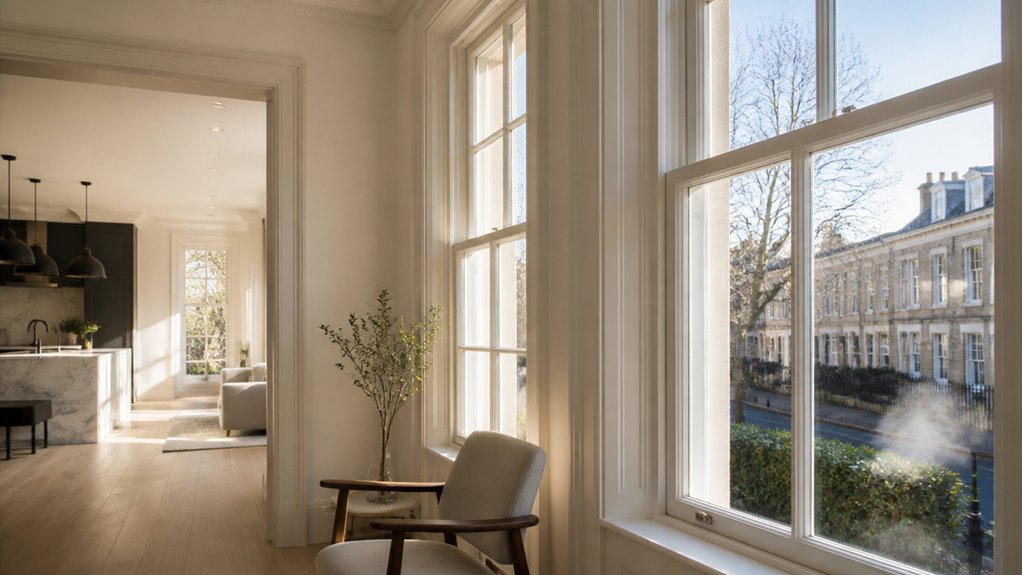
Although a well-restored Georgian sash should still breathe, you can stop the nagging draughts and winter condensation by tightening the window’s air paths rather than smothering it.
Fit discrete brush piles into staff and parting beads, then rehang the sashes so they meet the meeting rails cleanly without racking. You’ll keep Historical accuracy by retaining slim profiles and traditional sightlines, while sealing the leaks that make rooms feel edgy.
Replace perished sash cords, ease paint-binds, and add a compressible seal at the top rail where air loves to spill.
For Modern insulation, specify a low-profile secondary glazing panel or a slim double-glazed unit where consent allows.
Finally, manage moisture: trickle vents, steady heating, and breathable paint stop cold-glass dew.
Conclusion
You end up with windows that feel quietly original yet perform like new. Where cords once snagged and sashes rattled, they now glide; where paint had dulled profiles, crisp period lines return. You keep glazing bars, ironmongery, and shutters that speak Georgian restraint, then slip in slim double glazing and discreet draught seals that don’t shout. Outside, heritage proportions hold firm; inside, your rooms flow with contemporary ease—warm, bright, and still unmistakably historic.
About the Author