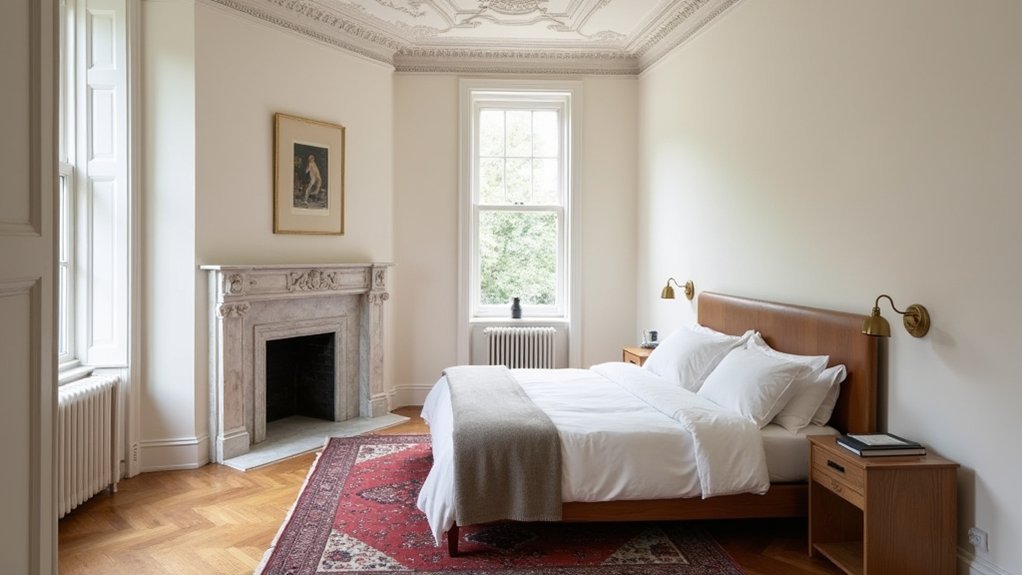
When you strip back a Victorian bedroom and uncover intact cornices, a ceiling rose, and timber sash windows, you don’t rush to replace them—you repair, patch, and reinstate with period-appropriate materials. You let the chimney breast set the layout, then use the alcoves for built-in storage that looks as though it’s always been there. You layer warm lighting with discreet switches and muted heritage paint, but the real difference comes next…
Key Takeaways
- We stripped back later coatings, repaired cracks with lime fillers, and restored original cornices, roses, rails, skirting, and architraves.
- We kept the chimney breast as the layout anchor, centring the bed and using alcoves for fitted storage or a compact desk.
- We serviced original sash windows with new cords, draught seals, and balanced weights to improve comfort without replacements.
- We added layered, dimmable lighting in period-style fittings, using warm 2200–2700K bulbs to flatter plaster and mouldings.
- We chose heritage colours and finishes—matte walls, eggshell trim, lighter ceilings—so modern function enhanced, not erased, Victorian character.
Save and Restore Key Victorian Bedroom Features First
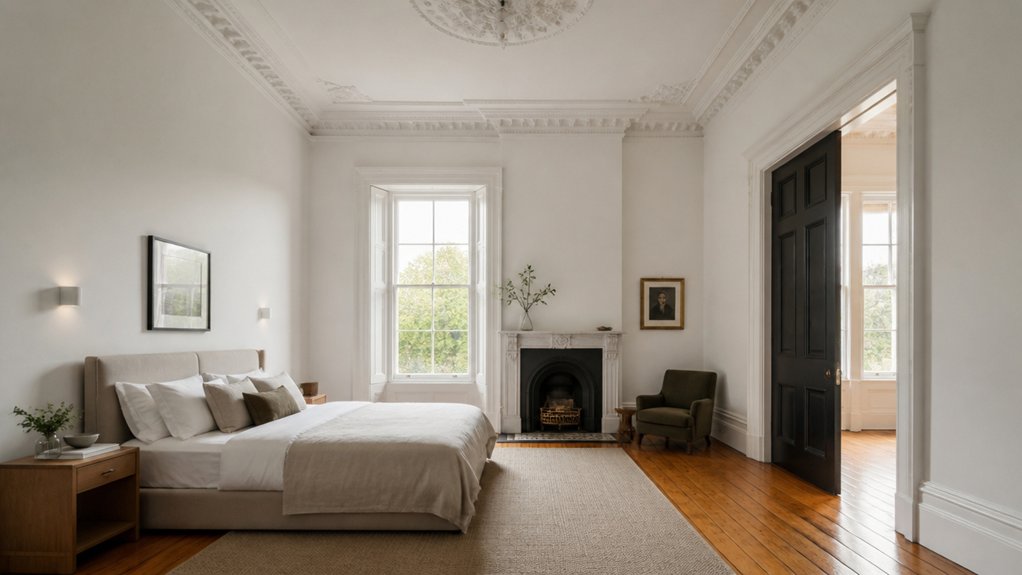
Before you reach for the paint roller or start swapping out furniture, take stock of what your Victorian bedroom already does well and commit to saving it.
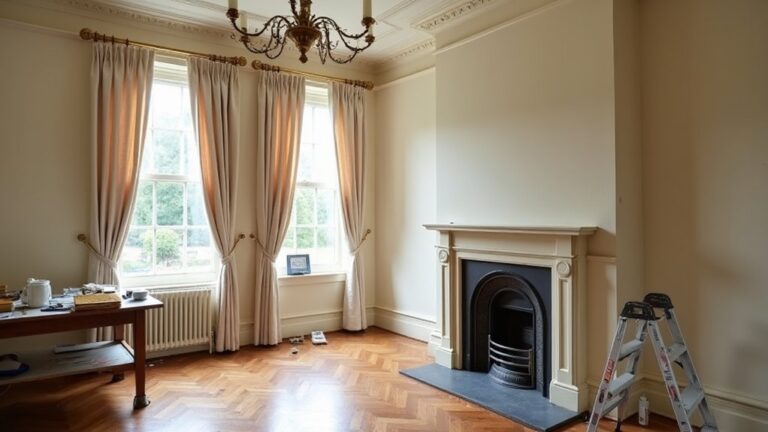
Start with the fabric of the room: strip back later coatings to reveal cornices, ceiling roses, and picture rails, then repair cracks with lime-appropriate fillers.
Restore original skirting and architraves; splice in matching timber instead of replacing whole runs.
Keep sash windows and service them—new cords, draught seals, and balanced weights—so you improve comfort without losing profiles.
Lift a corner of carpet to check for floorboards worth sanding and oiling.
When you bring in Victorian furniture, stabilise joints and revive finishes rather than “shabby-chic” sanding.
Photograph details, date hardware, and prioritise Historical accuracy.
Plan a Victorian Bedroom Layout Around the Chimney Breast
Once you’ve stabilised the room’s original fabric, let the chimney breast set the layout rather than fighting it. Treat it as the room’s anchor: centre the bed on the breast if proportions allow, or balance it by aligning the headboard to the same datum line and keeping equal clearance both sides.
Use the alcoves for fitted wardrobes, shallow shelving, or a writing desk so you don’t block circulation. Keep tall pieces off the breast itself to protect original plaster and any surviving surround.
For chimney breast decor, choose a simple mirror or framed print that echoes period scale, then keep accessories minimal. Position the dressing table to catch daylight, and pair it with Victorian window treatments that stack back cleanly, preserving the window reveal and sightlines.
Upgrade Victorian Bedroom Lighting (Layers, Switches, Warmth)
Although a Victorian bedroom can look beautiful under a single pendant, you’ll get a far more usable, sympathetic result by building lighting in layers: a warm, dimmable ambient source, task lights where you read and dress, and a soft accent to pick out cornices, alcoves, and the chimney breast without glare.
Keep Victorian lighting character by choosing opal glass, aged brass, or simple schoolhouse shades, then tune the colour temperature to 2200–2700K so plaster looks creamy, not clinical. Put controls where your hand naturally falls, and you won’t spoil period lines.
- Fit dimmers with low-flicker drivers for LEDs.
- Use bedside wall lights to free the nightstand.
- Add picture lights or discreet uplights to wash mouldings.
- Install modern switchgear in heritage plates and label circuits.
Add Victorian Bedroom Storage With Built-Ins and Alcoves
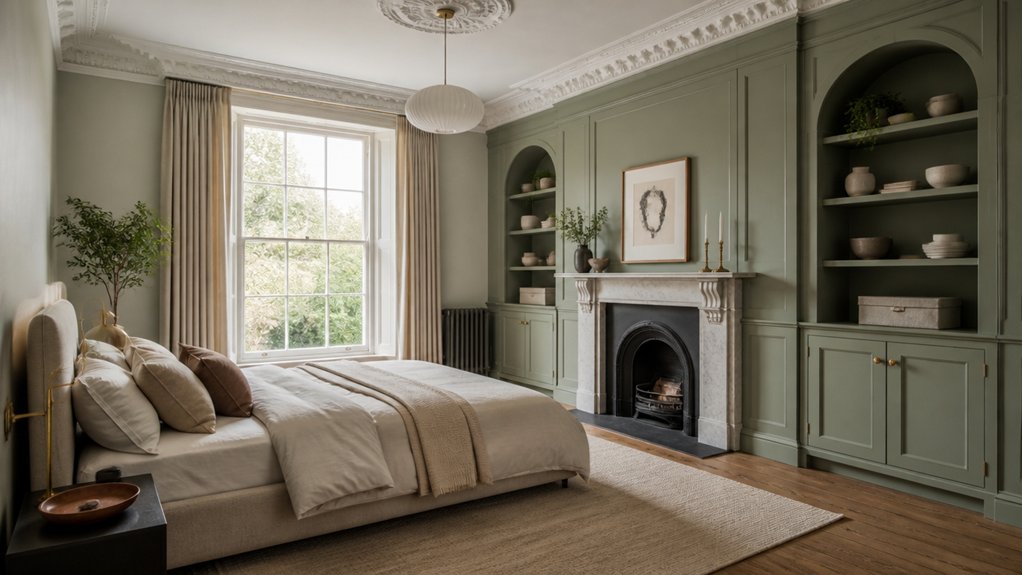
Layered lighting makes a Victorian bedroom feel calmer and more workable, but it also reveals where clutter and awkward freestanding furniture break up the room’s symmetry.
Instead of adding more Victorian furniture, you can reclaim balance with built-ins that read like original joinery.
Start by measuring chimney-breast returns and the depth of any existing alcoves. Fit low cupboards or drawers to keep sightlines open, then add open shelves above for books and display.
If you need wardrobes, run them wall-to-wall with shallow carcases so they don’t crowd the bed. Use panelled doors, beaded frames, and decorative trims that echo architraves and skirtings, so new work sits quietly in the room.
Finish with discreet brass pulls and soft-close hardware for daily ease.
Choose Paint Colours and Finishes That Suit Victorian Details
Because Victorian bedrooms carry so much visual detail—cornices, ceiling roses, tall skirtings, and often a chimney breast—your paint colour and finish need to support that architecture rather than compete with it.
Start by testing swatches in morning and lamplight; heritage hues shift dramatically.
- Use Victorian color palettes as a guide: dusty greens, inky blues, warm stone, and muted terracotta feel authentic yet fresh.
- Keep ceilings one step lighter than walls to lift height and make plasterwork read crisp.
- Choose finishes strategically: matte on walls hides lumpy plaster; eggshell on skirtings and doors survives scuffs.
- Add Ornamental paint finishes sparingly—lining on a picture rail or a glazed chimney breast—to highlight details without turning the room into a museum.
Conclusion
When you modernise a Victorian bedroom, you’re really stewarding history. By restoring cornices, ceiling roses, and sash windows first, then planning around the chimney breast, you keep the room’s proportions honest while gaining everyday comfort. Layered, warm lighting and subtle switches let details glow, not glare. Built-ins in the alcoves add storage without stealing character. And remember: the UK loses roughly 20,000 traditional sash windows each year—yours doesn’t have to be one.
About the Author