- Key Takeaways
- What Defines an Antique Fireplace?
- Explore Fireplace Styles
- Material Matters
- The Sourcing Journey
- Authenticity and Value
- Modern Integration Challenges
- Conclusion
Key Takeaways
- Antique fireplaces are generally at least a century old and are characterized not only by their vintage looks, but a fusion of age, artisan workmanship, original substance, and traceable provenance. If you’re shopping for one, begin by placing its likely era, handwork, and corroborating any history or paperwork.
- Style and design, including mantel proportions, tile motifs, and ornamentation, can clue you into key periods such as Georgian, Victorian, Edwardian, Art Nouveau, and Art Deco. Use reference guides or visual comparisons to align these characteristics with your interior so the fireplace is both authentic and cohesive with the room.
- From marble to wood to stone and cast iron, each material has particular strengths, susceptibilities and usual historical applications that play a role in value and repair requirements. Prior to purchasing, carefully examine surfaces for original patina, fixes and damage, then pick a material based on your climate, structural build and maintenance plans.
- History and originality significantly influence price and appeal to collectors, particularly when backed by marks of maker, craftsmanship, and a documented ownership lineage. Build a modest archive of photos, dimensions, any recorded restorations, and original tags or labels to bolster trust for future buyers, insurers, or restorers.
- Finding an antique fireplace takes time and some detective work. Visit dealers and salvage yards, check out auctions and search online. It requires a lot of careful questioning and hands-on inspection when you can. Compile a checklist that includes measurements, condition, alterations, and return policies. Then, you can compare each prospective purchase on an even playing field.
- Incorporating an antique fireplace into a contemporary home requires considerations such as safety codes, chimney lining, and fuel conversions that typically necessitate expert assistance. Treat the fireplace as both a historic object and a system by consulting specialists, acquiring permits and, if necessary, using it as a decorative or supplemental heat source rather than the primary heating source.
An antique fireplace is a timeless heating element, typically constructed from stone, cast iron, or intricately carved wood, which infuses a space with coziness and vintage elegance. Most antique fireplaces exude the design and craftsmanship of their period, from elaborate Victorian mantels to understated early 20th-century surrounds.
Whether designing a savvy renovation or preserving the original allure, the following sections stroll through styles, signature elements, safety tips, and simple maintenance.
What Defines an Antique Fireplace?
Antique fireplaces are generally at least 100 years old and associated with a defined architectural period. It’s not just a way to warm a room; it’s a display of the style, materials, and construction habits of a bygone era. Age, build quality, material choice, design, and documented history all combine to distinguish a genuine antique from a subsequent reproduction.
1. The Age
Almost all items labeled “antique fireplaces” are from the 18th, 19th, or early 20th century. In reality, the majority are Georgian, Victorian, Edwardian, or early Art Deco period, when the fireplace was a centerpiece of the home.
You can think of age through a simple timeline of styles and traits:
- Georgian (c. 1714–1830): Slim marble surrounds, clean lines, light ornament, roundel or bullseye motifs in some later examples.
- Early Victorian (c. 1837–1870): Stronger profiles, more carved stone or wood, early use of cast iron inserts.
- Late Victorian (c. 1870–1901): Cast iron and colorful tiles, corbel features under the mantel shelf, acanthus leaves and floral scrollwork.
- Edwardian (c. 1901–1910): Lighter, simpler surrounds, often tiled, with more restrained decoration.
- Early 20th century / Art Deco (c. 1920s–1930s): Geometric lines, stepped forms, and sometimes bold stone or tile contrasts.
Older fireplaces can be more valuable but typically require more maintenance. Brickwork, flues and firebacks can be delicate, and alteration should honor their historic construction.
2. The Craftsmanship
Design is a major indicator of an antique fireplace and manifests itself in hand-carved mantels, intricate stonework, crisp acanthus leaf carving, and exquisite metal grates. Most period surrounds featured handmade tiles, such as encaustic tiles with colored clay inlays that run through the entire tile, so designs won’t rub off the surface.
In contrast with contemporary mass‑produced units, joints on antiques are tighter, edges crisper, and motifs less redundant. This degree of handwork tends to make the fireplace both longer lasting and more desirable.
3. The Materials
Popular genuine materials are marble, sandstone, limestone, slate, pine or hardwood mantels and heavy cast iron inserts. Later Victorian and Edwardian examples frequently combine cast iron and tile in a single unit, with a robust iron surround accompanied by decorative ceramic or encaustic tiles.
The material combination typically follows the period and social context. A grand city house might use exquisite marble, and a humble cottage might have painted pine with a less elaborate iron insert.
Original finishes and patina do count. Search for flatted edges where hands sat, splotchy stain in wood, and vintage glaze on tiles. Certain marbles and rare woods can push value up, so a professional check is wise before sanding, painting, or cutting anything.
4. The Provenance
Provenance is the documented history of where a fireplace originated, who owned it and which structures it has adorned over time. A surround taken from a famous old mansion or civic building frequently has additional allure and worth, particularly if the house itself is documented in local records.
Helpful evidence includes antique sales receipts, builder’s plans, dated photos, or original maker’s tags and foundry marks from the ironwork. Arrange these in a neat chronological list, so subsequent purchasers or restorers can trace the lineage without speculation.
5. The Design
Design details let you determine the period and style in a glance. Mantel shelf depth, shape of the opening, and how the surround is molded all provide hints. Victorian examples often employ corbel brackets under the shelf, floral or acanthus scrolls, and tile panels with repeat motifs, while Georgian pieces favor flatter profiles and more subdued ornamentation.
Style shifts are easy to spot when compared. Rococo‑influenced work shows curves and rich carving. Art Deco favors straight lines, stepped forms, and simple geometric patterns. Roundel or bullseye blocks in the corners, certain leaf forms, and tile motifs can all anchor a piece to a tight date span.
Explore Fireplace Styles
Antique fireplaces inhabit the intersection of architecture, craft, and daily life. They define the ambiance of a room, the way we congregate, and how heat travels in a home, be it a small urban apartment or a sprawling period property with numerous chimneys. When you examine styles like Georgian, Victorian, Edwardian, Art Nouveau, and Art Deco all together, patterns emerge in symmetry, motifs, and use of materials.
A no-frills style guide featuring beautiful photos, close-ups of detail, and brief notes on each characteristic can assist you in matching a period mantel to your interior so that the fire seems an organic part of a complete design and not some random old thing.
Georgian
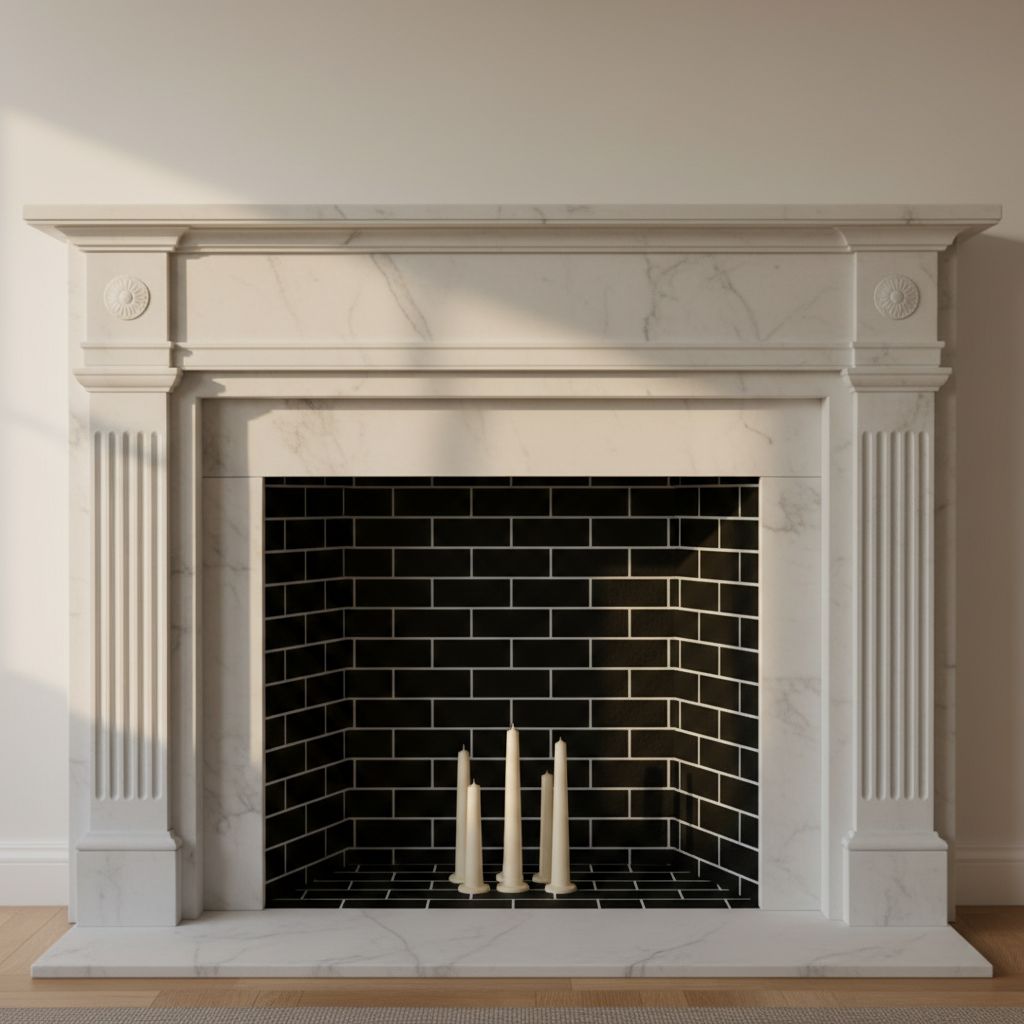
Georgian fireplaces follow classical rules: balanced lines, calm symmetry, and restrained ornament. Proportions often recall Greek and Roman temple fronts, with mantels flanked by pilasters or fluted columns and a defined hierarchy between base, opening, and shelf. Stone, especially marble, is the norm in formal rooms.
Painted pine surrounds in nimbler spaces seem to reflect the more subdued woodwork found in numerous 18th-century townhouses. Decor remains understated. You frequently come across fine fluting, little rosettes and shallow carved swags instead of deep, weighty carving.
This classical language connects directly to antiquity and to the very same design logic you encounter in early American houses or the Great Hall fireplace at Drayton Hall. For a contemporary home with a traditional slant, neutral walls, panelled doors and simple moulding, a Georgian mantle provides an anchor and a feeling of sustained serenity.
Victorian
Victorian fireplaces swing the other way and lean into detail. You’ve got cast-iron inserts brimming with pattern, marble surrounds with dramatic veining, and encaustic tiles around the aperture that depict vines, flowers, and even heraldic shields. Color enters the architecture because the tiles form a picture band that surrounds the flames and draws the eye inward.
Accessories, accessories, accessories. Fire screens, fenders and tool sets can often be found in the same motifs as the main surround. Big houses of the time could have dozens of fireplaces, like Filoli with its 17 fireplaces and 11 chimneys, each one tuned to the room’s status.
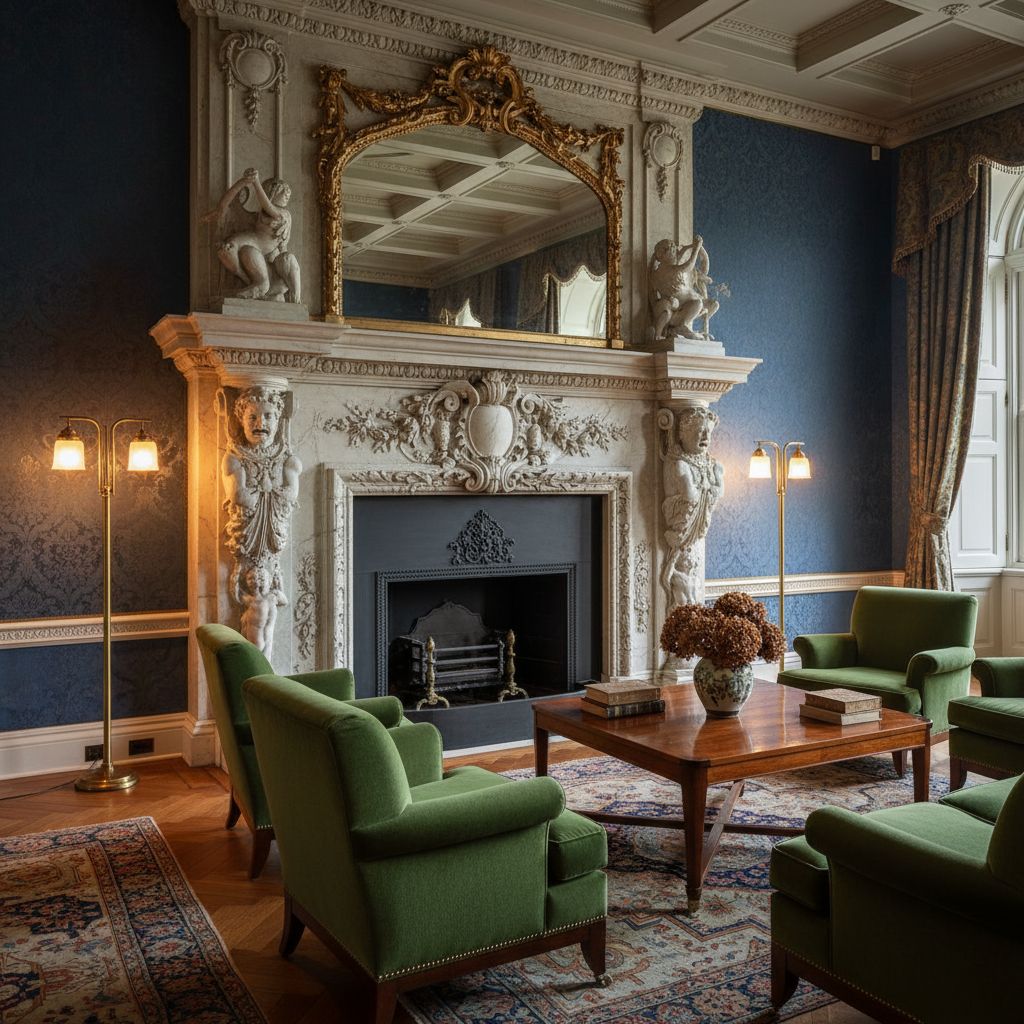
For a living or great room in which you desire that robust historic mood and distinct gathering point, a Victorian ensemble with an overmantel mirror or carved shelf can help ground the room and reinforce rich fabrics and deep paint colors.
Edwardian
Edwardian fireplaces lighten the tone and strip back some of the ornateness, yet still keep a whiff of tradition grounded in previous eras. They tend to use straightforward geometric lines, smaller scale tiles, and more open space surrounding the firebox, so that the unit reads as a part of the wall rather than a weighty thing pushed into it.
Materials tend to be natural but not showy: plain marble, light-colored stone, or painted timber, sometimes with discreet inlays or linear leaded-glass overmantels. There’s a distinct move toward utility here, which then evolves into increasingly austere fire surrounds and ultimately high-efficiency boxes like today’s Pioneer II indoor wood fireplace, which heats an entire home in a regulated fashion.
If your interior blends old and new—perhaps wood floors, understated built-ins, and muted colors—an Edwardian fireplace adds a dose of period personality without overpowering your other selections.
Art Nouveau
Art Nouveau fireplaces eschew the rigid symmetry in favor of the organic, flowing forms. Lines curve like vines around the opening and you frequently find ceramic tiles featuring irises, lilies, or abstract plant stems climbing up the jambs. The surround may be cast iron, carved stone, or wood, but the secret is how the shapes feel like they are growing as opposed to stacked straight blocks.
Craft is at the heart of most surrounds. Most surrounds boast hand-painted tile panels, delicately earthy glazes in greens and browns, and stylized-leaf metalwork. In this case, the fire becomes part of a larger natural motif, which can connect indoors and out, even if you reference the more open social atmosphere of an outdoor fireplace somewhere else.
Whether in a study, bedroom, or creative studio, an Art Nouveau fireplace adds quiet detail and complements natural fabrics, plants, and soft, indirect light.
Art Deco
Art Deco fireplaces zig toward geometry and velocity. There are stepped profiles, sunburst patterns and bold vertical or horizontal bands. Elements such as smooth marble, travertine, chrome trim and colored clay inlays come together to construct a powerful, defining framework around the fire, nearly theatrical in its design at times.
The look is sleek and contemporary in comparison to previous styles and it plays nicely with metal sconces, minimalist built-in shelving and even tech-saturated living rooms. Some oversized 1920s and 30s houses couple Deco fireplaces with similarly dramatic mantels from great European originals, such as the marble mantelpiece of Lyndhurst’s Ballroom that reverberates with the Versailles Hercules Salon.
Elsewhere in the same estate, other fireplaces remain loyal to earlier Gothic Revival tastes, demonstrating how style can differ from room to room and decade to decade. If you’re renovating a flat or home office that embraces clean lines and computers, an Art Deco surround can merge historic workmanship with a contemporary lifestyle, transforming the fireplace into a visual focal point and informal gathering place for friends or colleagues.
Material Matters
Material isn’t just about appearance or price. Marble, wood, stone, and cast iron all have varying degrees of durability, maintenance, heat characteristics, and even sentimentality in antique fireplaces. They tie into specific time periods and architectural styles, so selecting the right material can help your surround feel authentic to the building, the climate, and your intended use of the room.
|
Material |
Main Pros |
Main Cons |
Typical Eras / Styles |
|---|---|---|---|
|
Marble |
Refined look, heat‑resistant, stable over decades |
Chips, visible repairs, higher cost |
18th–19th c., neoclassical, high-style city homes |
|
Wood |
Warm feel, easy to refinish, flexible in style |
Scratches, insect risk, fire safety concerns |
Georgian, Victorian, vernacular cottages |
|
Stone |
Very robust, suits large rooms, strong presence |
Heavy, can weather or flake, hard to alter |
Farmhouses, manors, rural and medieval styles |
|
Cast iron |
Strong, good heat retention, compact and efficient |
Rust, missing parts, surface warping |
Victorian, industrial, early modern |
If you select a material, tie it to your climate and architecture. Damp areas are tough on soft wood and porous stone, while dry, cold areas are preferred by cast iron and dense marble. A small city flat might work best with a light marble or unadorned wood surround, whereas a large country room can support the weight of a heavy stone one.
Marble
Marble fireplaces usually point to high-style interiors, think neoclassical symmetry, lofty ceilings and careful moldings, but in a stripped down loft they can serve as a hushed, minimal block of stone that bridges old and new. Various marbles — soft gray Carrara, deep Belgian black, or warm Breccia — possess distinct grains and veins.
Those lines frequently hail from particular quarries and trading routes, meaning the pattern you observe is a testament to geology, craftsmanship, and centuries of aesthetic preference. When you examine an antique marble surround, inspect the shelf edges and inside corners for chips, hairline cracks, resin fills and patches. Repairs aren’t necessarily bad, but they should be stable, heat-safe and transparently priced, as heavy reworking can decrease value and alter the way a surface ages in actual use.
Wood
Antique wood mantels are typically pine, oak, or poplar, each telling a grain story. Pine exhibits broader, more gentle lines and was prevalent in simpler households. Oak seems harder and soaks stain. Poplar often brushes under paint but carves in exquisite detail.
Wood is much more susceptible to layers of old paint, dents, and even bug damage, so you’ll want to inspect the back, the joints, and the base blocks for soft spots or powdery dust. A judicious strip and refinish can restore original sparkle just as a bit of sewing or daily embroidery can patch personal trauma and amnesia.
You’re not erasing the past; you’re processing it layer by layer. For many, this slow sanding, filling, and re-oiling came strangely close to emotional repair and almost a spiritual craft practice instead of rapid design work.
Stone
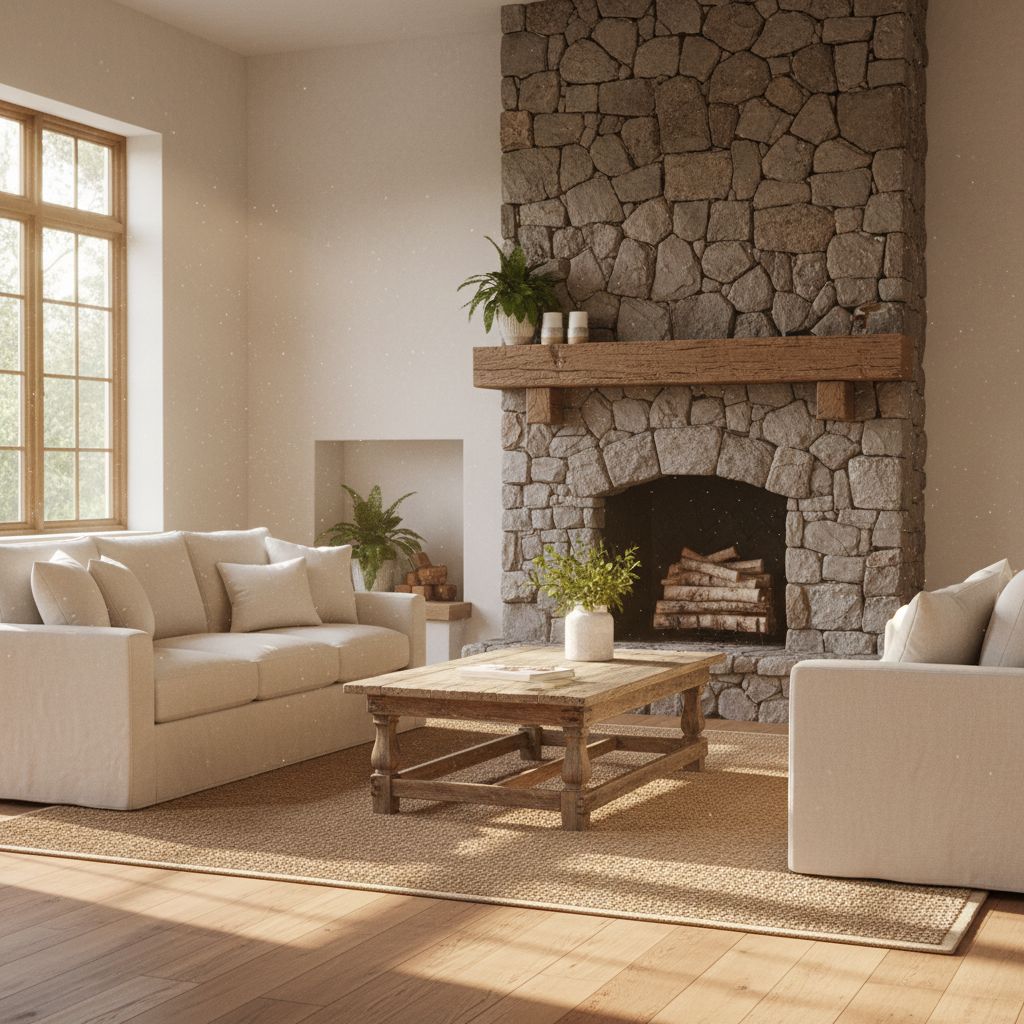
Stone surrounds, be they limestone, sandstone, or granite, sense solid and frequently encase the hearth as a sort of monument in the space. In big rooms or vintage farmhouses, that mass grounds the floor plan and can transform the hearth into an actual focal point for socializing, reading, or contemplative labor.
Every stone reacts uniquely to the climate and wear. Limestone and sandstone are soft and will weather or stain in moist air, while granite is dense, cold, and retains its edge for lengthy spans. As you examine stone, identify through-depth cracks, ill-fitting replacement blocks, and color or texture-mismatched mortar or cement repairs.
They might narrate a saga of past woe but they spell future toil for you. Carved motifs, modest chamfers or dramatic arches frequently reverberate with local artisan tradition and regional heritage. As saves on stitching survive the daily grind of living, so too do chisel marks and tool lines serve as a sort of corporeal archive of work, faith, and even ancestral notions of fire and hearth.
Cast Iron
Cast iron fireplaces emerged with Victorian and industrial-era homes, where sturdiness, mass manufacturing, and effective heat were key. Plates, firebacks, and grates were poured in molds, so you frequently find repeating floral motifs, coats of arms, or geometric grids that verged between craft and industry.
These things age in complicated manners. Rust, surface pitting and slight warping are expected, and most vintage sets are missing dampers, ash pans or side panels. Today, some designers have come to appreciate these flaws and have pushed back against an industry that pursues nothing but newness and slick marketing with imperfect iron, cardboard mockups, or PET plastic prototypes.
They have instead reimagined what heating objects can look like and how they work. Plain PET sheets, for instance, can create double-layer window inserts that eliminate drafts around that ‘old’ hearth, demonstrating how budget-friendly material and old cast iron can combine forces in a single functional improvement.
Restoring cast iron typically involves rust removal, sealing with stove polish or heat-safe paint, and tracking down compatible parts, often from salvage yards or boutique foundries. When used artfully, a cast iron insert can still warm a room while providing a crisp, graphic silhouette that suits both period properties and pared-back modern spaces.
The trick is to read the metal not just as metal but as one link in a longer chain of manufacture, mending, and understated daily design decisions.
The Sourcing Journey
Tracking down an antique fireplace is less like shopping and more like an intricate scavenger hunt. You juggle style with safety, budget, and logistics. It’s just as much about sourcing, not just buying a pretty mantel, but getting something with verifiable history and solid construction and a feasible delivery, storage, and installation scheme.
Where to Look
The main sources fall into four groups: specialized antique fireplace dealers, architectural salvage yards, online marketplaces, and auction houses. Specialist dealers and galleries often have carefully curated stock, provide written notes of authenticity, and can warehouse large mantles for months on end. Some will even store your piece for 12 months at no additional charge, which is great if your reno schedule keeps pushing out.
After that, you might get storage fees of 25 Euro per additional commenced week, so you want those conditions in writing from the beginning. Architectural salvage yards and demolition jobs can be really strong finds, particularly cast iron inserts and stone surrounds or tiled Victorian mantels ripped from old townhouses or public buildings.
These sources might be more under-documented, so you’re swapping provenance for cost and diversity. Estate sales can reveal complete sets, including original grates, fenders, and tiles. You often have to act quickly and provide your own lifting equipment and transportation.
Online platforms and dealer websites widen your search across countries, and many now build in transparent buying tools: detailed product pages, multiple photos, measurements in millimetres, and live chat with seasoned specialists. Color on screens will shift from computer to computer.
Verify finish and patina in writing and request pictures in natural light. When language is an issue, a multilingual team that can respond in Dutch, English, French, German, or Spanish reduces risk and prevents minor, expensive miscommunications about dimensions, damage, or accessories.
Whenever possible, visit a showroom or gallery. Standing in front of a 1,600 mm-wide marble mantel describes its scale, chips, and surface feel better than any online listing. Take advantage of these trips to connect with restoration craftsmen, inquire how they deal with hundreds-year-old stone or iron in-house, and receive early tips on items that haven’t even hit the web yet.
What to Ask
Before you buy, construct a mini checklist. Ask about provenance: approximate date, origin region, and any known maker or foundry. Inquire if there is any documentation, such as old invoices, catalog scans, or previous sales.
Ask for a clean restoration record. Has the fireplace been fixed up, painted, re-enamelled, or re-tiled and by whom? Verify that the work was done in-house by trained artisans or sent out and if original materials were retained or exchanged for replicas.
Get full dimensions in millimetres and centimeters: mantel shelf width and depth, overall height, leg to leg span, and exact firebox aperture (width, height, and depth). These figures count for design and for code inspections with your installer.
When buying remotely, ask for close-up photos of critical details: maker’s marks, tile edges, joints, carvings, and any cracks or previous welds. Ask about the former installation environment—dry living room, wet basement, or coastal climate as that impacts corrosion and unseen strain on stone or iron.
How to Inspect
When you finally view the piece, begin with fundamental organization. Take a flashlight and look for hairline cracks, filled joints, repairs at stress points, and missing pieces of moulding or carving. Skid cautiously over corners and mounting positions because those lug the burden when you mount.
Inspect the content and finish. For stone or marble, seek out stains, deep etching, or previous polishing that created an uneven surface. Inspect cast iron for rust, pitting, and any filler to conceal breaks.
Make sure that grates, inserts, or tiles that show in photos are actually included in the sale. Measure again on site with a tape: mantel span, leg clearance, and internal opening, then compare with your planned firebox size and wall layout.
This is when delivery and installation planning gets real, as a mismatch of just 10 to 20 mm can bog the project and increase costs. Make logistics explicit. Inquire about how the piece will be crated, where the carrier will set it down—usually just at a spot outside your house or building—and who is going to get it inside, up stairs or in a snug lift.
A prudent dealer takes you through these stages and brings them with your contractor in balance so the route from crate to wall is secure and practical.
Authenticity and Value
Genuine antique fireplaces are full of historic intrigue and true economic heft. In numerous period homes, particularly in the UK, an original fireplace can craft a valuer’s opinion well ahead of when floor area is even mentioned and can lend unequivocal, immediate value to the property.
Maker’s Marks
Begin by inspecting the surround, insert and grates for any cast or stamped marks, plaques or hand-signed information. Snap good, close pictures of every mark with scale and location so you can compare later or share with a specialist.
Maker’s marks usually indicate the city where it originated, an approximate date and sometimes the particular foundry or line of workshop. On cast-iron and tiled fireplaces, marks can lurk on back plates, undersides or secret edges. A torch and patience may be required.
Familiar names are worth more. Think Coalbrookdale, Carron, and Falkirk in the UK, Deville & Cie in France, and high‑end mantel makers in marble and limestone. Few Victorian and Georgian surrounds from reputable stone yards bear discreet chisel marks or cryptic coded figures linked to workshop logs.
Once you discover a mark, compare it to reference books, online archives or museum collections. Beware of strikes that appear too sharp or misplaced on heavily circulated pieces for that disjunction may be an indicator of a subsequent print or reworked plate.
Construction Clues
Construction details indicate age. Hand-cut joints, pegged timber, lime-based mortar and hand-forged brackets or ties all suggest traditional techniques. On Georgian and Victorian surrounds, watch for crisp, slightly uneven carving and small asymmetries that machine tools don’t replicate well.
Contrast what you are looking at with old records of period pieces, either in architectural guides, auction catalogs, or reputable dealer archives. If the style says early 19th century but you see consistent machine routing or modern chipboard backing, you are looking at a repro or seriously modified piece.
Machine-cut screws, shiny new nails, or synthetic fillers don’t always destroy value. They frequently display subsequent repairs. Label each clue in photos with plain tags, so you create a visual archive that potential buyers, insurers, or restorers can peruse effortlessly.
Condition Assessment
Condition determines both safety and value. Look over the fireplace for cracks, heat distortion, missing tiles, chipped mantels and trim. Firebox, lintel and hearth edges hidden damage in these areas can result in high repair bills.
Wear that actually makes sense for the age. Glazed tiles can have light crazing and soft edge wear, not razor, new chip all over. Wood mantels can have old polish build-up and little dings. Old cast iron can have smooth, stable rust instead of bright flaking corrosion.
Give each piece a simple rating: “excellent” (original, sound, minor wear), “solid” (fully usable, some repairs) or “needs repair” (structural issues, missing parts). This fast grade assists you in determining if restoration prices still allow space for extra value!
Use a checklist for each fireplace: structural stability, firebox integrity, surround and mantel condition, tile or insert completeness, evidence of water damage, signs of earlier paint removal, and safety compliance for modern use. A standard approach allows you to evaluate multiple opportunities side by side prior to investing.
Restoration History
Ask for any paperwork that tracks the fireplace: old invoices, salvage certificates, restoration quotes, and before-and-after photos. These create a provenance file that can establish age, ownership trajectory, and expert maintenance that purchasers and appraisers like to see.
Be cautious when reading restoration reports. See if any original stone, cast iron, or tiles were preserved or if they replaced whole sections with modern materials. Experienced, done-for-you work that honors original finishes and period detail frequently increases value and preserves authenticity even if the fireplace is not original.
Over-restoration is a genuine danger. Too-sharp re-cut moldings, thick new varnish, or deep grinding of iron will remove the age cues collectors desire. Bad fixes can mask problems, devaluing and undermining trust.
In period properties, a good handled original or accurate reproduction that suits the home’s era, scale and local buyer taste, particularly in Georgian and Victorian homes, can literally pay for itself by increasing overall value and reinforcing the serene, balanced aesthetic many buyers desire.
Modern Integration Challenges
Modern homes, even those in old buildings, require safe, efficient heat, while an old-fashioned fireplace was designed for another time, fuel and risk tolerance. Integration is about operating within rigid protocols, delicate frameworks, and emerging practices such as intelligent regulation and low-carbon lifestyles.
Safety Codes
Safety codes lay down the law about how close wood, plaster, and furniture may sit to an open fire, what kind of hearth you require, and which fireproof boards or masonry materials are acceptable behind and below the vintage surround. In most cities, any modification to a chimney, flue, or structural wall sets off a formal review.
In historic buildings, those regulations can be even stricter, as preservation offices can veto major cuts, vents, or reinforcement work that would damage original stone or timber. Before you start a fire, that old-fashioned fireplace has to comply with modern standards for stability, clearances and fire spread, not the casual practices of a hundred years ago.
That often means hidden retrofits: adding a tested fire screen, a non-combustible hearth that extends far enough into the room, and hard-wired smoke and carbon-monoxide detectors nearby, especially if the building has older wiring or closed floor plans. Most areas mandate permits and at least one inspection if you reopen a closed chimney, add a liner, convert to gas, or alter the load on a structural wall.
In a heritage apartment, you might require signoff from the city and from your building association, which can impede projects but safeguards neighbors who share walls and flues.
Fuel Conversion
Fuel conversion implies selecting between gas, bioethanol, or electric inserts and aligning each with the structure’s constraints. Gas can provide powerful, easily adjustable heat but requires secure gas lines, adequate venting, and maybe a new flue. Electric inserts circumvent burning but still need wiring capable of supporting the pull.
Bioethanol provides authentic flame with less infrastructure requirements but still generates heat, vapors, and moisture that need to be handled. Properly done, this maintains the original firebox proportions, surround and mantel, so the antique character remains in evidence while the working heart becomes modern.
In certain period rooms, particularly where the flue is closed or the building cannot support new vent runs, the hearth is better left as a design element with candles, LED logs or a slim electric piece that doesn’t contact historic brick. Professional installers and restoration specialists are key when you want both safety and historic integrity because they understand the flow of discreet pipe work, concealment of cabling, and how to get around carved stone, tile, and fragile plaster without hack cuts.
Chimney Lining
A modern chimney liner is the primary interface between hot gases and the building, and many older flues were constructed for coal or wood under different assumptions of draft and soot, so they’re often too coarse, cracked, or oversized for current fuels. A comprehensive inspection should check for nests, debris, moisture damage, and aged tar deposits, as well as whether the chimney flue is shared with other units, which is a typical feature in older city blocks.
Stainless steel and ceramic liners are popular, as they handle both solid fuel and many gas systems and can be sized to suit the output of the new configuration quite nicely. This is especially important in period homes where an old-school chimney might be absent or sealed off.
Here, a balanced-flue gas unit or vent-free ethanol fireplace may be your sole practical alternative to a massive construction project. A properly sized and fitted liner insulates the antique surround from heat stress and minimizes heat transfer to old timber frames or neighboring apartments, which is crucial in close-knit, dense urban housing.
Heat Efficiency
Most antique fireplaces were designed for smoke ventilation rather than energy conservation. They draw numerous room air up the chimney and provide a reduced efficiency compared to contemporary sealed stoves or inserts. In well-insulated apartments, that draft can conflict with ambitions regarding sustainability and small carbon footprints because more fuel is burned for less useful heat.
Simple add-ons can help: a grate that lifts logs for better airflow, a cast-iron fireback that reflects heat, and discreet glass or metal doors that you can close when the fire dies down to limit warm air loss. It seals drafts around the firebox, insert, and surround into wall cavities, which counts in old masonry where random voids abound and can sap comfort in adjacent rooms.
In most homes, the age-old fireplace functions optimally as an ‘occasional heat provider’ reserved for specific evenings or seasons, with primary heating delivered by contemporary radiators, heat pumps, or underfloor units. Smart fireplace controls, where available, can time usage and link to thermostats, but they require sensitive installation in ancient structures with mixed wiring and shared flues so that the tech supports the space rather than battles it.
Conclusion
There’s something about an antique fireplace that gives a room a sense of weight. Stone scars, jagged edges and hand chiseled grooves whisper ancient tales. Something like a black iron insert can really ground a bright space. A plucky soft marble surround could frame an unadorned, contemporary room.
In order to locate the right piece, align style, age and wear to your home and taste. Inspect the back, the joints and fixings, and the patina. Seek records or old pictures if the seller has them. Examine how it will vent, how it will mount, and how heat will move in the room.
To make progress, choose a specific next step. Browse a salvage yard, consult a local fitter, and begin a mini scrapbook of hearths that resonate.
About the Author