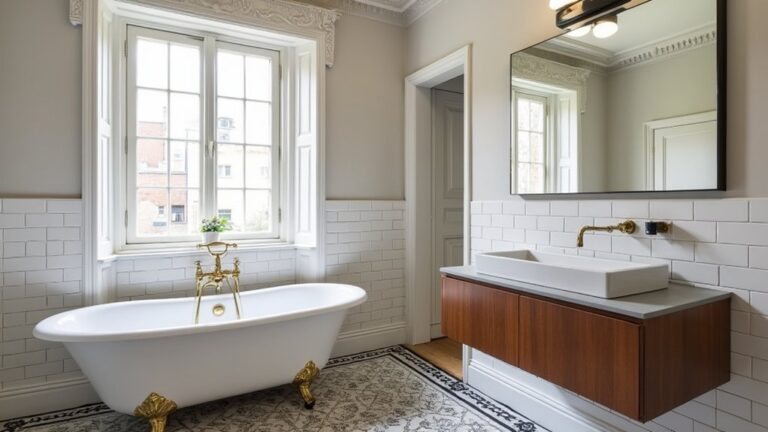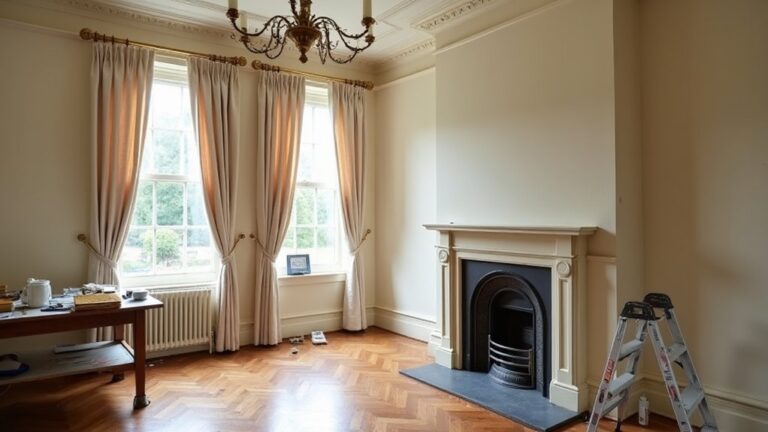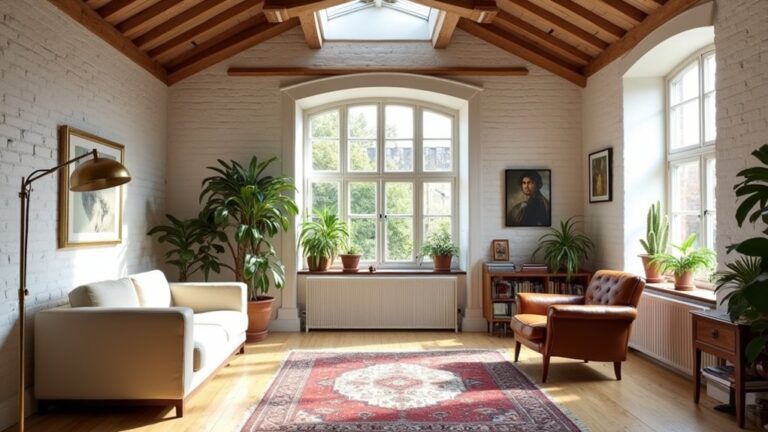
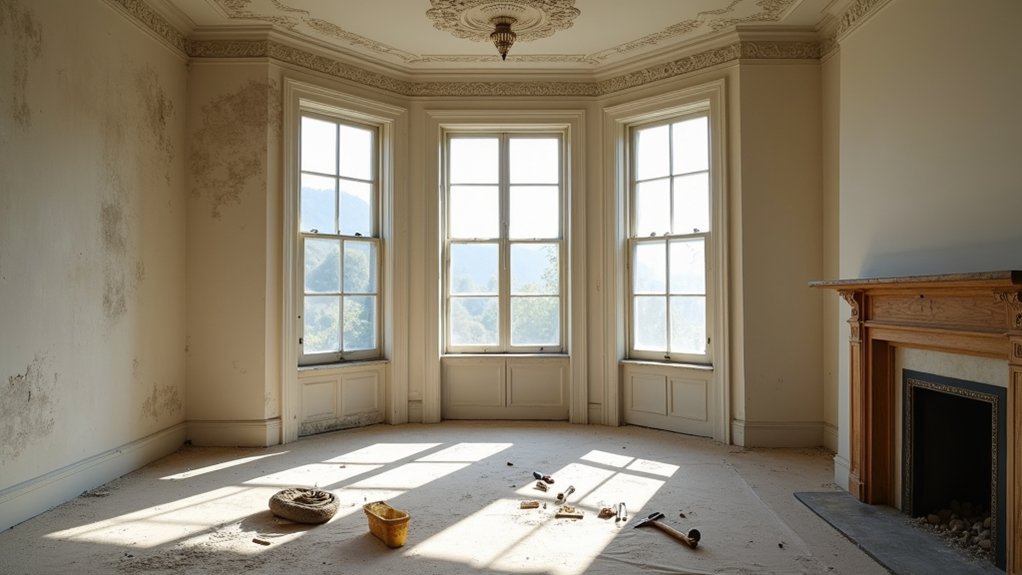
You can’t bring period features back properly until you know what you’re dealing with, so you start by pinning down your house’s era and recording what’s still original—profiles, mouldings, timber species, lime plaster, and fixings. You check for damp, movement, rot, and past “repairs” that have trapped moisture, then you confirm whether listed consent or conservation area rules apply. Only then do you match each feature to the right trade—and avoid costly mistakes that can’t be undone…
Key Takeaways
- Research the property’s era, record surviving details, and photograph mouldings with scale to guide accurate repair and sourcing.
- Define scope and sequence: stabilize structure, fix roof and drainage, then services, lime plaster, joinery, and decoration.
- Engage specialist trades early and get fixed quotes specifying materials, profiles, tolerances, and samples for approval.
- Prioritise repair over replacement, using spliced timber, lime plaster, linseed-oil putty, and reclaimed materials to match original fabric.
- Document evidence and decisions for future maintenance and consents, and hold a 10–20% contingency for hidden defects and delays.
Identify Your Home’s Era and Key Period Features
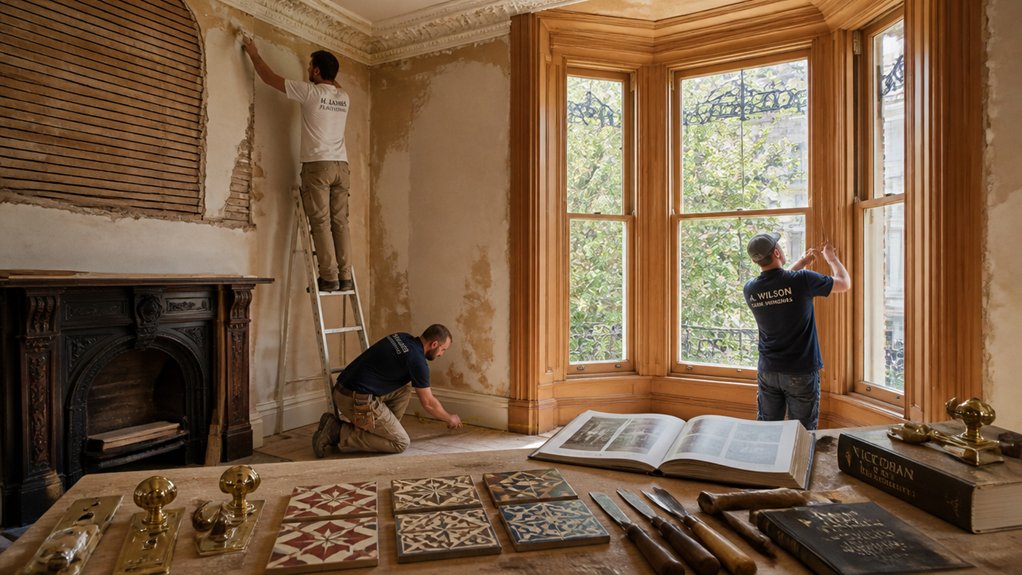
Before you hire any tradesperson, pin down when your house was built and which features are genuinely of its period, because that context should guide every repair, upgrade, and material choice. Start with deeds, old OS maps, planning records, and any listing description, then walk room by room.
Note window types (sash, casement), roof covering (slate, plain clay tile), and masonry bonds, plus chimney stacks and rainwater goods. Inside, log skirting profiles, architraves, cornices, stair balustrades, fireplaces, and floorboards, checking for machine marks versus hand-planed surfaces.
Photograph mouldings with a tape for scale and sketch elevations. This audit underpins Historical accuracy and informs Material sourcing, including matching timber species, lime mortar, bricks, and traditional ironmongery.
Decide What to Repair, Restore, or Replicate
With your room-by-room audit in hand, you can now decide what stays, what gets put right, and what needs making anew—without erasing the building’s story.
Prioritise original fabric: if a cornice, skirting, or sash still has sound profiles, choose repair with a joiner or plasterer rather than replacement. Where parts are missing, restore by splicing in matching timber, running new lime plaster to the same mould, or reusing salvaged fixtures from reclamation yards.
Replicate only when evidence is clear: use paint scrapes, old photos, shadow lines, and neighbouring houses of the same terrace to confirm details.
Keep your Historical interior legible while allowing Modern adaptations—discreet wiring routes, sympathetic ironmongery, and reversible fittings.
Document decisions for consents and future owners.
Check Period Damage: Damp, Cracks, Rot, Movement
Although period finishes can disguise trouble for decades, you should check for the four common culprits—damp, cracking, timber rot, and structural movement—before you commit to repairs or decorative work.
Start at ground level: look for tide marks, salt bloom, crumbling lime plaster, and musty skirtings; note blocked air bricks, failed gutters, and bridged DPCs.
Trace cracks: hairlines in lime often settle, but stepped masonry cracks, bulging reveals, or doors that suddenly bind can signal movement.
Probe joinery with a bradawl around sills, joist ends, and roof feet; softness, blackening, and fungal strands suggest rot.
Photograph, date, and measure changes for Historical renovation planning, then match Preservation techniques to the cause, not the symptom.
Confirm Rules: Listed Consent and Conservation Areas
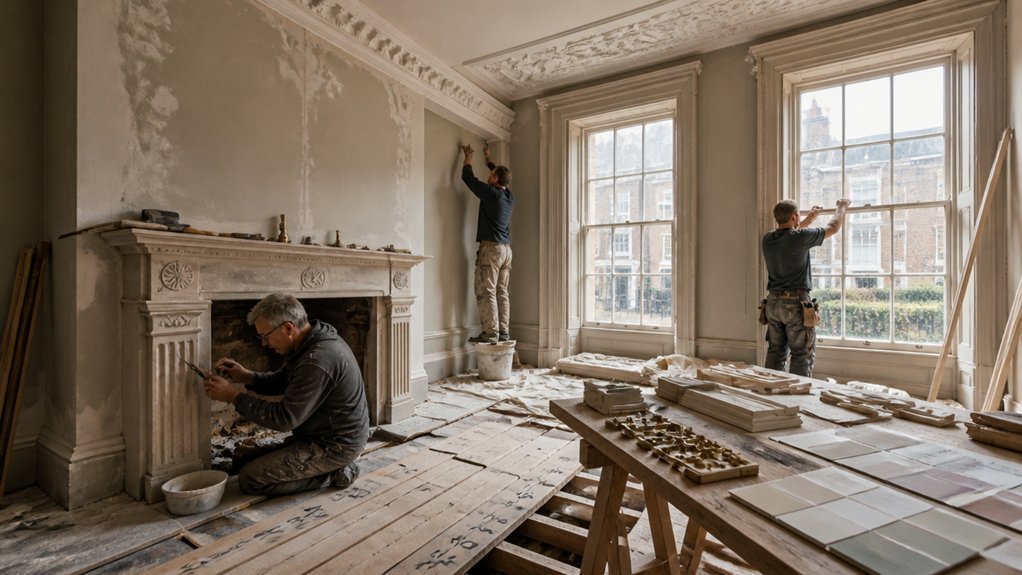
Before you book a trade for period features, you’ll need to confirm whether your property is listed and what that means for Listed Building Consent, even for works like repairing windows, fireplaces, or internal joinery.
If you’re in a conservation area, you must also check extra controls on alterations, materials, and visible external changes, as well as any Article 4 Direction limits.
Speak to your local planning authority early, because unauthorised works can trigger enforcement and long-term harm to historic fabric.
Listed Building Consent Essentials
If your period home is listed or sits in a conservation area, you must confirm the consent rules early, because ordinary “repairs” can count as controlled works under UK heritage law.
For Listed Building Consent (LBC), you’ll need permission for changes affecting special architectural or historic interest—inside and out. Don’t assume like‑for‑like fixes are exempt: replacing sash windows, stripping plaster, altering stair parts, removing fireplaces, changing roof coverings, or repointing with hard cement can trigger LBC.
Before any Modern renovation or DIY preservation, speak to your local authority conservation officer and ask what’s classed as repair versus alteration. Prepare a clear scope, method statement, and heritage impact statement, with photos and matching material samples (lime, timber species, ironmongery).
Start work only after written approval; breaches risk enforcement and prosecution.
Conservation Area Restrictions
Since conservation areas protect the look and character of whole streets rather than single buildings, you must check your council’s specific controls early and in writing. Even if your home isn’t listed, you may need permission for windows, roofs, chimneys, boundary walls, and cladding, especially where an Article 4 Direction removes permitted development rights.
Ask for pre‑application advice and share drawings with your joiner, roofer, or stonemason so you don’t order the wrong profiles or materials. Use local conservation guidelines to match glazing bars, pointing, slate size, and paint finishes, and keep a photo log for compliance.
- Confirm whether Article 4 applies and what works need consent.
- Specify like‑for‑like repairs; document every change.
- Explore heritage funding for eligible repairs through council or trusts.
Map Each Period Feature to the Right Trade
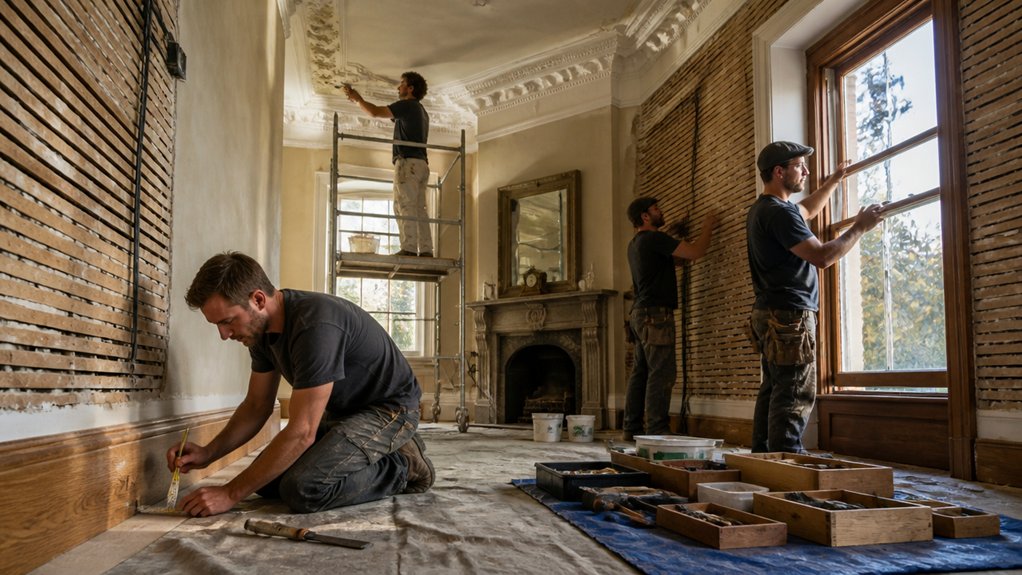
You’ll get better heritage outcomes when you match each period feature to the right trade—lime plaster to a plasterer who works in traditional mixes, sash windows to a joiner, encaustic tiles to a specialist tiler, and leadwork to an experienced roofer.
You also need to coordinate multi-trade restoration so repairs happen in the correct sequence, from structural and damp issues through to finishes, without one trade undoing another’s work.
You’ll keep the fabric—and your Listed Building or conservation area obligations—intact by specifying like-for-like materials and appointing trades who can evidence UK heritage experience.
Match Features To Trades
Whether you’re dealing with a Georgian cornice, a Victorian encaustic tiled hallway, or an Edwardian sash window, matching the feature to the right trade keeps the repair honest and the fabric intact. You’ll protect historical authenticity by choosing specialists who understand lime, timber movement, and period detailing, while still allowing discreet modern adaptations where building regulations demand it.
- Plasterwork (cornices, ceiling roses): hire a fibrous plasterer or heritage plasterer who can run moulds and use lime where appropriate.
- Joinery (sashes, panel doors, shutters): use a traditional joiner experienced in draught-proofing without over-sealing, and in repairing, not replacing.
- Tiles and masonry (encaustic, brick, stone): appoint a tiler or stonemason who matches beds, mortars, and finishes to the original.
Coordinate Multi-Trade Restoration
How do you stop a period repair becoming a patchwork of good intentions? You coordinate trades like a conductor, mapping each feature to the right specialist and sequencing work so nothing gets undone.
Start with a measured survey: note moulding profiles, timber species, brick bonds, limewash layers, and any listed-building constraints.
Then assign tasks: a joiner for sash repairs and glazing bars, a plasterer for lime and cornices, a mason for stone cills, a slater for roof details, and a decorator versed in breathable finishes.
Lock in Historical accuracy by agreeing details and sample panels before anyone starts.
Plan Material sourcing early—reclaimed match bricks, FSC timber, handmade glass, NHL lime—so lead times don’t stall the programme.
Keep one scope, one schedule, one sign-off process.
Build a Scope, Timeline, and Restoration Sequence
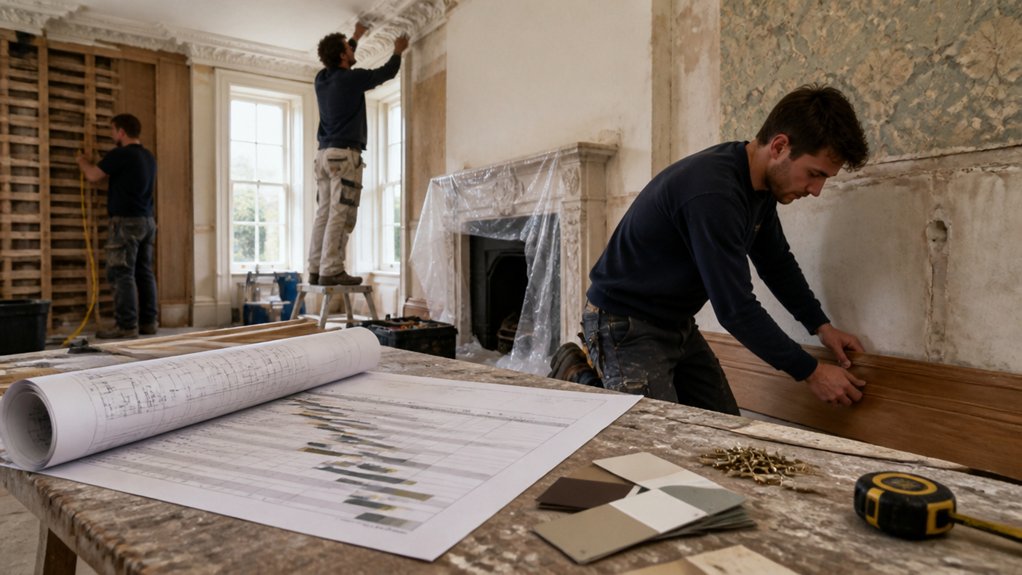
Before any plaster gets hacked off or sash cords get replaced, set out a clear scope, timeline, and restoration sequence that protects the building’s historic fabric and keeps trades from working at cross-purposes.
Walk the house room by room, photograph details, and note what’s original versus later alterations so you can defend Historical accuracy during decisions.
Build a programme that follows the building’s logic and Britain’s damp climate, letting each trade hand over cleanly.
- Define scope: list elements to retain, repair, or reinstate; record mouldings, joinery profiles, ironmongery, and finishes.
- Plan sequence: stabilise structure, address roof and drainage, then services, then lime plaster, then joinery and decoration.
- Fix lead times: schedule surveys, approvals, and Material sourcing for reclaimed bricks, matching glass, lime, and seasoned timber.
Budget for Authentic Period Repairs and Replicas
Because authentic repairs often hinge on materials and methods you can’t swap out at the last minute, set your budget around conserving what’s there and commissioning like-for-like replacements where fabric has genuinely failed. Price survey time for a measured condition report, trial opening-up, and specialist labour; they’re what protect Historical accuracy when surprises appear.
Ring-fence sums for reclaimed matchstock, handmade mouldings, period-appropriate ironmongery, and finish testing, plus careful removal and refitting rather than wholesale replacement. Get fixed quotes that specify species, profiles, joinery details, and installation tolerances, and insist on samples before you sign off.
In conservation areas or listed buildings, allow for Listed Building Consent drawings and heritage statements. Finally, plan a contingency (10–20%) for hidden rot, failed fixings, or sourcing delays—without compromising Authentic craftsmanship.
Restore Plasterwork With Lime, Cornices, and Roses
Once you’ve allowed for like-for-like materials and specialist labour in your budget, you can tackle one of the most visible period finishes: plasterwork.
Start by evaluating what’s sound, what’s blown, and what’s been patched in hard cement. You’ll get the best long-term result by specifying Lime plaster, which moves with older masonry and helps manage moisture in UK solid-wall houses.
For cornices and ceiling centres, a plasterer can run mouldings in situ or take casts from surviving sections, keeping profiles true to the era. Treat decorative roses as focal points: repair hairline cracks, refix loose laths, and reinstate missing leaves with fine casting plaster.
- Match original mixes and aggregate.
- Replicate profiles, not “close enough”.
- Finish with breathable paints.
Repair Sash Windows and Add Discreet Draught-Proofing
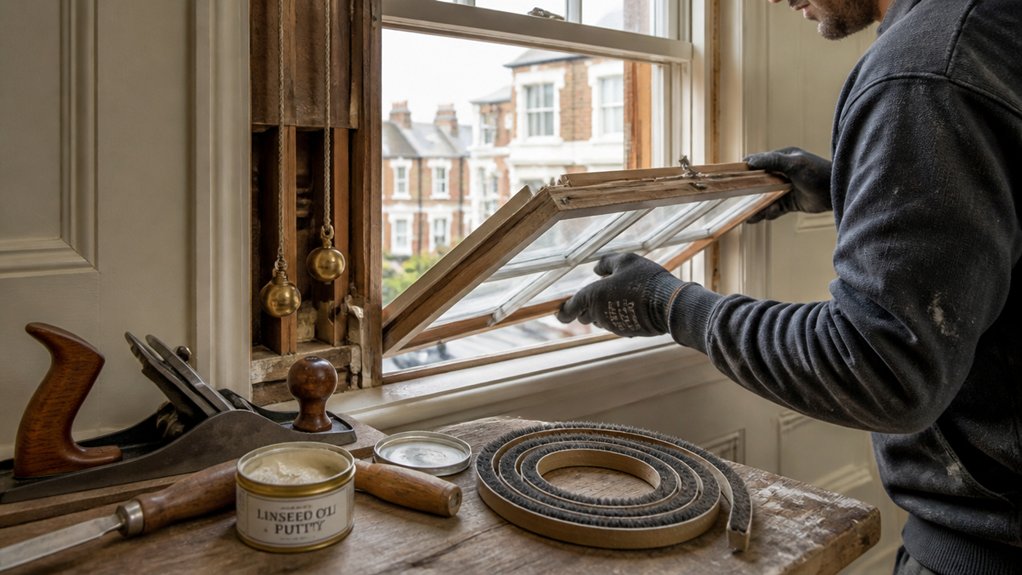
Where do you start with sash windows—especially when you want to keep original joinery rather than replace it? Begin with a careful survey: check for racked frames, rotten cills, loose glazing bars, snapped sash cords, and failing putty.
You’ll keep Historical accuracy by splicing in matching timber, retaining wavy glass where safe, and using linseed-oil putty and traditional profiles. Ask a joiner to ease sticking sashes, overhaul pulleys, and rebalance weights so the windows run smoothly.
For modern efficiency, add discreet brush-pile seals in staff and parting beads, fit a slim draught strip to the meeting rail, and renew the sash-to-frame seal without chunky plastic.
Finish by checking security and ventilation, and ensure paint lines don’t glue sashes shut again.
Restore Floors, Joinery, Fireplaces, Tiles, Finishes
You’ll often find your period rooms come back to life once you revive original floorboards or parquet, carefully lifting, repairing, and re-laying with matching timbers and traditional fixings.
You can then bring crisp lines back to skirtings, architraves, and mouldings by splicing in like-for-like sections and keeping profiles true to the house’s age.
Finally, you’ll restore fireplaces with sound hearths, period-appropriate tiles, and breathable finishes—think limewash and waxes—so the whole scheme suits UK heritage practice and lasts.
Floorboards And Parquet Revival
Even if your Victorian terrace has been carpeted for decades, the floor beneath can still be a defining period feature worth reviving. Start by lifting edges carefully and checking for loose boards, damp staining, and old cut nails; you’ll protect joists and preserve historical flooring.
Bring in a floor restorer to re-fix with matching reclaimed timber, then punch down nails and fill sparingly with tinted slivers, not modern goo.
If you’ve got a hallway of parquet, a specialist can re-bond blocks, source like-for-like species, and re-lay true to original parquet patterns.
Finish with breathable hardwax oil or traditional wax, not a plastic varnish, so boards can move.
- Survey moisture and movement first.
- Repair with reclaimed, period-accurate timber.
- Finish with vapour-open products.
Joinery And Moulding Repairs
How do you keep crisp architraves, skirtings, dado rails, and panelled doors looking right without erasing their age? Start by mapping profiles: take rubbings, measure quirks and ovolos, and photograph joints before you lift a chisel.
You’ll splice, not replace—cut back to sound timber, scarf in matching species (often deal or oak), and align grain so repairs disappear once settled.
Ask a joiner to consolidate loose tenons, re-pin pegged joints, and ease doors so they close without planing away history.
For missing mouldings, commission knives to match the original run, then hand-fettle corners to keep shadows sharp.
Treat wooden carvings and decorative panels gently: clean, stabilise, and repair with hide glue and reversible fillers, ready for careful redecorating later.
Hearths, Tiles, And Finishes
Once the joinery’s sound and the mouldings read cleanly, turn your attention to the hard surfaces that frame a room’s character: hearths, tiled slips, and the painted and polished finishes that sit around them. You’ll preserve Historical significance by repairing before replacing, and by matching original proportions, patina, and sheen.
- Hearths: Get a stone mason to lift and re-bed slabs on lime, not cement; keep edges crisp, don’t over-grind.
- Tiles: Ask a tiler to salvage, clean, and relay originals; where losses exist, use Material sourcing from UK reclamation yards or small-batch makers that copy Victorian profiles.
- Finishes: Let a decorator test for distemper, oil, or shellac; then choose breathable paints and waxes, and tidy up fire-surround blacks for period depth.
Conclusion
When you restore period features, you’re not just patching plaster or easing a sash—you’re relighting a house’s lantern. You’ve checked damp, stitched cracks, and respected listed consent where it applies, so every lime repair and timber splice sits honestly in place. With the right UK trades—plasterers, joiners, stonemasons—you let cornices, floors, and tiles speak again. Finish with quiet draught-proofing and careful detailing, and you’ll keep history warm without dimming its glow.
About the Author