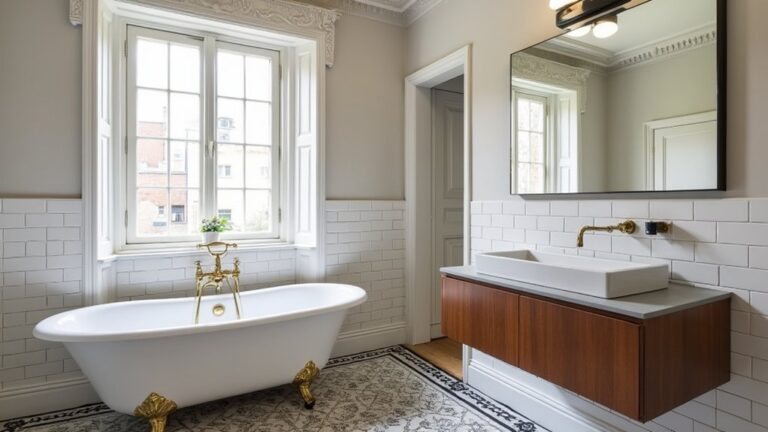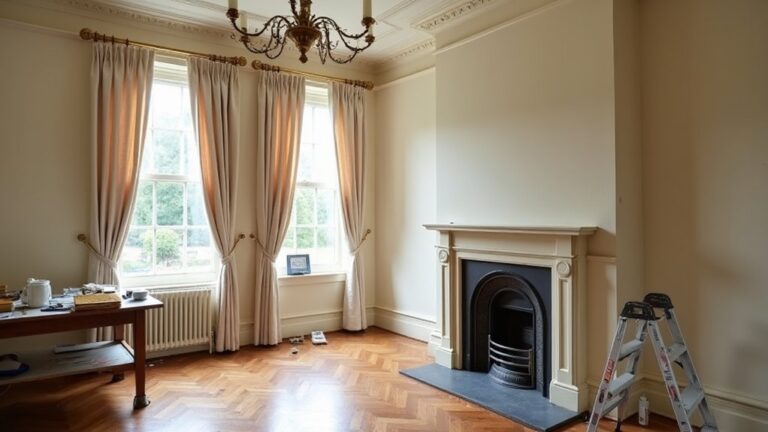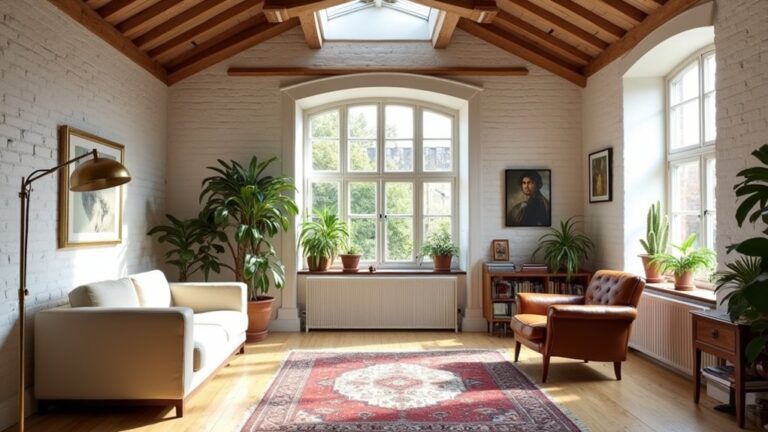
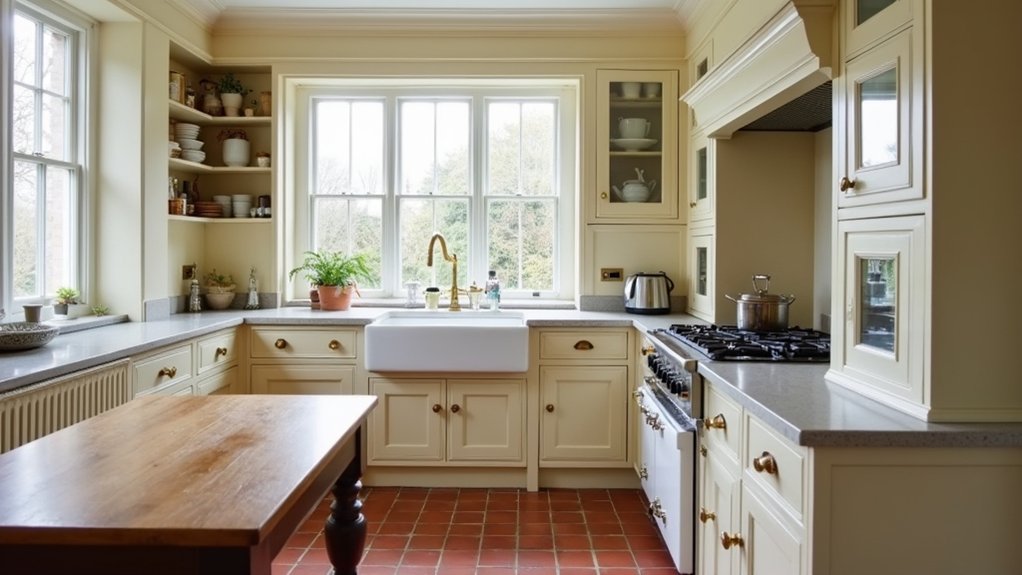
You don’t have to gut an Edwardian kitchen to make it work; sometimes the smartest upgrade is refusing the shiny shortcut. You keep the high skirting, chunky architraves, and timber boards, then repair what’s tired instead of binning it. You run services close to their old routes, choose muted paints and proper hardware, and hide modern kit behind plain fronts. But the real trick sits in the layout choices you make next…
Key Takeaways
- We repaired and cleaned original joinery, pantry doors, and brass latches, avoiding replacement unless safety or structural issues demanded it.
- We kept the Edwardian layout, placing the sink at the window and keeping service runs close to original routes to preserve character.
- We chose period-true cabinetry: slim base units, freestanding-style larders, narrow frames, modest bevels, and unlacquered brass hardware.
- We used honest finishes—plain-painted timber, small-format tiles, muted mineral colours, and eggshell paint—avoiding glossy, handleless units and plastic splashbacks.
- We added modern comforts discreetly with panelled appliances, quiet extraction, under-cabinet LEDs, and durable worktops, keeping the chimney breast and hearth line clear.
Our Rules for Updating an Edwardian Kitchen
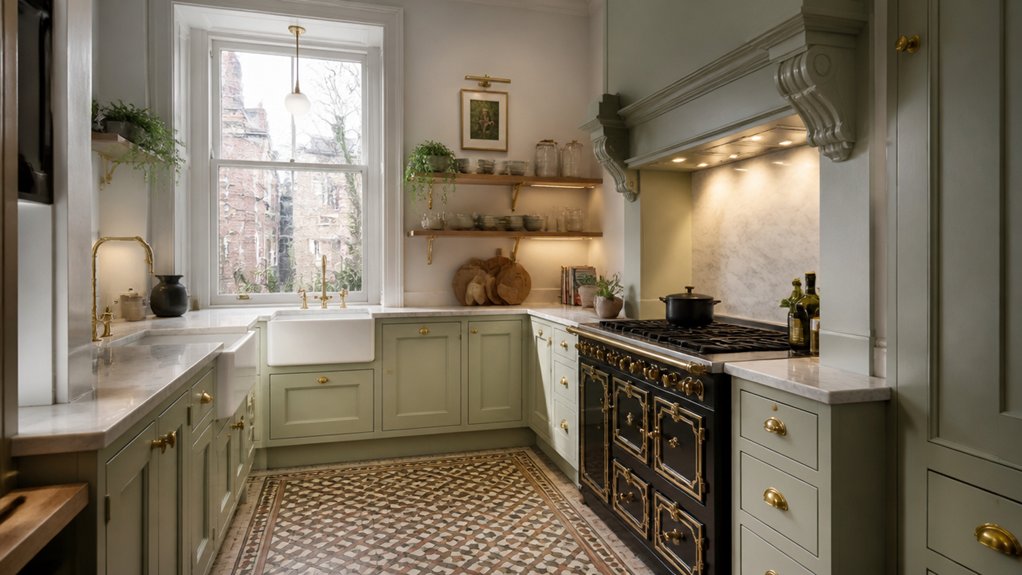
Although you’re tempted to rip everything out and start afresh, you’ll get a better Edwardian result (and spend less) if you set a few house rules before you lift a screwdriver.
First, you’ll keep the layout where the plumbing already sits; you’ll only shift services if a safety inspection demands it.
Next, you’ll choose finishes that look honest: plain-painted timber, small-format tiles, and worktops that won’t shout “showroom.” You’ll set a strict palette—warm whites, soot greys, and muted greens—so new pieces don’t jar.
You’ll hunt Vintage appliances with simple enamel fronts, then hide modern performance behind them where you can.
You’ll add Modern lighting, but you’ll pick opal shades and brass fittings, and you’ll wire dimmers for evening softness.
Original Edwardian Features We Kept (and Why)
Because the quickest way to lose an Edwardian kitchen is to “improve” it into blandness, you’ll get farther (and spend less) by keeping the bones that still do their job: the high skirting and chunky architraves, the deep sash-window reveal that catches the light, and the original chimney breast that anchors the room—even if the range itself is long gone.
You’ll also keep the picture rail and repair it, not replace it; it hides cracks and saves plastering. Keep the timber floorboards where they’re sound: lift, insulate between joists, and refit with cut nails.
Retain the old pantry door and brass latch; a clean and wax beats new joinery. Then you can modernise politely: vintage appliances sit happily by the hearth, while contemporary lighting keeps tasks bright.
- Repair, don’t rip out.
- Reuse, don’t replicate.
- Clean, then decide.
Layout Planning: Working With Edwardian Quirks
Once you’ve kept the good bones—the chimney breast, the deep window reveal, the pantry door—you’ve also accepted that an Edwardian kitchen won’t behave like a blank-box extension. You plan around pinch points, not through them, and you let the room’s odd corners dictate zones.
Put the sink to the window for natural task light, then run prep space back toward the range so you’re not crossing paths.
If the chimney breast steals depth, choose slim base units and a freestanding-style larder instead of bulky tall cabinets. Keep circulation at 900mm where you can, and borrow inches by swapping chunky handles for Antique hardware with a low profile.
Use Vintage lighting on a dimmer to soften shadows without dropping a new ceiling. You’ll spend less by keeping services near their original runs.
Restoring Edwardian Joinery and Trim Details
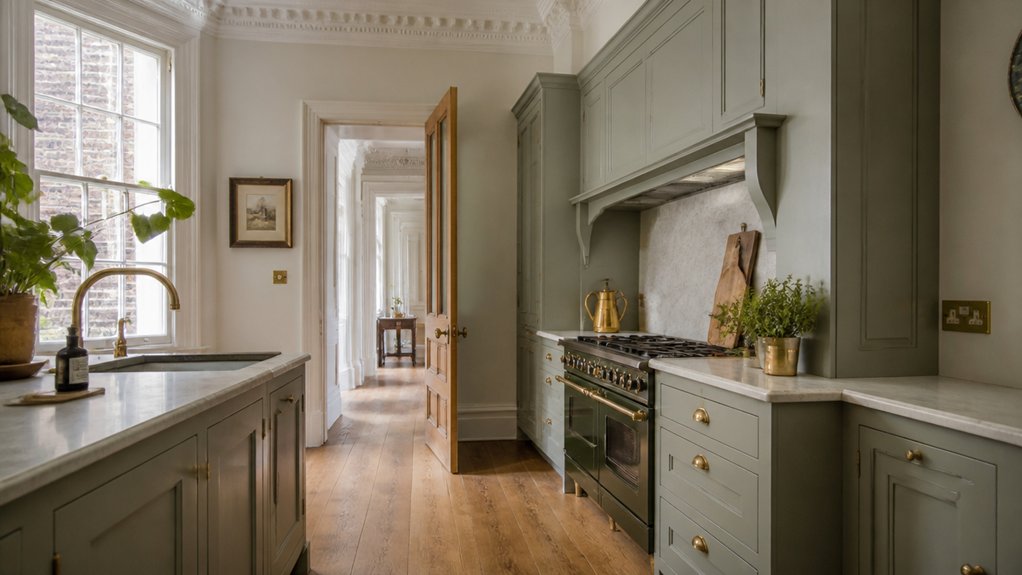
While the units and appliances grab your attention, it’s the Edwardian joinery—the picture rails, architraves, skirtings, and panelled doors—that makes the kitchen feel “right,” so restore what you’ve got before you start replacing.
You’ll often find sturdy softwood under paint, with Victorian influences in the heavier profiles and subtle Colonial motifs in the beaded edges.
- Strip only where needed: use a heat gun and scraper on flaking sections, then feather back sound paint to save hours.
- Repair, don’t rip out: splice in matching timber, pin with lost-head nails, and fill with a fine linseed putty.
- Finish faithfully: prime knots with shellac, then use a durable eggshell; pick out rails lightly, not shiny.
Keep original hinges if they still bite.
Cabinet Style: Shaker vs True Edwardian Fronts
If you want an Edwardian kitchen in Liverpool to read as original rather than “heritage-ish,” the cabinet fronts matter as much as the paint colour. Shaker doors can work, but their square stiles and wide rails often read later and plainer, especially in compact terraces where every line feels amplified.
True Edwardian fronts usually show a narrower frame, a modest bevel, and a slightly taller top rail, sometimes with a simple cockbead detail. You don’t need bespoke joinery: ask your maker for a slimmer Shaker with a bead, or reface existing carcasses and keep the proportions honest.
Pair it with Antique hardware—small knobs, latches, or bin pulls in unlacquered brass—to add age without gimmicks. Finish with Vintage lighting so the timber grain and paint sheen look gently lived-in.
Storage Upgrades That Don’t Look “New Kitchen
You can bring back a built-in pantry by boxing in an unused corner and fitting plain pine shelves behind a simple painted door, so it reads as original joinery, not a showroom add-on.
Keep cabinet interiors period-correct with tongue-and-groove lining, tidy hooks, and shallow pull-out trays, using hardwearing paint instead of costly refits.
Then tuck hidden storage where it won’t shout—false drawer fronts for trays, a toe-kick pull-out, or a slim broom cupboard—so you gain space without making the room look “new kitchen.”
Built-In Pantry Revival
Because Edwardian kitchens were designed to work hard rather than show off, a built-in pantry revival lets you gain proper storage without tipping the room into “brand-new fitted” territory. You keep the original recess if you’ve got one, or box in a shallow run beside the chimney breast, then face it in plain-painted timber with simple beading.
- Reuse an old door (or strip yours) and hang it true; draft strips stop rattles.
- Fit sturdy shelves on cleats, not shiny brackets, and add a rail for brooms.
- Finish with Antique hardware and a small Vintage lighting sconce so it reads as “always there.”
You’ll spend on timber and paint, save on carcasses, and gain calm, hidden storage that suits Liverpool’s soot-softened brickwork.
Period-Style Cabinet Interiors
While the outer faces of Edwardian cupboards ought to stay plain and workmanlike, the interiors can quietly do far more without shouting “new kitchen.” Start by cleaning, then paint the insides in a soft cream or pale sage, using durable eggshell so it wipes clean.
Replace tired shelves with cut-to-fit plywood edged in lipping; it looks like old joinery but won’t cost like it. Add simple beaded rails to stop stacks of plates creeping forward.
Fit a slim oak or brass plate groove where you’ll actually use it. Keep doors and catches authentic: reuse Antique hardware, or buy mismatched originals and patinate them.
Tuck Vintage lighting under a shelf on a discreet switch, so you see what you’ve got.
Hidden Storage Additions
If you’re short on space but keen to keep the room properly Edwardian, build storage into the shadows rather than bolting on shiny new systems. Use the voids you’ve already paid for: beneath the dresser plinth, behind the skirting, and under the window seat. A local joiner can match pine, re-use original knobs, and keep paint tones soft so nothing shouts “refit.”
Slip in Hidden compartments for baking tins and linens, and add concealed drawers where a plain rail once sat.
- Fit a toe-kick drawer for trays and cloths.
- Add a false back in a pantry for jars and tea.
- Hang a shallow rail cabinet inside the larder door.
You’ll gain order without disturbing the room’s honest age.
Worktops That Suit an Edwardian Kitchen
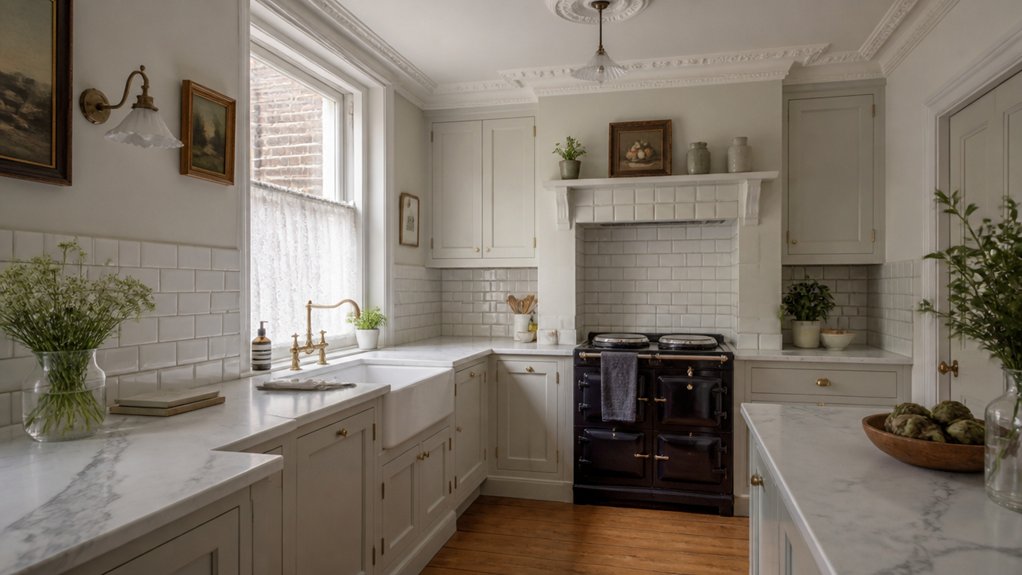
To keep an Edwardian kitchen feeling properly “of its time,” you’ll want a worktop that looks solid, wears well, and doesn’t shout for attention.
Start with wood: beech or oak gives honest warmth, and you can patch and sand it rather than replace it. If you cook hard, choose a honed granite or soapstone-look composite; avoid high-gloss finishes that jar with vintage lighting and decorative moldings.
Budget-wise, mix materials: run timber on the main run, then use a tougher slab just by the range or sink. Keep edges simple—square or a modest bullnose—so the joinery reads as original.
Finally, match thickness to old cabinetry; a slimmer top often sits better on Edwardian carcasses.
Timeless Edwardian Kitchen Colours and Paint Finishes
Once you’ve settled on a worktop with the right weight and sheen, let the paint do the quiet heavy lifting that makes an Edwardian kitchen feel settled rather than staged. Choose muted, mineral shades that Liverpool’s grey light flatters: stone, sage, deep cream, and inky blue on a dresser end.
Keep finishes honest and wipeable. You’ll spend less if you reserve full gloss for trim and go eggshell elsewhere; it hides bumps and still scrubs clean.
Anchor the scheme with:
- Warm off-white walls to soften shadowy corners
- Deep, smoky cabinet colour to ground the room
- Satinwood on doors for a practical, period glow
Pair Vintage lighting with a soft white ceiling. Let Antique hardware read as jewellery, not fuss.
Flooring Ideas for Edwardian Kitchens in Liverpool Homes
When you’re choosing flooring for an Edwardian kitchen in Liverpool, you can keep it faithful with small-format encaustic-style tiles, simple geometric mosaics, or quarry tiles in muted reds and creams.
You’ll want to match scale and grout colour to the room’s age, and you can often save by using reclaimed tiles as a border with new field tiles through the centre.
If you’d rather have warmth underfoot, you can lay narrow-board timber where it suits, or pick good-quality wood-look LVT that mimics aged boards without the maintenance.
Period-Appropriate Tile Choices
How do you get that Edwardian look underfoot without paying museum prices? You choose tiles the way an early-1900s Liverpool builder would: practical, patterned, and made to take scrubbing. Go for small-format ceramic mosaics or “quarry” reds, then border them crisply to suit a narrow scullery or generous range alcove.
- Pick classic colours: buff, charcoal, oxblood—never loud.
- Use a simple geometry: checkerboard, basketweave, or octagons with dots.
- Finish with period details: a dark grout line, tidy trims, and skirting tiles.
Source reclaimed lots from salvage yards, but buy new replicas where cracks risk damp. Your Vintage lighting and Antique hardware will feel properly grounded by the floor.
Warm Wood And Alternatives
Two boards and a bit of care can shift an Edwardian Liverpool kitchen from chilly to welcoming: a painted pine floor (or scrubbed deal boards) reads right for the period, costs less than ornate encaustics, and still stands up to daily traffic if you seal it properly.
Choose an eggshell floor paint in stone, sage, or oxblood, then finish with a tough varnish; you’ll hide scuffs and keep the grain softly visible.
If the originals are gone, lay reclaimed boards over a thin acoustic underlay and keep the skirting plain.
On a tighter budget, consider cork tiles in a honey tone: warm underfoot, quiet, and forgiving.
Tie it together with Vintage lighting in opaline glass and a few antique accessories—brass hooks, a butcher’s block, and enamel tins—so the timber feels intentional, not rustic.
Modern Comforts We Added (and What We Avoided)
Although the kitchen’s Edwardian bones deserve pride of place, we still slipped in a few modern comforts that make daily cooking in Liverpool feel easy without turning the room into a showroom.
You choose modern appliances with plain fronts, tuck the fridge behind a painted panel, and keep the hob low-gloss so it doesn’t shout. You hang art deco lighting in warm brass, but wire it to a discreet dimmer for evenings when the rain drums on the scullery roof.
You spend where it counts, then stop before the room loses its manners:
- Add under-cabinet LEDs, hidden by a slim valance.
- Fit a quiet extractor in the chimney breast.
- Install a boiling-water tap only if your plumbing behaves.
You avoid glossy handleless units, plastic splashbacks, and oversized islands that block the hearth line.
Conclusion
You don’t need to strip an Edwardian kitchen of its soul to make it sing. Keep the proud skirting, chunky architraves, and timeworn timber underfoot, then repair, refit, and reuse wherever you can—your budget will thank you. Tuck modern kit behind honest fronts, run services sensibly, and choose muted, matte paints with period hardware. That’s the sweet spot: subtle, simple, sympathetic upgrades that keep Liverpool’s charm calm and convincing.
About the Author