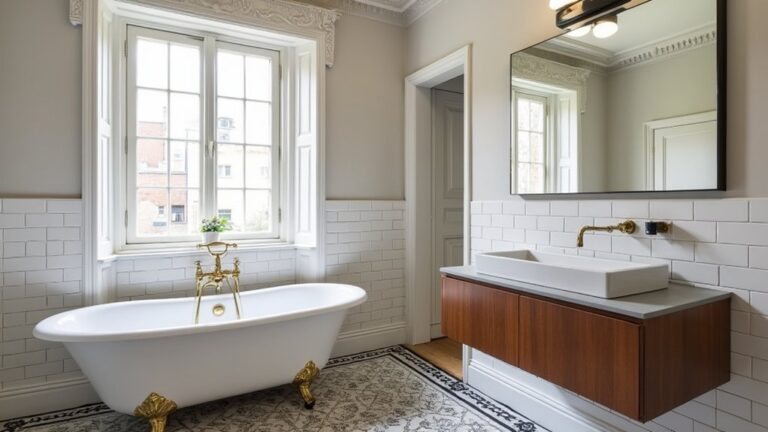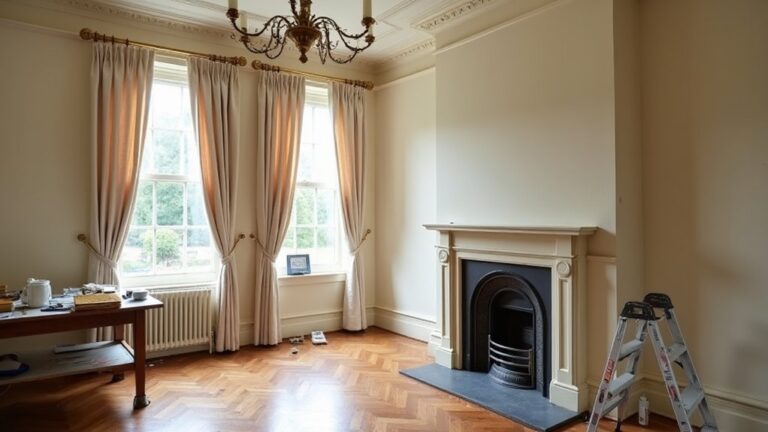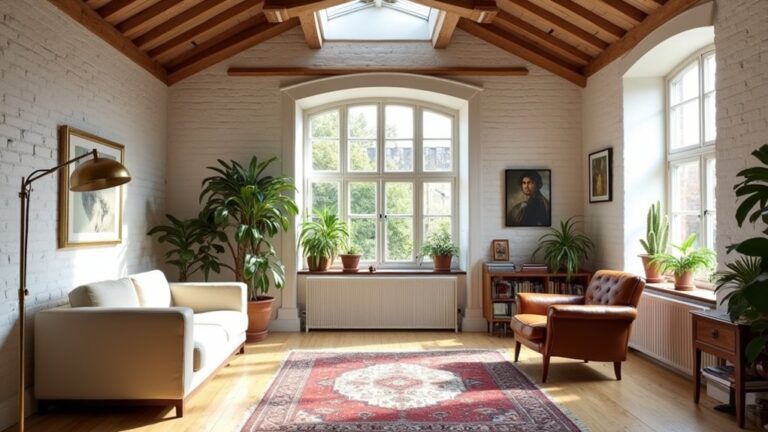
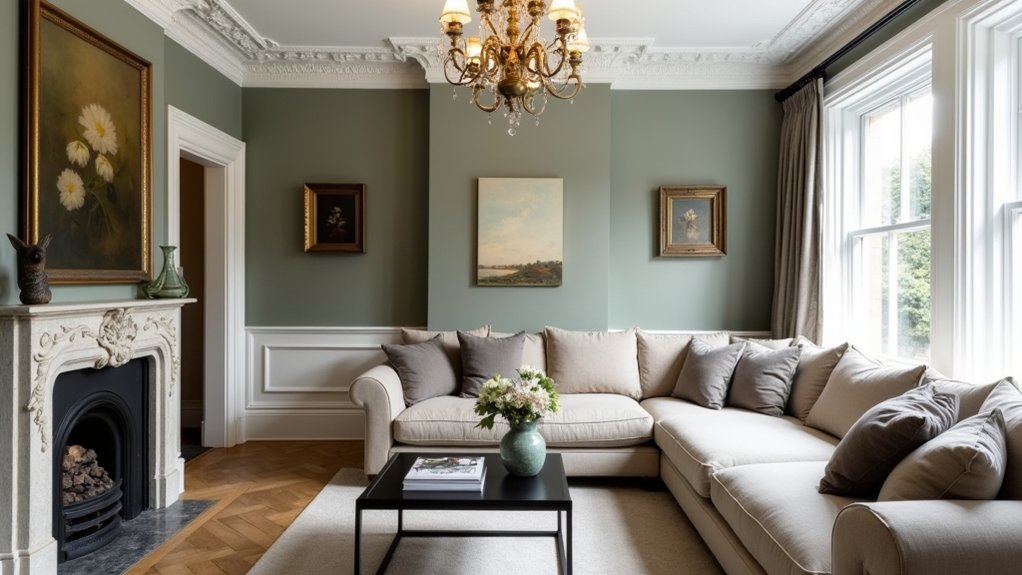
Across the UK, around 20% of homes were built before 1919, and Edwardians make up a sizeable share of what you’re likely to buy and inherit. You keep what gives the house its authority—sash windows, cornicing, panel doors—then you quietly fix the plan so rooms connect without losing formality. You choose breathable insulation, engineered oak, heritage wallpaper, and hide LEDs and slimline radiators in plain sight… but the real test comes when you start moving walls.
Key Takeaways
- Restore and protect original Edwardian features—sash windows, cornices, doors, fireplaces—repairing rather than replacing wherever possible.
- Improve flow by re-hanging doors, widening openings with matching architraves, and adding glazed internal doors or fanlights for borrowed light.
- Update lighting discreetly using reproduction pendants, aged-brass wall lights, and concealed LEDs that highlight period details without looking modern.
- Upgrade comfort with breathable insulation, vapour-open materials, and discreet heating like trench convectors, slim radiators, and underfloor bathroom warmth.
- Keep finishes authentic using warm neutrals, heritage accent colours, low-sheen wood floors, and breathable paints that respect the home’s moisture balance.
What’s Worth Keeping in an Edwardian Interior?
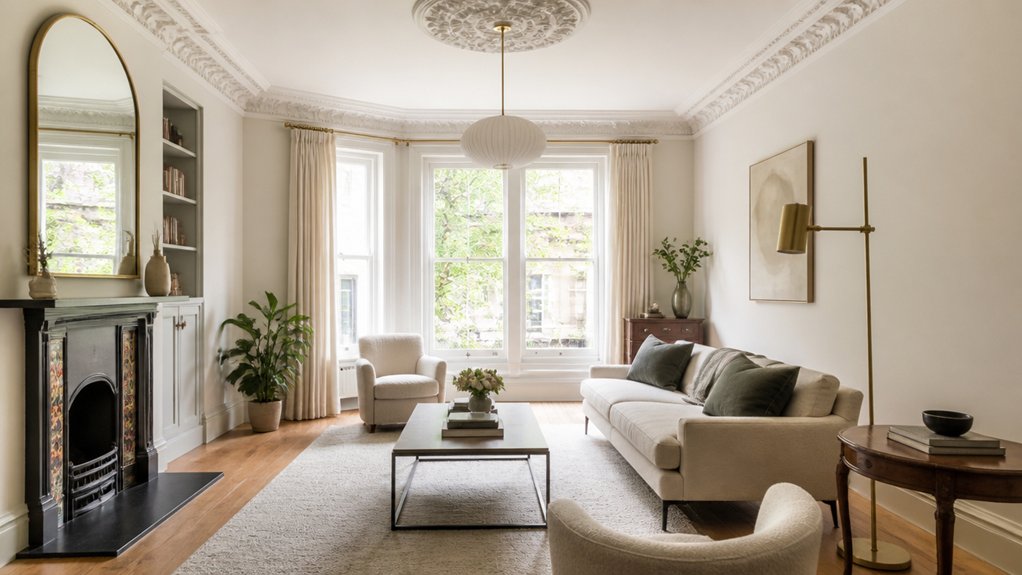
Before you start stripping things back, take stock of the original Edwardian features that still do the heavy lifting: tall sash windows, deep skirting boards, picture rails, decorative cornicing, and those generous door and window architraves. Keep them, repair rather than replace, and let modern finishes sit around them.
If your sash cords have snapped, reweight and draught-proof; you’ll keep the slim glazing bars and lose the rattles. Hang on to original four-panel or half-glazed doors, and restore brass rim locks and porcelain knobs where you can.
Fireplaces matter too: even with a blanked chimney, a tiled insert and timber surround anchors the room’s Victorian influence. In hallways, retain encaustic-style tiles and any Colonial details in balustrades.
Fix an Edwardian Layout Without Losing Flow
Although Edwardian houses often feel generous, their rooms can still read as chopped up—boxy front parlours, a narrow hall, and a kitchen pushed to the back—so fix the layout by improving sightlines and circulation rather than gutting the plan.
Start with doors: rehang to open against walls, or widen a pinch-point with a properly detailed opening so you keep a sense of rooms, not a void. Use glazed internal doors or a fanlight over a new opening to borrow light down the hall.
If the back feels dead-ended, align thresholds so you get a clear route to the garden. Tuck a utility or cloakroom under the stair to free the kitchen.
These tweaks respect Cultural significance while acknowledging Architectural evolution in how you live now.
List, Protect and Restore Edwardian Features
Once you’ve improved circulation and sightlines, you can lock in the character that makes an Edwardian interior worth keeping by listing what’s original, what’s later, and what’s been lost. Photograph cornices, picture rails, ceiling roses, tiled hearths, encaustic hall floors, and panel doors, then tag what’s salvageable.
Protect details before any work starts: box in fireplaces, tape skirtings, and cover boards with hardboard, not plastic sheets that trap moisture. Strip paint gently from joinery and keep the crisp profiles; replace missing mouldings with matched knives from a local joinery shop.
Where you’ve lost pattern, reintroduce Vintage wallpaper in the hall or front room, and anchor it with Period appropriate furnishings—mahogany, bentwood, or cane—so the house reads as Edwardian, not pastiche.
Add Modern Lighting to an Edwardian Interior
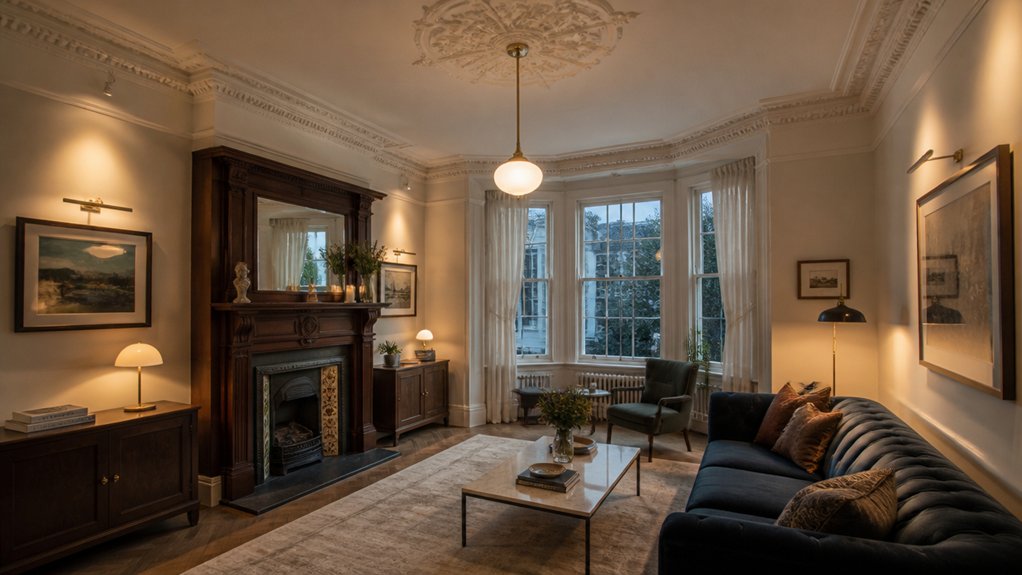
- Replace tired pendants with reproduction opal-glass shades, scaled to your room height.
- Add wall lights beside fireplaces and on stair turns, using braided flex and aged brass.
- Hide low-glare LED strips above cornices or inside bookcases for evening depth.
Ask your electrician to chase cables along existing voids, not across ornate ceilings. You’ll keep the character intact.
Edwardian Paint Colours That Feel Modern
You’ll keep an Edwardian room’s calm by choosing updated neutrals—warm off-whites, stone, and putty—that suit its tall skirtings and plasterwork without feeling museum-like.
Then you’ll sharpen the period character with heritage accents such as deep bottle green, oxblood, or inky navy on picture rails, doors, or chimney breasts. But you’ll use them with a modern twist in cleaner finishes and tighter contrasts.
To make it feel current, you’ll build contemporary complementary palettes—chalky neutrals with muted teal, soft blush with charcoal, or sage with warm brass—so the original joinery reads crisp and intentional.
Updated Edwardian Neutrals
Although Edwardian rooms often read as “all cream and mahogany” at first glance, the originals leaned on nuanced neutrals—soft stone, putty, warm grey and chalky off-white—chosen to flatter plasterwork, tiled hearths and dark joinery in the fickle light of a British day.
You can modernise without bleaching character by matching undertones to existing materials and keeping sheen low. Aim for Historical accuracy and period authenticity, but translate them through today’s breathable matt paints and cleaner pigment.
- Choose a warm grey with a slight taupe cast for north-facing bays.
- Use chalky off-white on cornices so shadows keep depth, not glare.
- Pick putty on panel doors; it softens varnished rails without fighting them.
Test swatches morning-to-dusk, then repeat in the hall for continuity.
Heritage Accents, Modern Twist
Once you’ve set your nuanced neutral base, bring in heritage accents—muted bottle green, inky blue-black, oxblood and smoked ochre—to echo Edwardian tiles, stained glass and brasswork while still reading crisp in a modern scheme.
Use them where the architecture already asks for depth: the stair newel, picture rail, skirting, and the inside face of a panelled front door. Keep finishes considered: eggshell on timber for a soft sheen, matt on plaster to calm light, and gloss only on original mouldings you want to sharpen.
If your rooms run north, choose green with a greyed undertone; in sunnier bays, let oxblood lean brown rather than cherry. That’s the heritage accents, modern twist: character without heaviness.
Contemporary Complementary Palettes
When you balance Edwardian detailing with contemporary living, complementary palettes keep the period lines intact while making the rooms feel sharper and lighter. Start by treating timber, plasterwork, and glazing bars as the heroes, then choose modern-leaning shades that still nod to early-20th-century restraint.
- Pair warm off-white walls with inky blue joinery to crisp up picture rails and doors.
- Use a muted sage or stone in halls to flatter encaustic tiles and Vintage textiles.
- Add a chalky blush or ochre accent behind shelving for Artistic muralism without shouting.
Keep ceilings clean, skirting slightly deeper, and let natural light from sash windows do the rest. Finish with satinwood on trims and dead-matt on walls for a quietly updated, London-ready feel.
Modern Materials That Still Suit Edwardian Details
If you want an Edwardian room to feel current without losing its crisp cornices and generous skirting boards, you’ll get the best results by choosing modern materials with the right weight, sheen, and texture.
Pick engineered oak in a warm fumed tone for stability, then finish with a low-sheen hardwax oil that reads like well-kept boards, not a plastic lacquer.
Use quartz or honed granite on fireplaces and hearth slips; the matt surface sits politely beside original tile and cast iron.
Swap glossy paint for durable eggshell on woodwork, and breathable clay or mineral paint on plaster so the walls keep their soft depth.
Keep furniture placement slightly off walls to protect mouldings, and choose window treatments in linen blends with discreet wave headings.
Discreet Heating, Insulation and Electrics Upgrades
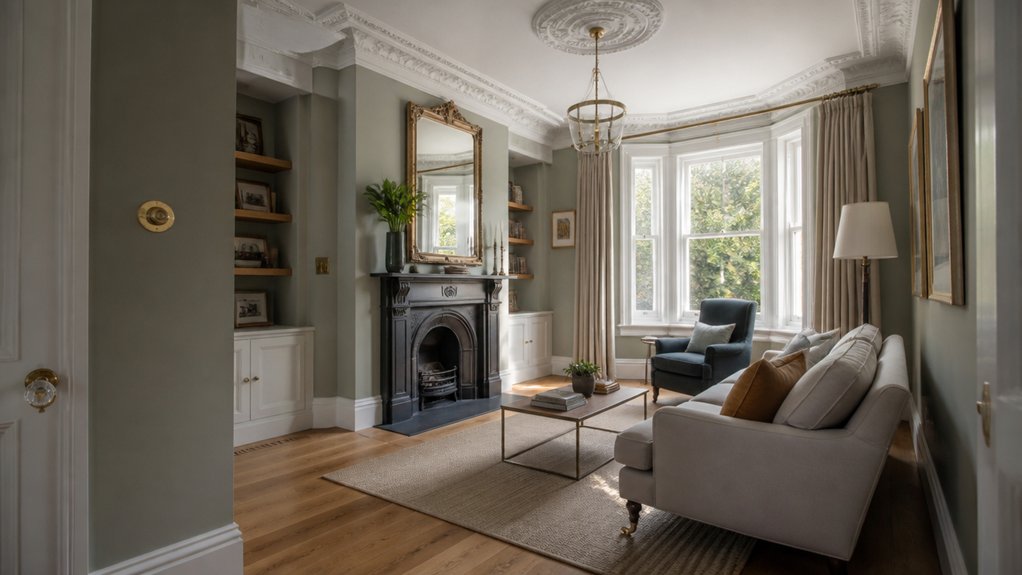
To warm an Edwardian room without cluttering chimney breasts and picture rails, you can use hidden radiator alternatives such as slimline panel rads, trench convectors under bay windows, or discreet underfloor heating in targeted zones.
You’ll also need breathable insulation—woodfibre boards, lime plaster, and sheep’s wool—to cut draughts while keeping solid walls and suspended timber floors able to dry out in the UK’s damp climate.
Finally, you can rewire with period-safe routing that protects cornices and original joinery, then finish with sympathetic switch plates and careful circuit planning that meets current regs without shouting “new build”.
Hidden Radiator Alternatives
Although cast-iron column radiators suit an Edwardian room, you don’t have to keep bulky heat sources on show to stay comfortable. Hidden radiator alternatives let you preserve picture rails, deep skirtings and tiled hearths while still getting unobtrusive heating where you need it.
You can run pipework through floor voids, keep valves tucked behind joinery, and choose finishes that disappear against heritage colours.
- Fit slimline trench convectors at bay windows to cut draughts without blocking shutters.
- Use skirting-board radiators in halls so the dado line stays crisp and walls stay clear.
- Add electric underfloor heating in bathrooms, then keep the original towel rail as a feature.
Pair everything with smart TRVs so rooms warm up gently, not wildly.
Breathable Insulation Strategies
When you insulate an Edwardian house, breathable build-ups matter because solid brick walls and suspended timber floors need to shed moisture rather than trap it behind modern foams.
You’ll get the best results by keeping vapour-open layers: woodfibre boards or cork internally, finished with lime plaster, so the wall can buffer humidity.
Under floorboards, you can fit sheep’s wool or woodfibre between joists, then staple a vapour-permeable membrane and reinstate the boards.
Keep air bricks clear and add discreet vent grilles to improve crossflow; these ventilation techniques protect joist ends and reduce mould risk.
Around bay windows and cornices, cut insulation tight and seal with lime-based fillers, not silicone.
You’ll prioritise moisture control, not just U-values.
Period-Safe Electrical Rewiring
Breathable insulation only pays off if the services you add alongside it don’t undo the moisture strategy or scar original plasterwork, so plan your electrical rewiring with the same care. You’ll route new cabling through floor voids and existing chases, then patch with lime-compatible fillers so walls keep breathing.
Keep the consumer unit tidy, labelled, and placed where it won’t dominate the hallway, while meeting current UK regs. Choose heritage-style accessories that suit period specific furnishings, but wire them to modern standards, with RCD protection and ample circuits.
- Reuse original rose positions and pull drops to keep ceiling lines clean
- Specify slim metal back boxes to minimise chasing and lath disturbance
- Match faceplates using antique restoration techniques, not fake patina
Conclusion
Modernising an Edwardian interior works best when you treat it like conservation, not replacement. You keep sash windows, cornicing, and panelled doors as your “fixed points”, then improve circulation, light, and comfort around them. You’ll also avoid trapping moisture: the UK’s older walls need to breathe. Significantly, around 80% of the homes expected to be standing in 2050 already exist, so sensitive upgrades matter. Done discreetly, you gain function without forfeiting period soul.
About the Author