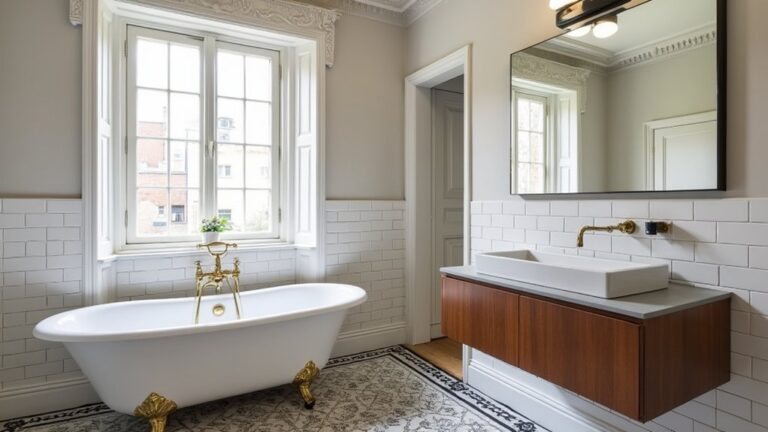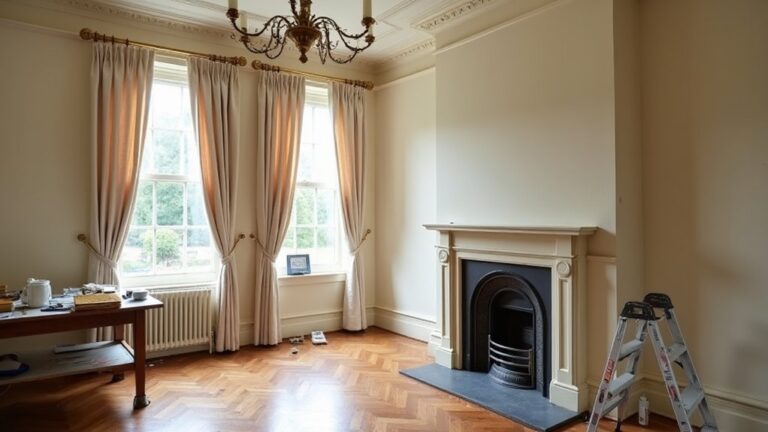

A Georgian auction lot can look like a bargain until you spot the listed status and a completion date that won’t budge. You’ve got to treat the legal pack like your only negotiation window, line up finance in advance, and price in lime plaster repairs, roof work, and breathable insulation. You’ll also need a rapid survey that flags damp sources and timber movement before you bid—because once the hammer falls…
Key Takeaways
- Register early, lodge ID, and arrange a pre-authorised card or deposit; auction timelines are strict and rarely allow flexibility.
- Review the legal pack thoroughly: title, boundaries, rights, covenants, lease terms, and any listed-building or conservation constraints.
- Understand winning means immediate exchange, pay 10% deposit on the day, insure instantly, and complete in 20–28 days.
- Commission a rapid survey for roof, damp, timber decay, and structural movement; Georgian defects can be costly and hard to remedy.
- Price realistically using local sold comparables and worst-case restoration costs, including lime plaster, sash repairs, breathable finishes, and heritage compliance.
How Georgian Property Auctions Work (Timelines & Rules)

Whether you’re bidding online or in a saleroom, Georgian property auctions run on tight, rule-driven timelines that leave little room for last-minute renegotiation—so you need your finance, survey assumptions, and renovation budget lined up before the gavel falls.
You’ll register early, lodge ID, and often pre-authorise a card or pay a bidder deposit under Auction house procedures. Before bidding, you review the legal pack: title, special conditions, lease terms, and any conservation constraints tied to Historical architecture.
On the day, the guide price signals interest, not value; the reserve stays confidential.
Win, and you exchange immediately, pay the deposit (typically 10%), and insure at once.
Completion usually follows in 20–28 days, with penalties for delays.
Is a Georgian Auction Purchase Right for You? (Deal-Breakers)
Because auction contracts lock you in on the fall of the hammer, a Georgian lot only makes sense if you can stomach hard deadlines and hard facts—no “subject to survey,” no price chips for hidden damp, and no slow mortgage chain catching up later.
If you can’t fund a 10% deposit instantly and complete fast, walk away. If you’re relying on a valuation that won’t tolerate non-standard construction, short leases, or unresolved title quirks, don’t bid.
Georgian fabric hides costly surprises: failed lime plaster, beetle in joists, undersized electrics, and roof spread that demands structural input.
If Historical preservation constraints or listed-building consents will frustrate your programme, you’ll burn time and cash.
You’ll also need contingency for interior restoration: joinery repairs, sash overhaul, and breathability-first finishes.
Find a Period Georgian Property Worth Bidding On
Hard auction terms mean you can’t “fix it later” with renegotiation, so you need to shortlist Georgian lots that stack up before you even think about bidding. Start with location and resale: strong school catchments, walkable centres, and proven demand for period homes protect your exit.
Next, read the fabric like a builder: check roof lines for sag, party walls for stepped cracking, and damp signatures around chimneys and below window sills. Prioritise original Historical architecture you can restore—sash windows, cornices, staircases—because reinstatement costs bite.
Price in preservation challenges: lime plaster repairs, breathable insulation, and careful joinery. Compare guide price to recent local sales, then model a worst-case budget with a contingency and realistic timeline.
Legal Pack Checks for Georgian Property Auctions (Title, Leases, Listed)
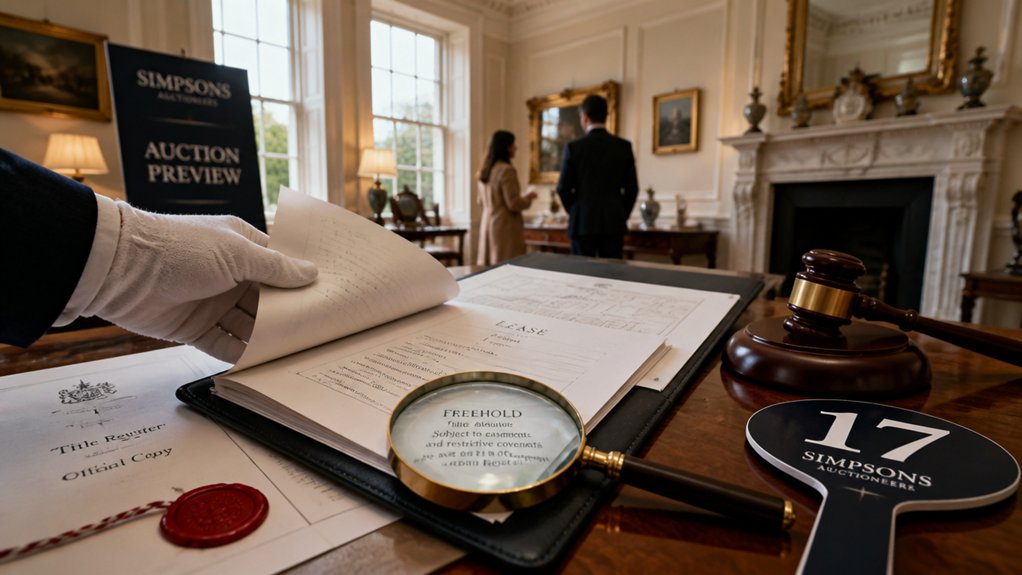
Before you let the guide price tempt you into a bid, interrogate the legal pack like it’s part of the build survey: title documents and plan boundaries, lease terms (if it’s not freehold), and any listed/building conservation constraints that will dictate what you can actually change.
Check the title for rights of way, shared drains, access over courtyards, and any restrictive covenants that block sash replacements, extensions, or subdivision.
Compare the plan to the auction particulars; Georgian plots often hide strip ownership and flying freeholds.
If leasehold, scrutinise length, ground rent escalators, service charge history, and alteration clauses—some require landlord consent and fees.
For listed status, read local authority correspondence, Heritage conservation conditions, and prior consents so you price in renovation restrictions and compliance time.
Fast Surveys for Georgian Homes: Roof, Damp, Timber, Structure
While the auction clock runs down, you still need a rapid, risk-weighted read on the usual Georgian deal-breakers—roof condition, damp pathways, timber decay, and structural movement—so book a fast walk-through with a period-savvy surveyor and go in with a checklist, torch, moisture meter, and binoculars.
Focus on defects that derail lender appetite and inflate conservation-led specs, without compromising Historical accuracy or interior restoration.
- Roof: scan slate/nail fatigue, lead flashings, parapet gutters, and chimney haunching; check loft airflow and daylight ingress.
- Damp: trace bridged DPCs, cement pointing, high ground levels, and failed gutters; map salts vs condensation.
- Timber: probe joist ends, window sills, and skirtings for beetle, wet rot, and springy floors.
- Structure: note stepped cracking, bay deflection, and party-wall spread; watch for past pinning repairs.
Set Your Budget, Bid Smart, and Hit Completion Deadlines
You’ve got to set a total budget that goes beyond the hammer price, factoring in buyer’s premium, SDLT, legal fees, bridging costs, and a realistic Georgian renovation contingency for damp, timber, and services.
Bid with your completion timeline in mind, because auction contracts lock you into tight dates and any slip can wipe out your margin fast.
Line up your deposit funds, solicitor, and financing before you raise your hand, so you can exchange immediately and complete on schedule.
Define A Total Budget
Because auction timelines move fast and period Georgian refurb costs can spike without warning, you need a total budget that covers more than just your maximum bid. Price from the inside out: your bid is only one line in a renovation-led cash plan that respects Historical architecture and navigates Preservation regulations.
- Acquisition costs: buyer’s premium, SDLT, legal searches, surveyor, and insurance from exchange.
- Immediate works: roof, damp, structural stitching, chimneys, and temporary weatherproofing.
- Heritage compliance: listed-building specialist reports, lime plaster repairs, sash restoration, and approved materials.
- Contingency and finance: 15–25% contingency, higher-rate bridging interest, valuation shortfalls, and exit fees.
Run comps for “done” values, then back-calc your ceiling price.
Manage Deadlines And Deposits
Once the gavel falls, the auction clock dictates everything: you’ll usually pay a 10% deposit immediately, sign the contract on the day, and then race to complete within 20–28 days (or whatever the legal pack states). Have cleared funds ready and confirm your Auction registration details early, or you’ll risk a failed purchase and penalties.
Build your Bid strategy around the deadline: line up a solicitor, survey access, and finance in principle before bidding.
If you’re renovating, cost in urgent Georgian essentials—roofing, damp remediation, lime plaster repairs, and temporary heating—so you don’t overbid and then scramble.
Schedule insurance from exchange, book trades for week one, and keep a contingency for retention issues, missing consents, or short lease surprises. Hit completion cleanly.
Conclusion
When you bid on a period Georgian home at auction, you’re stepping into a swift, no-nonsense process: exchange is instant, the deposit’s due, and completion won’t wait. You’ll do the quiet heavy lifting upfront—scrutinise the legal pack, flag listed constraints, and commission rapid roof, damp, timber, and structural checks. Price in “gentle upgrades” like lime plaster, breathable insulation, and sash repairs. Bid with clear numbers, locked finance, and a tight timeline.
About the Author