You start by treating your Edwardian staircase like joinery, not just a route upstairs: you check for movement in the newel, soft spots in treads, squeaks at wedges, and any lead paint on the strings. You clean gently, strip with care and proper containment, then repair with matching timber and tight fixings before you choose shellac, stain, or a restrained varnish. Only then do you add discreet LEDs or a wool runner—because the first decision changes everything…
Key Takeaways
- Inspect every tread, stringer, and newel for movement, rot, damp, and loose joints; mark faults and photograph moulding profiles for matching repairs.
- Test paint in hidden spots for lead, distemper, or oil; choose safe removal methods, avoid flames, and contain dust with HEPA extraction.
- Eliminate squeaks and looseness by re-wedging housings, shimming gaps, and re-fixing from beneath with screws or nails; avoid foam fillers.
- Replace damaged timber with matching species and profiles, then finish with spirit stain and thin shellac coats; use satin oil varnish on treads.
- Add modern accents discreetly: LED tread lights, brass stair rods with wool runner, low-sheen balustrade lacquer, and compliant handrail or child gate.
Inspect Your Edwardian Staircase (Movement, Rot, Lead)
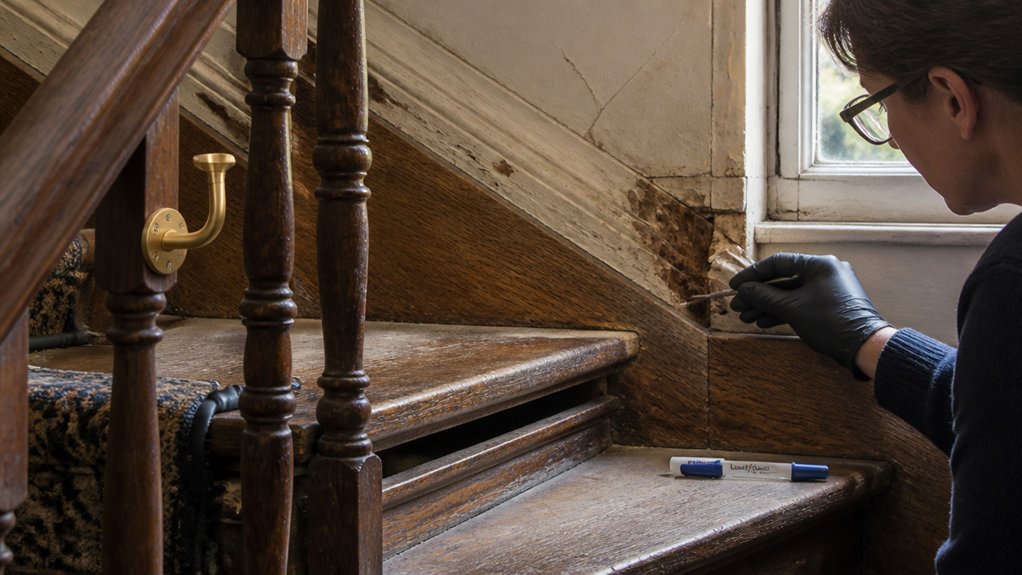
Before you so much as lift a scraper, give your Edwardian staircase a proper inspection: walk each tread to feel for movement, probe suspect timbers for rot, and check the paintwork for lead. Listen for squeaks at the nosings and note any spring in the stringers; loose wedges and tired glue blocks often show themselves underfoot.
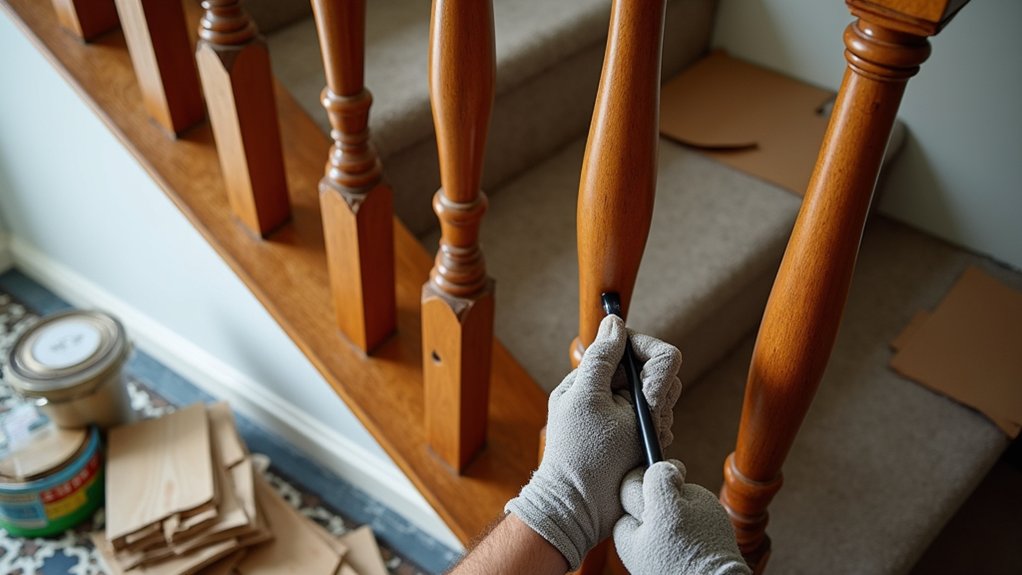
Take a torch to the underside and newel base, where damp from an outside wall can darken oak and soften pine. Examine handrail joints and spindles for wobble, and record Balustrade styles so later repairs match the turning and spacing.
Study the skirting, risers, and brackets for Decorative motifs—reeded mouldings, paterae, or simple chamfers—then photograph profiles for accurate replication. Mark faults in chalk and plan repairs.
Test and Strip Paint Safely (Tools and Containment)
Once you’ve marked the weak spots, start with a small paint test in an inconspicuous corner—under the handrail return or on the inner string—so you know what you’re dealing with and can choose the safest method. If it softens with warm water and a drop of washing-up liquid, you’re likely facing distemper; if it clogs paper, it may be old oil or varnish.
Choose Paint removal techniques suited to the mouldings: a shavehook for flat treads, a tungsten scraper for strings, and a gel stripper for turned balusters; avoid open-flame blowlamps. Keep a HEPA vac to hand and mist dust before you work.
Set containment strategies: 500-gauge polythene sheeting, taped seams, Zipwall-style door, and labelled waste bags for chips.
Repair Your Edwardian Staircase for Safety and Silence
With the paint safely off and the dust contained, turn your attention to the parts that make an Edwardian stair feel sound underfoot: tight joints, firm fixings, and a handrail you can trust.
Start below: check each tread and riser for movement, then re-wedge loose housings with softwood slips and hide glue for historical accuracy.
Pull squeaks by re-fixing from beneath where possible, using cut nails or slotted screws that suit the age, not bright Pozi heads.
Pack gaps with timber shims, not foam, and clamp until set.
Tighten newel posts with discreet coach screws and washers buried in existing pockets.
For material sourcing, match species—often pine or deal—and keep profiles true when replacing nosings or spindles.
Test every run.
Choose a Period-Right Finish (Stain, Shellac, Varnish)
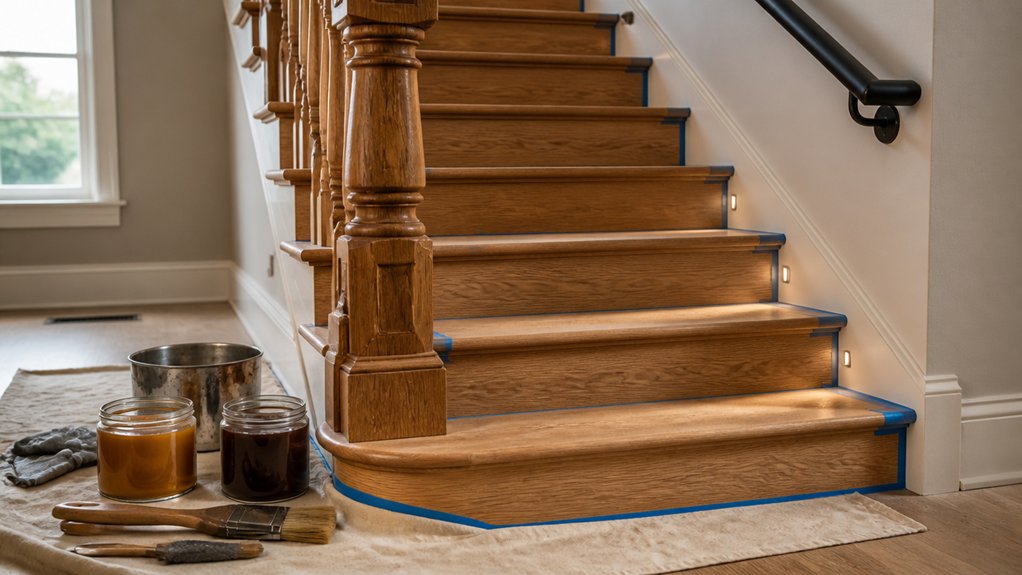
How do you make an Edwardian stair look properly of its time rather than merely “done”? You start with Historical accuracy and careful Material selection.
Identify the timber—often oak for treads and handrail, pitch pine for strings and newels—and match the finish to what those woods historically received.
If you want warmth without obscuring grain, use a spirit stain, testing on an offcut to judge depth under lamplight.
For a true period sheen, brush on blonde or button shellac in thin coats, cutting back lightly between layers; it dries fast and flatters crisp mouldings.
Reserve varnish for hard-wearing treads: choose a traditional oil varnish, not a plastic-looking film, and keep it satin.
Work with the grain, minding nosings and returns.
Add Modern Touches That Suit Edwardian Stairs
Although you’re adding modern conveniences, you’ll keep an Edwardian stair looking “right” by choosing interventions that read as discreet upgrades rather than stylistic takeovers. Tuck LED tread lights into the riser return, warm-white only, and hide drivers in the understairs cupboard.
Swap a loose runner for a properly whipped wool stair carpet on slim brass rods; it nods to Victorian details without shouting.
If you need a handrail, pick a simple oak profile and mount it on painted brackets that match the string, not chrome. For safety, add a clear, low-sheen balustrade lacquer and fit a child gate in stained timber rather than plastic.
Where you replace spindles, echo Colonial influences with lightly turned sections, keeping spacing and heights to current regs.
Conclusion
You’ve inspected every tread for movement and rot, stripped back paint with care, and made repairs that quieten each creak without erasing its age. You’ve chosen a finish that suits the house—stain, shellac, or a sober varnish—then slipped in modern comforts: discreet LEDs, a wool runner on brass rods, a steadier handrail. Can you picture the hall at dusk, the steps glowing softly, polished timber catching the light?
About the Author