
- Key Takeaways
- Understanding Mid Century Modern
- Where to Find Affordable Mid Century Modern Furniture
- Spotting Authentic Pieces
- The Art of the Deal
- The Restoration Dilemma
- Beyond the Label
- Conclusion
Key Takeaways
- Affordable mid century modern furniture is a lot easier to find when you know what you’re looking for. Clean lines, functional design, tapered legs, walnut, and teak help you spot a good piece in a flash no matter where you are. Master these visual and construction clues, and you’re less likely to get ripped off by low-end reproductions.
- A multi-channel search strategy including online marketplaces, local thrift stores, estate sales, auction houses, and social media groups will maximize your chances of stumbling on something budget-friendly. Shop around and check prices, shipping costs, and selection across platforms before you buy.
- Inspecting craftsmanship and material quality is key to receiving real quality, particularly with vintage pieces that might require a bit of TLC. Examine joinery, wood condition, finishes, and upholstery so you can determine whether a piece is worth the asking price or any restoration needed.
- Good negotiation habits, like checking what others have sold for, beginning with realistic offers, and not being afraid to leave, keep your buys reasonably priced. When you time your buys around off-seasons, clearance, and local moving seasons, you open up even more savings.
- With judicious restoration decisions, you can safeguard both your wallet and a piece’s long term value by differentiating between pieces that need to be refinished and those best cared for with delicate preservation. Save the pro restoration for treasure or high dollar finds, and go DIY for the run of the mill or low cost score.
- A laissez-faire attitude that blends true vintage with quality reproductions and generic pieces lets you create a unified mid century modern aesthetic without depending exclusively on iconic brands. Concentrating on common design language, such as proportions and materials, ensures your space feels purposeful, timeless, and affordable.
Where to locate cheap mid century modern furniture comes down to combining savvy online research with diligent quality and construction inspections. A lot of them begin with eBay, thrift stores or estate sales, then price compare with flat-pack brands and outlet stores that steal classic designs.
To help you sort the good deals from the weak builds, the main body explains key sources, price ranges, and simple checks on materials and joinery.
Understanding Mid Century Modern
Mid century modern is a design movement that developed between the mid-1930s and late 1960s, chronologically straddling early Modernism and Post-Modernism. It’s centered around clean, simple lines that eschew ornamentation, taking new materials in practical directions. The movement strives for furniture that appears light but functions well in everyday life.
That’s why so many of us continue to select it for tiny city apartments and communal households, where it combines peaceful geometry with cozy hues and strong ergonomics without being stuffy or old-fashioned.
Core Principles
At a fundamental level, mid century modern emphasizes simplicity, function, and purpose. Every part of a piece is meant to do something clear: a chair frame supports, a shelf stores, and a table surface stays open and easy to clean. The shapes are usually sleek and straightforward, so you encounter extended planes, slender silhouettes, and smooth connections instead of engraved flourishes or period decorations.
Clean silhouettes characterize the style. Skinny legs are straight or slightly tapered, thin tabletops and armrests track the line of your body. Joinery is economical and most often concealed, so screws, bolts, and brackets are kept out of sight or flush with the surface.
The goal is a visual flow, with your eye journeying along edges without running into knobs, scrolls, or deep moldings. Open space is handled like a design element. The piece all sits on raised legs, so you can see the floor underneath and that makes rooms, especially small rooms, feel larger and less cluttered.
Decorative elements stay minimal: one ceramic vase on a credenza or a single graphic print above a sofa, rather than dense displays. This renders mid century modern handy if you’re attempting to maintain a rental or first home that is easy to clean and uncluttered.
Comfort and practicality still count. Seat angles contour the body, backs cradle the lumbar region and sofas are designed for everyday lounging, not just show. A low, broad coffee table provides space for laptops, books and communal snacking, while storage tends to blend open shelving with closed cupboards so you can stow mess in a flash.
Key Materials
Wood is at the heart of mid century modern. Most originals employ veneer rather than solid timber. Sheets of walnut, oak, or rosewood are pressed onto sturdy cores, which keeps weight and cost down while still displaying a luscious grain.
Here’s the deal with mid century modern: when you admire that seamless wood grain running across a few doors on a slim sideboard, that surface is almost always veneer, not one gigantic slab. The designers experimented with newer materials of the era like fiberglass, molded plastic, and light metals.
Fiberglass shells enabled thin, curved chairs that mimic forms in the body, while steel or aluminum bases kept the structures robust yet svelte. It’s this combination of natural wood and industrial materials that causes the style to feel modern yet still warm.
Good craftsmanship pulls it all together. Good pieces have rounded edges, consistent finishes and hardware that glides effortlessly years after buying. Finishes are typically hard-wearing lacquers or oils that preserve the surface but allow the grain to come through, rather than thick, shiny layers that conceal it.
Textiles lend the cozy and the detail. Lots of mid century chairs and sofas feature smooth brown leather or hardwearing woven fabric upholstery. Colors lean to warm beige, cognac brown, rustic orange and mustard yellow, which sit well with wood tones and keep a room from feeling cold even when the forms are very minimal.
Iconic Silhouettes
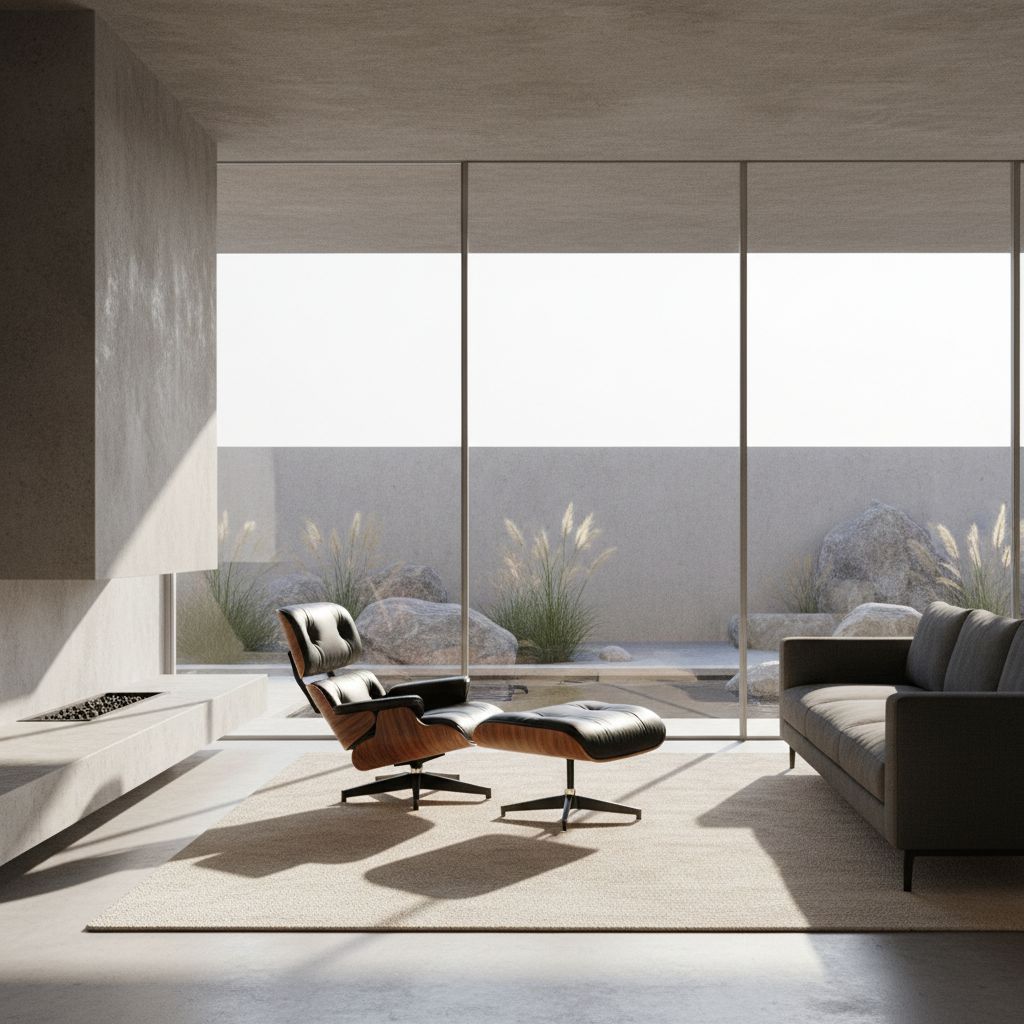
Some silhouettes just make mid century modern easy to recognize. Think about the Eames lounge chair with its bent plywood shell, matching ottoman and leather cushions. It combines soft curves with sharp edges. Tapered legs under sideboards, dining tables and nightstands lift furniture off the floor, revealing more wall and providing a weightless appearance.
Low, linear modular sofas can be broken into sections to fit small or shared spaces. Low‑profile frames are featured in coffee tables, media units, and beds. Many pieces use organic curves in arms and seats, then combine them with clear geometric bases or tops.
Round tabletops sit on straight legs and rectangular credenzas have softly rounded corners. This use of geometry combined with softer organic curves was novel compared to many pre-1930 designs, which leaned on either rigid symmetry or heavy ornament.
Minimalist staples, such as long credenzas, slim coffee tables, and petit accent chairs, work well in modern living rooms where every square inch of floor space counts. A plain oak TV unit with sliding doors, for instance, conceals wires yet still reads as a hush hush shape on the wall.
For early-career renters or students, one or two of these pieces can furnish an entire room without a lot of additional décor.
|
Piece / Type |
Designer(s) |
Key Features |
|---|---|---|
|
Eames Lounge Chair |
Charles & Ray Eames |
Bent plywood shell, leather, low profile |
|
Womb Chair |
Eero Saarinen |
Fiberglass shell, deep seat, organic curves |
|
Noguchi Coffee Table |
Isamu Noguchi |
Sculpted wood base, glass top, soft geometry |
|
Danish Credenza (generic) |
Various Danish designers |
Veneer case, tapered legs, sliding doors |
Where to Find Affordable Mid Century Modern Furniture
Affordable MCM pieces surface in all sorts of channels, and the best deals come from approaching furniture hunting like a research project instead of an impulse buy.
- Online marketplaces and resale sites
- Local thrift stores and second‑hand shops
- Vintage and antique stores
- Estate sales and house clear‑outs
- Auction houses, both local and online
- Social media groups and community forums
- Direct-from-maker studios and local artisans
- Smaller furniture retailers and city boutiques
- Large retailers’ sales, outlet, and clearance sections
Always check the price on at least two or three of these places before you buy. The same style and sometimes even the same piece shows up on multiple sites with different markups, shipping costs, and fees. Compare vintage and repro of the same piece. An original teak sideboard and a new oak “MCM‑inspired” one can be compared, then decide based on price, condition, and long‑term usage.
Some of the smallest locally owned shops, small city boutiques, and newer online stores roll new stock in quietly. A quick once‑a‑week scan will surface underpriced items that never made it to the big platforms.
1. Online Marketplaces
Online marketplaces like eBay, Etsy, Chairish, and specialist MCM sites offer access to thousands of listings all at once, from rare originals to mass-produced reproductions and budget flat-pack pieces. Most allow filtering by price range, location radius, era, material, and even leg style, helping you cut through noise and home in on pieces that fit your budget and room size, whether it is a 120 cm desk or a compact 60 cm bedside table.
Use seller ratings, detailed reviews, and buyer protection policies as hard filters, not afterthoughts, as they can be your only protection when you can’t inspect joinery, veneer, or upholstery in person. Many specialist modern and MCM sites operate rotating sales and clearance events, where discontinued finishes or floor models dip well below list price.
Before you pay, compare shipping methods, packing fees, and white-glove delivery options between platforms because shipping for a heavy credenza can invalidate a “good price” quickly if you don’t include it in your total cost.
2. Local Thrifts
Local thrift stores, consignment shops and generic second-hand chains may be the lowest-cost source of all, where solid-wood MCM pieces can be had for a fraction of the price of new reproductions. Stock moves quickly, so quick weekly visits are better than rare, long expeditions.
Inspect frames, drawer slides, veneer edges and leg joints for cracks or major warping, and assume you’ll want light sanding, new hardware or re-upholstery. Develop a basic checklist: tapered legs, clean lines, low profile, minimal ornament, wood like teak or walnut, so you can sweep a crowded room and identify probable MCM pieces in moments.
Go along often, be nice to staff and they may tip you off to MCM donations in advance or look out for particular pieces, such as a super slim 90 cm media unit.

3. Estate Sales
Estate sales in older or well-established neighborhoods tend to feature original MCM sets that remained in the same home for decades, which translates to better structural condition than those that passed through a whotheland of owners. Scan your local listing sites and community boards, then flag sales that display MCM silhouettes in preview photos.
Show up close to opening for the deepest selection, particularly if you’re searching for signature pieces like sideboards or club chairs. If you’re price-sensitive, coming late in the event can work, as organizers occasionally put unsold items on sale to make room.
Bring a short inspection routine: look at maker labels, underside stamps, substrate under veneer, and any deep water damage. Cash, card readers, and mobile payments are all common these days, but it’s always good to check accepted methods first so you can speed things along when you stumble onto a good piece.
4. Auction Houses
Local rooms and online auction houses pack vintage and modern furniture into organized sales, which can be handy if you desire cleaner catalog information and rough market prices. Many have their own “modern design” or “20th-century” sessions that cluster MCM pieces together, facilitating side-by-side comparisons of designs and condition on a single catalog.
Know the catalog notes, condition reports, and estimate ranges before you bid, and search past sale archives to see how similar items were doing. Determine your maximum bid by including buyer’s premium, tax, and transport costs, as these can push the final price significantly beyond the hammer figure.
Being loyal to a pre-set ceiling is the only surefire way to ensure you don’t pay more than a similar piece at a shop or on a marketplace.
5. Social Media Groups
Social platforms have emerged as huge unofficial markets for MCM furniture, via Facebook Marketplace, city-specific buy/sell groups, and Instagram sellers who post limited runs or one-off discoveries. There are lots of communities on forums and chat groups, where private sales and small auctions zip by quickly and frequently stay below mass market rates.
Watch posts regularly if you’re in a dense city, as decent stuff can go within minutes, particularly when sellers dump at low prices just to clear their storage units. Engagement matters: ask questions about authenticity, repairs, and finish history, and learn from members who share before and after restoration work.
Direct messages assist you in bargaining, verifying dimensions, and coordinating local pickup, which saves on shipping costs and damage risk. In certain cities, smaller MCM-focused boutiques and local makers leverage social media to promote studio sales, prototypes, or discounted samples, which is one of the more direct routes to reasonably priced pieces made by living craftsmen.
Spotting Authentic Pieces
Real mid-century modern pieces occupy a detective’s sweet spot between design legend and living room. To shop smart on a budget, it behooves you to distinguish vintage originals from contemporary reproductions and to recognize when a fresh, quality repro is your best bet. That means reading the construction, marks and materials like data, not guesses.
Construction Clues
Begin with the frame. What mid-century makers did was use solid wood where it counted (legs, rails, structural parts) and veneer on visible planes to conserve weight and cost. Veneer is par for the course on mid-century modern, but solid wood cases are few and far between, so a thin, uniform layer of veneer over plywood can be period-correct construction, not cheapness.
Check for dovetail joints in drawers and mortise-and-tenon or dowel joints in chairs and tables. These are tight-feeling, with no wobble, no big glue blobs or messy gaps.
Check how the piece hits the floor. Real mid-century modern pieces were not simply slab bases either. They employed open bases, tapered legs, or sled bases that floated the case form. Silhouettes are taut or softly natural, with curves on chair backs, arms, or rims that were uncommon prior to the 1930s and 1940s. If a ‘mid-century’ sideboard has a chunky closed base or heavy crown molding, then it’s later or full-on contemporary.
Walk around the piece and read the surface. Veneer grain should flow in an obvious, deliberate direction and is frequently bookmatched on doors or tabletops. Finishes are usually very uniform with a satin sheen, not high gloss.
Stapled bindings, crude metal brackets, and thick MDF and particleboard everywhere are the hallmarks of cheap knockoffs and they don’t wear well. Original hardware and leg designs such as minimalistic pulls, recessed finger grooves, or slender metal stretches tend to seem deliberate and built-in, not ornamental afterthoughts.
Maker’s Marks
Traditionally, authentic pieces have stamps, foil labels, or burned-in marks under table tops, inside drawers, or on the back of cases. These can display the producer, collection label, or occasionally a designer signature.
|
Region |
Brand / Designer |
Typical Marking Style |
|---|---|---|
|
US |
Herman Miller (Eames, etc.) |
Foil labels, stamped logos, model codes |
|
US |
Knoll |
Printed labels, metal tags, embossed logos |
|
US |
Heywood-Wakefield |
Branded stamp with script logo |
|
Europe |
Fritz Hansen (Denmark) |
Sticker labels, engraved metal tags |
|
Europe |
Artek (Finland) |
Printed labels under seats and tops |
|
Europe |
Roche Bobois (France) |
Later foil labels, brand plaques |
Cross-check any marking against online archives or catalog scans, and be suspicious if typography, logo shape, or country of origin text appears unusual. Photograph every stamp, label, and underside. This comes in handy when you resell, when you talk to appraisers, or when you compare notes with online forums that monitor counterfeits.
Material Integrity
Genuine mid-century mod pieces — designed for life — were crafted with teak, walnut, oak, and beech, often combining glass with chrome or wood on tables and storage. Look for minor dings, mild sun fade, or fine checking in the finish. Age signs like these can back up authenticity.
Heavy orange varnish, thick new lacquer, or plastic-like coatings can conceal newer repairs or refinishes. Try twisting frames, sitting in chairs, loading shelves with some weight – test the structure. A little play can be tightened, but heavy racking, cracked joints, or replaced legs can jeopardize worth and stability.
Spotting the real deal for upholstery involves seeking out foam that hasn’t completely crumbled, springs that don’t sag, and period style fabric. Wild synthetic prints or ultra-modern textures generally indicate a full re-cover, which is fine if disclosed and priced right.
Whenever possible, favor pieces with sound frames, stable joinery, and surfaces that require only light cleaning or oiling. Heavy restoration can wipe out character and cost more than the furniture itself.
The Art of the Deal
Scoring a true deal on mid-century modern furniture is not about magic, it’s about technique. The style falls somewhere between early Modernism and Post-Modernism and its long spell of popularity keeps prices somewhat erratic. The more you’re familiar with materials, makers, and market conventions, the more leverage you have at the bargaining table.
Negotiation Tactics
Serious negotiating begins with research-driven figures. Check out recent sales of similar pieces by designer, size, and material—veneer or solid. Veneer over particleboard or plywood is mid-century modern’s standard. Full solid teak or walnut is a rarity and costs a premium. If you’re dealing with classic names like Eames, Børge Mogensen-style cabinets, or Charlotte Perriand-inspired pieces, price up at least three and find a realistic range instead of one jacked-up listing.
Start with a fair offer that speaks to real condition, not just fashion. Look for loose joints, wobbly legs and failing drawer runners. These impact use and repair cost, so they impact value. Address each concern in a matter-of-fact manner and connect it to a specific price adjustment. For example, “The veneer chip here will require a patch and refinish, so my bid is 20 percent under your ask.” Sellers will take a lot more risk of moving if they see you’re not guessing.
Polite but firm tone trumps friendly small talk. Set your budget maximum and stick to it whether you like the soft, organic curves or slim silhouette of the piece. If the price remains above your range, prepare to leave and tell them so in a blunt, unapologetic fashion. Cash or immediate transfer can assist. You can offer, “If you can get it to X, I can pay today and collect this week.
If you’re purchasing multiple items, request a bulk price up front, then bargain the lot as vendors tend to like one easy deal better than a bunch of small ones.
Timing Your Purchase
Season and timing can adjust the price by quite a bit. A lot of sellers discount close to the end of the month when rent or storage fees are due or during slow periods outside of the big holidays. By observing estate sale and auction calendars, you learn how to identify local supply peaks, particularly during moving season when more sideboards, dining tables, and small armchairs go on the market.
Holiday and clearance sales at the bigger stores that sell mid-century–style (not the real deal vintage) can be a great value if you just want the style without dropping the cash on now-endangered rosewood, which is no longer imported into the US.
Assessing Condition
Condition is the point where you go from ‘this appears to be nice’ to ‘this is worth X.’ Start with structure: sit on chairs, lean on tables, open and close cabinet doors. Any sway or creak or misalignment means more work to come. Then learn edges. Veneer in teak, oak, or walnut is typical, so inspect edges and corners for lifting, chips, or water rings that could require sanding and a fresh finish.
Solid wood pieces, when you find them, generally can take deeper refinishing, but may show movement cracks. Record what you discover — even in quick notes or phone photos — before you negotiate prices. Water damage, prior repairs, swapped-out hardware or missing shelves.
Then estimate real follow-up costs: how much for a basic oil and wax refresh, how much for full re-veneer, and how much for professional upholstery if the seat foam has collapsed. A simple checklist helps: structure (stable or not), veneer (intact, chipped, or loose), hardware (original or later swap), finish (light wear or full refinish needed), and function (drawers glide, doors close flush).
Employ this list at every store, from farmers’ markets to Craigslist, so you develop a habit and an internal valuation that keeps your bids reasonable and well-anchored.
The Restoration Dilemma
The restoration dilemma is the difficult decision to bring a vintage mid-century modern piece back to ‘like new’ or preserve every scar and sun fade it accumulated from decades of use. The correct decision hinges on age, rarity, materials, intended use and whether or not resale value is important to you.
When to Refinish
Refinishing is logical when your surface is in rough condition, not just aged. Deep water rings on a teak coffee table, smoke stains on a walnut sideboard, or a sticky, yellowed lacquer on a once-clear oak desk show the signs. If it has chips through veneer to the substrate or flaking finish that catches on clothing, you have damage, not character.
For rare or high-value pieces, say rosewood cabinets by famous designers or early streamlined lounge chairs with transparent provenance, a professional restorer is generally safer. They understand how to sand through thin veneer layers, which are common on mid-century modern furniture, without sanding right through to the core. This is even more important when the wood species is now restricted. Certain rosewood is endangered and cannot be newly imported into the US. Preserving what is in hand has legitimacy with future purchasers.
For more pedestrian pieces, such as unnamed beech dining chairs or mass-produced chrome and glass side tables, DIY refinishing can maintain low costs. You could knock off a seriously yellowed 90s lacquer from an original walnut veneer or shine up some pitted chrome on a cantilever chair frame. Aim to match period-appropriate looks: warm, clear oil on teak, low-sheen lacquer on walnut, or simple, bright chrome on metal legs. A combination of chairs, tables, and credenzas all still looks like one mid-century modern collection in your space.
When to Preserve
Preservation is often wiser for furniture that is rare, signed or outright investment-grade, like oak or pine slabs from beloved artisans that already maintain their value on the secondary market. Here, that finish, even dulled, represents value and tells a story about use and age.
Concentrate on gentle cleaning and stabilization rather than stripping. You could apply a gentle wood cleaner to extract grime, add a thin layer of appropriate wax or oil, and reinforce loose joints at the basement level without disturbing the aesthetic seams. On chrome or glass accents, a non-abrasive metal polish and glass cleaner preserve the original blend of materials that characterizes so many mid-century modern pieces.
Use gentle tools: soft cloths, fine steel wool only when needed, neutral pH cleaners, and upholstery products made for natural fibers and foam. Most silhouettes from this era feature slender arms, tapering legs, and cushy organic curves that were uncommon pre-1930s and 40s. Aggressive sanding or big, chunky repairs can warp the shape quickly.
If you give a damn about future appraisal, photograph and jot a few notes before and after any work. Buyers and valuers want to know that you cleaned and stabilized rather than over restored, and that the original patina and color shifts remain.
DIY vs. Professional
The decision of DIY or professional work begins with risk. Inquire about the consequences if you err. A veneered nightstand with a chipped corner, courtesy of the Restoration Dilemma, is a reasonable test piece to learn how to patch, stain, and blend. A marked rosewood sideboard with chrome pulls and sliding glass doors is certainly not.
DIY is well suited to simple tasks such as tightening screws, gluing a loose chair rung, cleaning fabric with a safe cleaner, or adding a light coat of oil to dry teak. They maintain utility and don’t alter the fundamental appearance, so you preserve both everyday wearability and fundamental resale value.
Professional assistance justifies its expense for complicated joinery breaks, total re-upholstery on hand-carved, organic-shaped chairs, or color-matching sun-bleached panels on enormous wall units. A restorer knows how to read grain patterns in veneer, match old lacquer tones, and maintain those thin, streamlined profiles that characterize mid-century modern design.
ALWAYS factor restoration into your overall plan. A “cheap” 250 EUR sofa that requires 600 EUR worth of new foam and fabric is no less expensive than a high-quality version, even if it’s got a good frame and a timeless design. Certain pieces, though, particularly well-crafted oak or pine with crisp curves, can still be worth that complete investment since they hold their value on the secondary market.
Beyond the Label
Mid-century modern furniture can sell as a logo and a legend, but the true currency lies in how well a piece is constructed, how it wears in everyday use, and how it sculpts light and space. This applies in a city studio or a classic stone-floored, beamed country house. Concentrating on those layers instead of the label on a tag opens up way more possibilities when your wallet is small.
Unbranded or lesser-known pieces can still show the core traits of mid-century modern: clean-lined silhouettes, integrated handles that sit flush with the surface, and small retro curves on corners or seat edges. A low sideboard in solid wood, with clean flared legs and neat doors, can reflect the same design reasoning as an expensive classic, even if it originates from a local workshop or boutique web vendor.
Check the joinery, the feel of the drawer runners, and the weight of the frame. If the frame is steady and the rungs are straight and the balance is serene, then that absence of a renowned designer label is less significant.
New makers and modern brands now construct MCM-inspired lines that replicate salient characteristics without the price of scarce authentic items. Many sell “dupes” of legendary shapes, like slender, bent metal frame chairs that remind one of the Wassily chair, which was considered to be one of the earliest to use bent tubular steel, or pod-like chairs that pay tribute to the minimalist yet bold Ball chair.
These models substitute exotic woods or elaborate bespoke metalwork with more standard materials, so the cost tends to remain in a few hundred euros rather than thousands. Quality still varies, so read technical notes on frame material, cushion density, and finish, not just the style label.
A balanced room can combine an original vintage piece with quality reproductions and newer inexpensive pieces. One statement object, such as a restored floor lamp inspired by Poul Henningsen’s layered shades that shape and soften light, can ground bargain storage units or a mass-market tapered-leg sofa.
The key is to repeat core elements: similar leg angles, matching wood tones, and consistent curved or straight lines across chairs, tables, and lighting so the space feels intentional.
Conclusion
Mid century modern doesn’t have to mean a huge budget. It requires keen eyes, focused objectives, and a bit of patience. At least now you know the primary places to scour. With online marketplaces, thrift stores, estate sales, and local artisans all contributing, they all have their vibe, price range, and risk.
You know how to sift hype from substance. You can inspect construction, heft, and joints and distress. You can compare a complete restore versus a light cleanse. You can pursue a maker name or an emphasis on robust form and function.
Step two remains straightforward. Choose a room and a price range and begin with one piece. Fire up your laptop, plot out a few stops, and begin your first legit hunt of the week.
About the Author