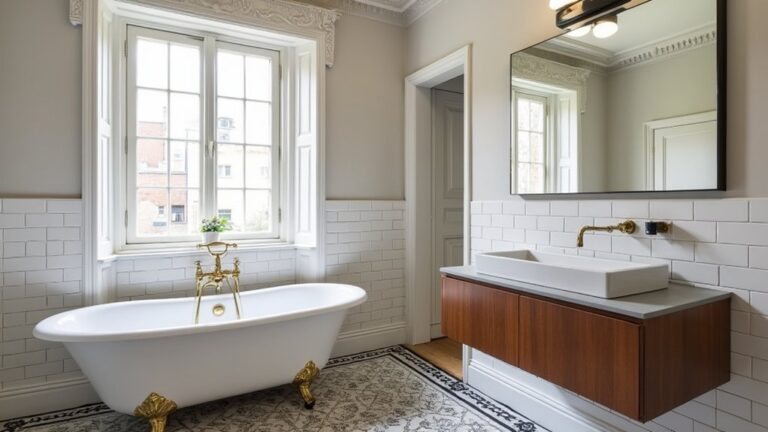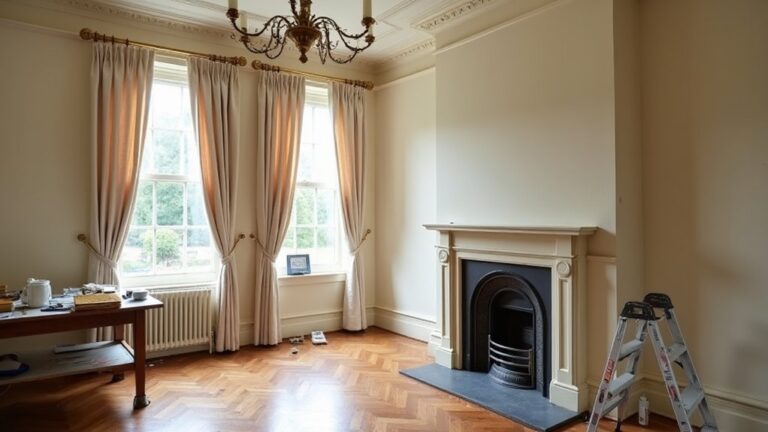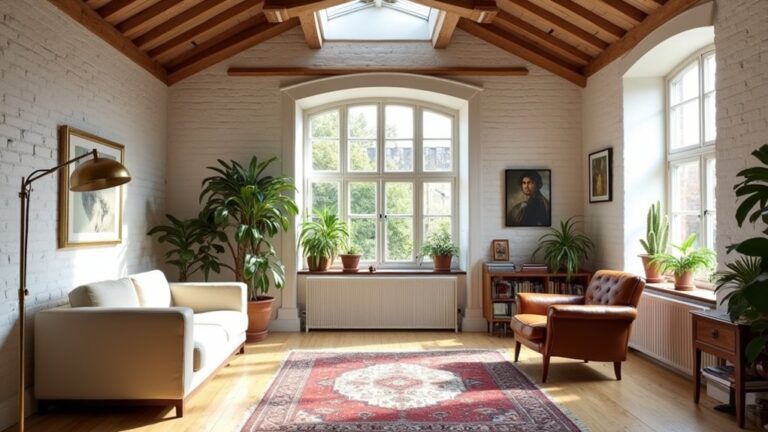
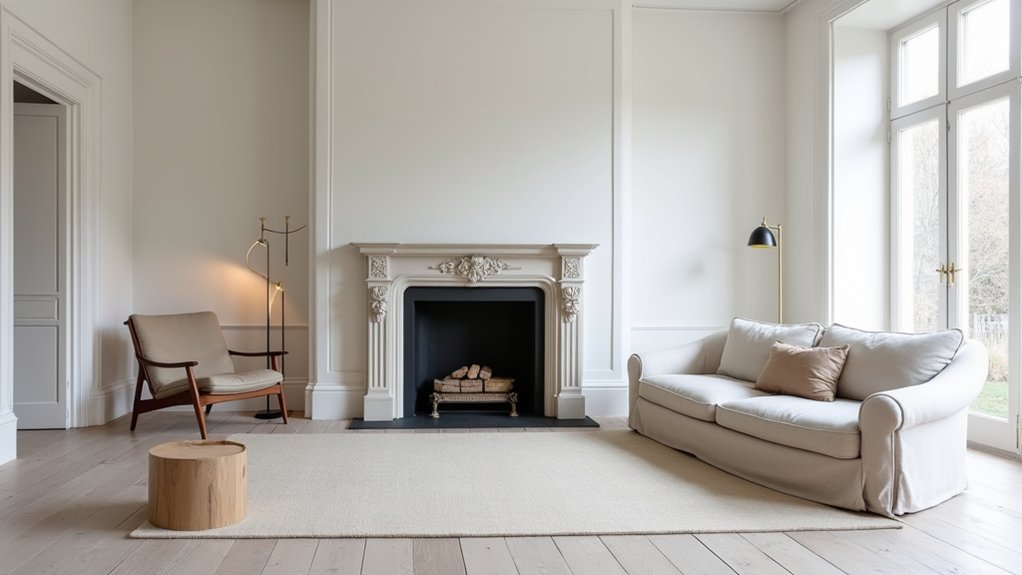
You can test whether Scandinavian minimalism really belongs in an Edwardian house without erasing its craft. You start with a clear anchor room, then hold a quiet 60/40 balance: chalky whites and muted pastels carry the calm, while original mouldings, quarter-sawn oak, and brass hardware supply the weight. You keep the profiles, simplify everything around them, and cap materials to avoid visual noise—then one choice decides if it feels authentic or staged…
Key Takeaways
- Anchored the design around one room/era, preserving Edwardian cornices, picture rails, sash proportions, and original fireplace details.
- Used a 60/40 balance: Scandinavian neutrals and matte finishes dominate, while Edwardian metals, woods, and muted pastels add depth.
- Kept a disciplined palette—one wood tone, one metal family, one stone/ceramic finish—so heritage details read curated, not busy.
- Simplified surfaces with limewash or matte clay paint, keeping low-contrast walls so shadow lines and mouldings become the decoration.
- Layered crafted lighting and textures: warm-dim 2700K LEDs, opal glass and brass, plus linen, wool, and vintage textiles for patina.
Pick Your Scandinavian–Edwardian Anchor (Room or Era)
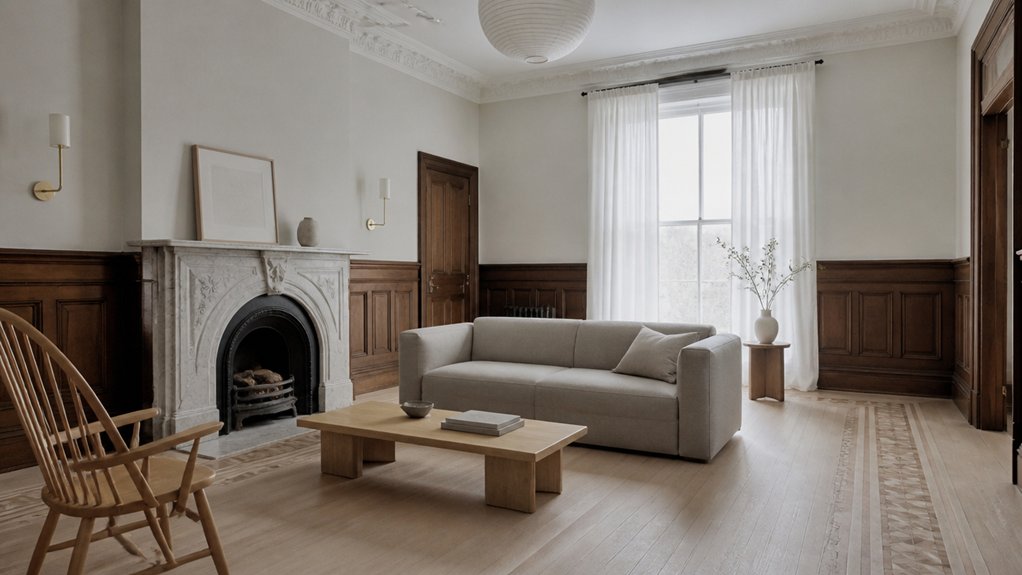
Before you buy a single fixture or strip a wall, choose one clear anchor that tells you how Scandinavian restraint and Edwardian richness will share the space—either by room (a calm, light-filled kitchen; a library-like sitting room) or by era emphasis (early Edwardian simplicity versus later, more ornate detailing).
Decide what must stay authentic: cornices, picture rails, fireplace tiles, or sash proportions. Then set your Scandinavian baseline—pale timber, matte paint, clean joinery—so the heritage elements read intentional, not fussy.
If you anchor by room, let service spaces go bright and spare, and reserve depth for rooms that historically carried it. If you anchor by era, match profiles and patina; add ornate hardware and Vintage textiles as controlled accents.
Use a Simple 60/40 Rule to Mix Styles
Start with a clear 60/40 split: you’ll choose one dominant style—Scandinavian restraint or Edwardian craftsmanship—to set the room’s bones.
Then you’ll assign the remaining 40% to complementary accents, like turned-wood details against clean-lined seating or linen-wrapped simplicity beside inlaid cabinetry.
To keep it practical-luxury, you’ll balance color and texture—muted Nordic neutrals warmed by heritage brass, polished oak, and tactile wool—so nothing competes and everything reads intentional.
Choose The Dominant Style
Although Scandinavian minimalism and Edwardian craftsmanship can coexist beautifully, you’ll get a more refined, heritage-forward result when you choose a clear lead style and let the other play support. Decide which era sets the room’s tone, then commit to it at about 60 percent of the visual weight.
If you lead with Edwardian, anchor the space with one carved, well-proportioned piece as the Focal point, and let its joinery and patina establish Design hierarchy.
If you lead with Scandinavian, keep forms spare, surfaces pale, and lines disciplined so craftsmanship reads as restraint, not clutter.
Check your choices against scale, symmetry, and material honesty—oak, brass, linen—so the room feels curated, not conflicted, and comfortably luxurious.
Assign Complementary Accents
Once you’ve set your dominant style, use a simple 60/40 rule to assign accents so the mix reads intentional rather than blended by accident. Give 60 percent of the room to Scandinavian restraint: clean-lined seating, pale timber, and open negative space that lets craftsmanship breathe.
Reserve 40 percent for Edwardian character, choosing pieces with provenance—turned legs, inset panels, or a carved mantel—so details feel collected, not staged.
Keep your accents disciplined. Pick one Accent color that nods to period interiors, then repeat it sparingly through piping, book spines, or a single framed print.
Add decorative accessories with purpose: brass candlesticks, cut-glass bowls, or a small mirror with bevelled edges. You’ll honor heritage while keeping the room calm and current.
Balance Color And Texture
With your key pieces in place, you can keep the Scandinavian–Edwardian mix feeling crisp by balancing color and texture with the same 60/40 rule. Let 60% read as Scandinavian calm: chalky whites, pale oak, cool greys, and matte finishes that spotlight form and light.
Reserve 40% for Edwardian depth: inky greens, oxblood, or soot-black, applied in smaller, deliberate doses.
Build color harmony by repeating one heritage tone three times—trim, cushion piping, and a framed print—so it feels collected, not themed.
For texture layering, pair a tailored wool throw with a linen sofa, then add one polished note: brass gallery rail, glazed tile, or a carved mahogany tray. You’ll get restraint with richness, and rooms that age well.
Choose a Pale Scandinavian Palette for Edwardian Homes
You’ll get the clean Scandinavian calm you want by starting with soft neutrals—chalky whites, linen greys, and oatmeal—then warming them with Edwardian-appropriate undertones that flatter original plasterwork.
Add muted pastels in the mouldings’ shadow lines and pair them with pale woods like ash or birch to keep the joinery feeling light yet considered.
Finish with gentle contrast—matte black ironmongery, smoked glass, or a deeper putty on trim—so the craftsmanship reads crisp without tipping into fussiness.
Soft Neutrals, Historic Warmth
Although Edwardian rooms often celebrate mahogany trims, tiled hearths, and softly aged plasterwork, a pale Scandinavian palette doesn’t erase that character—it frames it.
You’ll get the best balance by choosing Warm neutrals: chalky off-white, oat, bone, and stone, tuned to your home’s north or south light. Keep ceilings a shade lighter to lift cornices and picture rails without making them shout.
Build Textural contrast so the scheme feels lived-in, not flat: limewashed walls beside satinwood doors, honed limestone on the hearth ledge, and linen drapery against polished brass.
Let timber read as the accent—cleaned, not stripped—so the grain still tells its century-old story. Finish with matte paints and quiet sheens for practical luxury.
Muted Pastels With Mouldings
If your Edwardian mouldings already cast a crisp shadow line, muted Scandinavian pastels can make that relief feel intentional rather than fussy. Choose chalky blush, misty blue-grey, or celadon with a soft undertone so the room stays calm while the profiles stay legible.
Treat colour like a wash, not a statement. Paint walls in a low-sheen eggshell, then pick a slightly cleaner tint for cornices and picture rails to sharpen the architecture without shouting. If you’ve got deep skirtings, keep them in the same family, one step lighter, so scuffs don’t read as dirt.
Use careful cutting-in to honour moulding details; the crisp edge is your luxury. Finish with matte hardware and restrained textiles for quiet polish.
Light Woods, Gentle Contrast
When pale timber meets Edwardian joinery, the house reads lighter without losing its period authority. You let sun-washed oak or ash temper the dark drama of skirtings, architraves, and fireplace surrounds, so every profile stays legible. Keep Natural textures honest—limewashed boards, linen upholstery, brushed brass—and build Soft contrasts that respect original proportions.
- Choose matte pale floors to broaden halls and soften high ceilings.
- Pick warm whites for walls, then echo timber tones in built-ins.
- Stain or wax existing woodwork lightly instead of stripping character away.
- Use charcoal accents sparingly—ironmongery, grilles, picture rails—to frame heritage details.
You’ll get Scandinavian calm with Edwardian craft still front and centre.
Warm It Up With Edwardian Woods and Brass
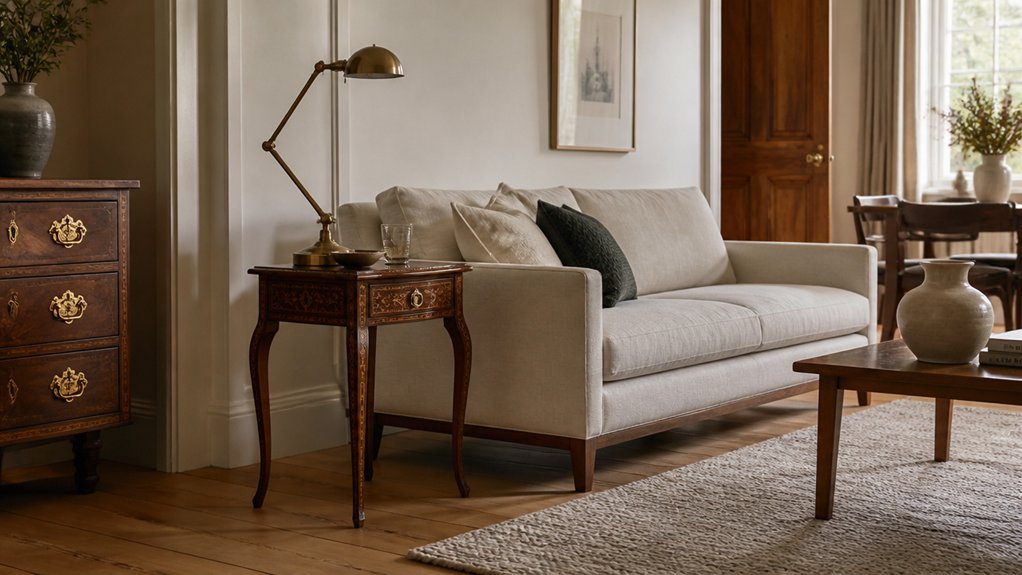
To keep Scandinavian minimalism from feeling too cool, layer in Edwardian woods and brass that bring instant depth and heritage. Choose quarter-sawn oak, walnut, or mahogany in restrained stains, then let the grain do the talking against pale walls and matte floors.
Anchor one piece—a sideboard, writing desk, or glazed cabinet—so the room reads curated, not crowded.
Swap generic pulls for Ornate hardware in aged brass, keeping profiles crisp but detailing authentic. Repeat brass in a picture light, tap, or slim floor lamp for a quiet glow.
Add Vintage textiles—embroidered linen, wool checks, or a faded rug—to soften edges without clutter. You’ll get warmth, patina, and everyday durability, while the layout stays clean and Scandinavian.
Keep Edwardian Mouldings, Simplify Everything Around Them
Keep the original Edwardian cornices and picture rails, repairing crisp edges and matching profiles so the room’s craftsmanship stays front and center.
Then you simplify everything around them: smooth, quiet wall color, pared-back flooring, and clean-lined joinery that doesn’t compete.
Choose furnishings with disciplined silhouettes and a few premium materials, so the mouldings read as the luxury.
Honor Original Edwardian Cornices
Although Scandinavian minimalism prizes restraint, your original Edwardian cornices deserve to stay as the room’s most articulate detail. You’re not keeping fussy decoration; you’re protecting ornamental detail with disciplined intent, and treating historical preservation as a design decision, not nostalgia.
Inspect every run in raking light, then repair with compatible lime-based plaster so profiles read crisp, not overfilled.
- Photograph and measure each profile before any work begins.
- Consolidate cracks with plaster washers, then skim only where needed.
- Strip paint chemically, avoiding heat that softens fine edges.
- Repaint in a single, matte mineral finish to sharpen shadow lines.
Let the cornice set the ceiling’s cadence, and keep junctions clean, so craftsmanship speaks quietly.
Streamline Walls, Floors, Furnishings
Once your Edwardian mouldings hold the room’s character, everything else should recede with intention. Choose calm wall textures: limewash, matt clay paint, or finely skimmed plaster that catches light without competing with the cornice and picture rail. Keep colour contrast low; let shadow lines do the decorating.
On the floor, simplify the story but respect the era. Restore boards and use restrained flooring patterns—herringbone only if it’s original, otherwise straight planks with a soft oil finish. Add one generous wool rug, not layers.
Furnish with fewer, better pieces: pale timber, linen, and leather, with legs that lift mass off the floor. Avoid ornate silhouettes; repeat simple profiles. Hide storage behind flush fronts, so the mouldings stay the focal point every day.
Show Off Edwardian Joinery With Quieter Walls
When you quiet the walls, Edwardian joinery steps forward and reads like craftsmanship rather than background texture. You’ll notice rails, stiles, and cornices with crisp shadow lines, so keep the surrounding planes calm and matte. Use wall texture techniques that soften glare without competing, and let Hidden structural details stay discreet but present—like carefully aligned reveals and patched-in lath lines that tell the house’s story.
- Skim-coat plaster for a flat, mineral surface that honors original trim.
- Choose chalky whites or soft stone tones to lift timber profiles.
- Run paint up to mouldings with a fine brush, no caulked blobs.
- Light joinery with grazing sconces to emphasize joinery depth, not sheen.
You’ll get practical luxury: serene walls, exemplary craft.
Mix Scandinavian Furniture With Edwardian Silhouettes
Because Edwardian rooms already carry strong architectural curves and proportions, you’ll get the cleanest blend by letting Scandinavian furniture supply the quiet planes while Edwardian silhouettes provide the character.
Anchor the layout with a low, pale-oak sofa or a Mid century modern sideboard, then echo the home’s heritage with a cabriole-leg occasional chair or a bow-front display cabinet.
Keep profiles crisp: choose tapered legs, slim arms, and tight upholstery so the period pieces read intentional, not fussy.
Repeat one Edwardian gesture—arched crest rails, turned feet, or inlaid borders—across two items, and you’ll create a lineage that feels curated.
Add a restrained Bohemian eclectic note through a single sculptural floor lamp or a patterned cushion, so craftsmanship stays the headline.
Limit Materials to Avoid Visual “Noise
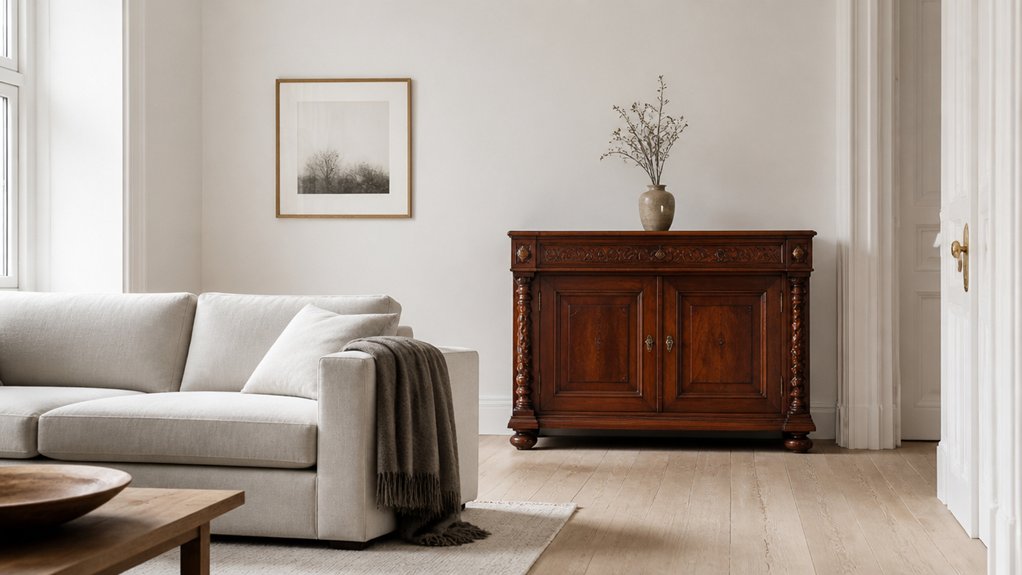
Although both Scandinavian minimalism and Edwardian craftsmanship celebrate honest making, the blend turns chaotic fast if you introduce too many finishes at once. You’ll get visual clutter when every surface competes—oak beside walnut, brass beside chrome, stone beside tile—until neither style reads as intentional.
Keep material variety disciplined, then let craft details carry the luxury. Set a tight palette and repeat it room to room so your joinery, beading, and inlays feel curated, not busy:
- Choose one primary wood tone and match trim, shelving, and legs.
- Limit metals to a single family (aged brass or nickel) across hardware.
- Repeat one stone or ceramic finish for hearths, tops, and thresholds.
- Reserve a single patterned textile for heritage nods, then echo its color elsewhere.
Use Scandinavian Lighting That Suits Edwardian Proportions
A disciplined material palette gives your rooms calm; the right lighting then sets the scale so Edwardian volumes feel intentional, not cavernous.
Choose Scandinavian pendants with generous diameters and clean silhouettes, then hang them lower than you’d in a new-build to visually “meet” the high cornices and deep ceiling roses.
In halls and stairwells, layer a tall paper or linen shade with discreet wall lights to keep sightlines elegant while delivering an even ambient glow.
Use warm-dim LEDs (around 2700K) to flatter original plasterwork, oak balustrades, and encaustic tiles.
Favour natural materials—opal glass, spun brass, birch, and wool felt—so the fittings feel quiet yet crafted, in keeping with Edwardian joinery and the home’s formal proportions.
Common Mistakes: Too Plain vs Too Busy (and Fixes)
When you try to marry Scandinavian restraint with Edwardian richness, you can easily swing too far toward blank minimalism or, just as often, pile on “period” details until the room feels fussy. You’ll keep the heritage intact by editing with intent and letting craftsmanship do the talking.
- If it feels too plain, add one heirloom anchor: a carved mantel, inlaid sideboard, or turned-leg table, then keep surrounding lines quiet.
- If it feels too busy, cut repeat motifs; choose one curve language (ogee, arch, or spindle) and drop the rest.
- Use Decorative accents sparingly: brass gallery rail, pleated shade, or linen runner—three max per zone.
- Practice clutter management with closed storage and a single display shelf, so patina reads, not noise.
Conclusion
When you blend Scandinavian calm with Edwardian craft, you don’t need more stuff—you need better decisions. Anchor the room, keep the 60/40 balance, and let original mouldings do the talking while you simplify everything else. Stick to pale, chalky tones, then add quarter-sawn oak and aged brass for warmth that feels earned. One stat: Zillow reports homes with “natural materials” can sell for up to 3.5% more—proof restraint reads as value.
About the Author