You don’t have to choose between preserving period character and getting a cleaner, more current dining room. You start by identifying which original details are worth repairing, then use warm whites, greige, and a deep accent to sharpen the architecture without stripping it. You layer a chandelier, sconces, and warm LEDs for controlled ambiance, then scale furniture to the room’s axis for instant polish. Next comes the part that determines whether it feels timeless—or merely updated…
Key Takeaways
- Survey and document period details; repair cornices, roses, fireplaces, sash windows, and paneling before making any interventions.
- Refresh walls with warm whites, stone, or greige, then add modern contrast using inky navy, bottle green, or oxblood accents.
- Layer lighting with a dimmable statement pendant, matching wall sconces, and lamps; choose 2700K–3000K, high-CRI LEDs for warmth.
- Plan a symmetrical layout from the doorway, centering a substantial table on the room axis and keeping 36–42 inches for circulation.
- Finish with tailored textiles and restrained patterns, upgrading curtains for weight, and adding curated art, brass, aged wood, marble, and candlelight.
Identify What to Keep (and Change) in a Georgian Dining Room
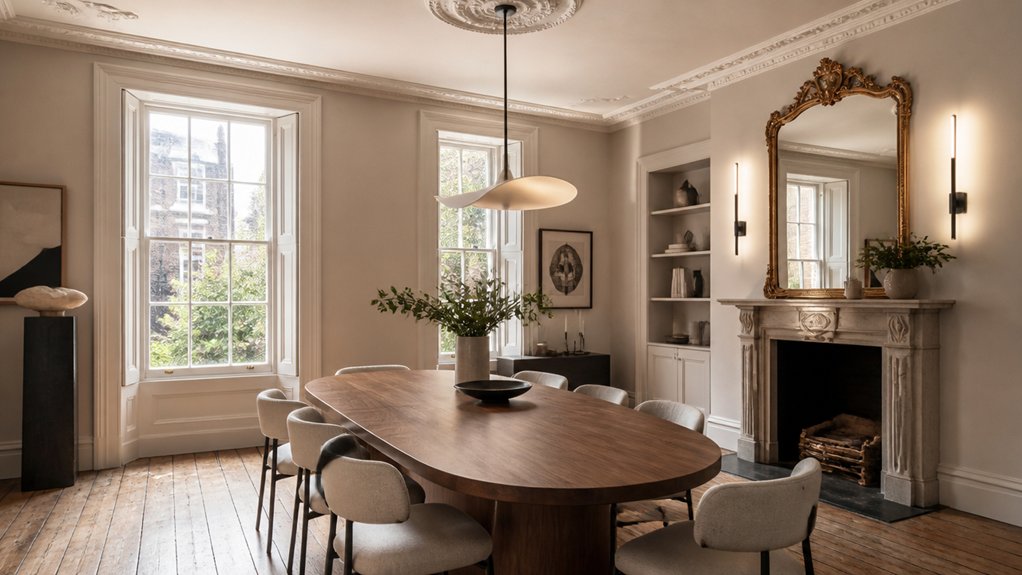
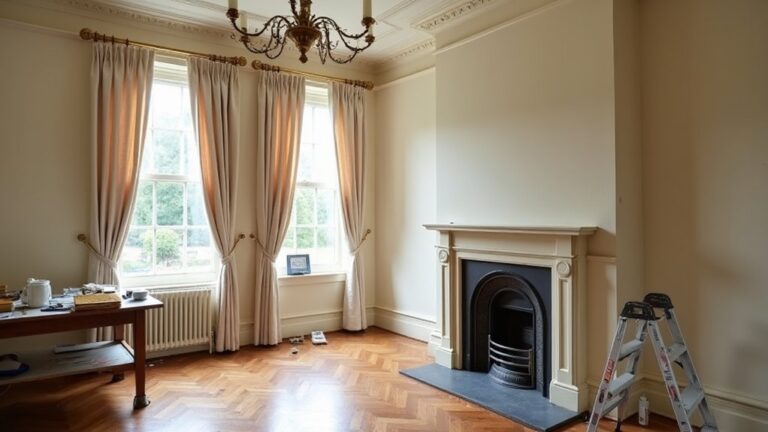
Before you pick up a paintbrush or order new lighting, take a hard look at what gives your Georgian dining room its long-term value: architectural bones like original cornicing, ceiling roses, fireplaces, sash windows, and well-proportioned wall paneling are the features you’ll want to keep and highlight.
While doing so, identify dated surface choices—heavy window treatments, overly dark wall colors, worn carpets, and fussy reproduction furniture—that are the smartest places to change for a cleaner, modern finish without sacrificing period credibility.
Document profiles and joinery before you intervene, and repair rather than replace to protect resale value.
Prioritize Historical accuracy: keep chimney pieces, architraves, and skirting depths consistent.
Use preservation techniques like gentle stripping, lime-compatible patching, and discreet draught-proofing on sashes.
Swap cluttered accessories for fewer, better antiques, and upgrade the table and seating silhouettes for comfort without erasing provenance.
Choose a Modern Georgian Color Palette and Contrast Level
Two decisions set the tone for a modern Georgian dining room faster than any furniture swap: your palette and your contrast level. Start with historically grounded neutrals, then sharpen them with contemporary depth so the room reads tailored, not themed.
Aim for contrast that highlights symmetry and millwork, and choose finishes that’ll age well and protect resale value.
- Put warm white, stone, or greige on walls to flatter plasterwork and trim.
- Add inky navy, bottle green, or oxblood for disciplined, modern contrast.
- Keep ceilings and cornices lighter to preserve Georgian lift and proportion.
- Use Victorian patterns only as controlled accents—chairs, a runner, or art.
- Repeat Antique accents in brass, aged wood, or marble for quiet continuity.
Layer Lighting for a Georgian Dining Room
While paint and furniture set the backdrop, lighting determines whether your Georgian dining room reads crisply modern or flat and period-costume.
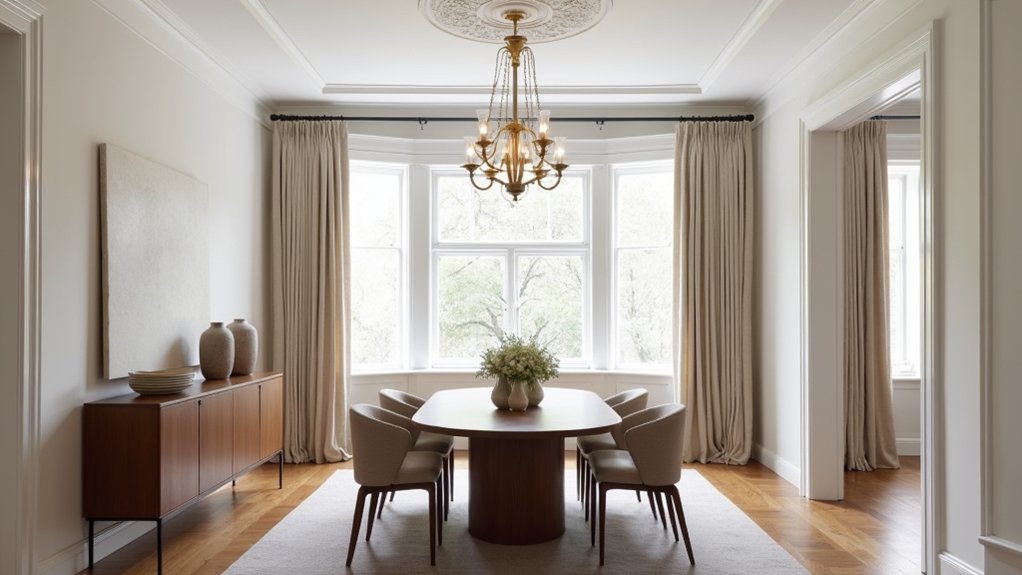
Start with a statement pendant or chandelier that respects ceiling height, then put it on a dimmer so you can tune an ambient glow from cocktail hour to dinner.
Add discreet wall sconces to lift shadowy corners and flatter plasterwork; choose slim, architectural forms in aged brass, bronze, or matte black for a current finish that still feels tailored.
Layer in a sideboard lamp or two for warm pools of light and a lived-in sheen.
Use 2700K–3000K LEDs, high CRI, and consistent bulb shapes for cohesive, investment-grade layered illumination that photographs well and feels intentional.
Pick Georgian-Scale Furniture: Size, Shape, Layout
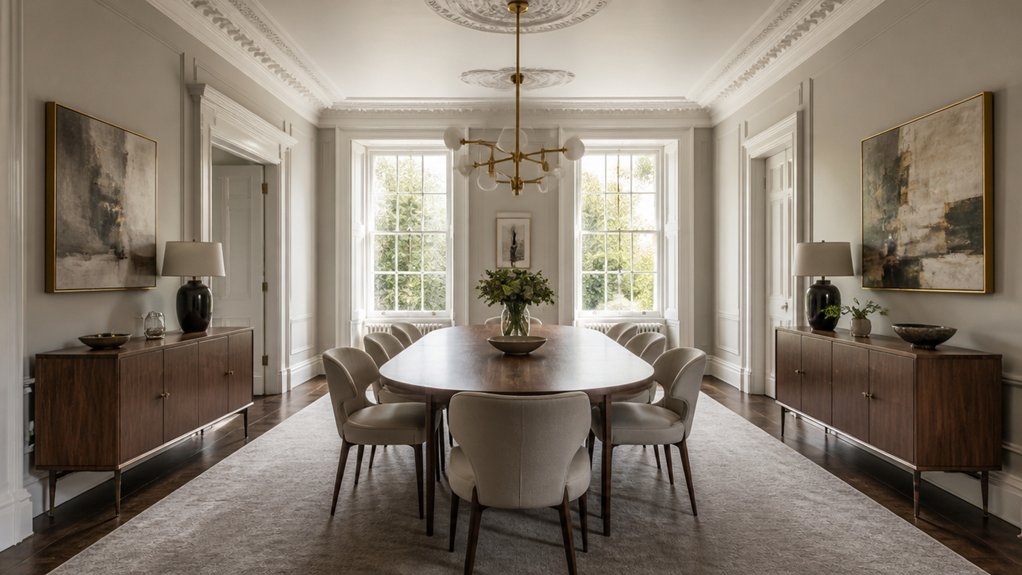
Once you’ve got your lighting layers dialed in, the furniture needs to hold its own at Georgian scale—generous proportions, clear sightlines, and enough breathing room to keep the room feeling sharp rather than stuffed.
Choose pieces with confident silhouettes and refined joinery; you’re investing in lines that won’t date. Prioritize symmetry, but let one contemporary curve soften the formality.
Plan furniture placement from the doorway, keeping circulation intuitive and chairs easy to pull out.
- Center a substantial dining table on the room’s axis
- Keep 36–42 inches of clearance around seating
- Match chair height to cornice and window rail lines
- Anchor storage with a low sideboard, not a tall hutch
- Edit decorative accents so the scale reads intentional
Add Modern Dining Textiles Without Losing Period Charm
After you’ve set the table and chairs at the right scale, textiles become the fastest way to modernize a Georgian dining room without disturbing its architecture.
Start with a tailored linen or linen-blend tablecloth in stone, ink, or warm white; it reads crisp against paneling and ages well.
For Contemporary fabric choices, upgrade curtains to wool-silk, cotton sateen, or performance velvet in a solid or subtle herringbone, lined for weighty, period-appropriate drape.
Use Textile pattern updates sparingly: swap busy florals for oversized checks, tonal stripes, or a restrained botanical with more negative space.
Repeat one motif across seat pads and a runner to look intentional, not themed.
Finish with a high-quality underlay and chair pad grips so everything stays aligned through dinner parties.
Finish a Georgian Dining Room With Art and Accessories
Because Georgian rooms already bring strong symmetry and architectural rhythm, you’ll get the most modern elegance by treating art and accessories as curated “finishing layers,” not extra decoration.
Start with Art placement: hang one commanding piece centered on the primary wall, aligning its midline with the door and cornice sightlines. Keep frames slim—blackened brass or ebonized oak—for a current, investment-grade look.
- Choose a limited palette: charcoal, warm white, and one jewel tone
- Repeat metal finishes across sconces, frames, and flatware for coherence
- Use oversized vessels and low bowls to preserve table sightlines
- Add one sculptural object per surface; edit the rest
- Prioritize Accessory selection with provenance, handmade quality, and scale discipline
Finish with soft candlelight and a single seasonal stem for quiet polish.
Conclusion
When you update your Georgian dining room, you’re not chasing trends—you’re curating value. Keep the fireplaces, keep the cornicing, keep the sash windows, and let your warm whites, greige, and inky navy or green sharpen the architecture. Layer a chandelier, add sconces, place warm LEDs, and you’ll get glow without glare. Choose Georgian-scale pieces, set them symmetrically, dress them in tailored textiles, and finish with art that feels collected.
About the Author