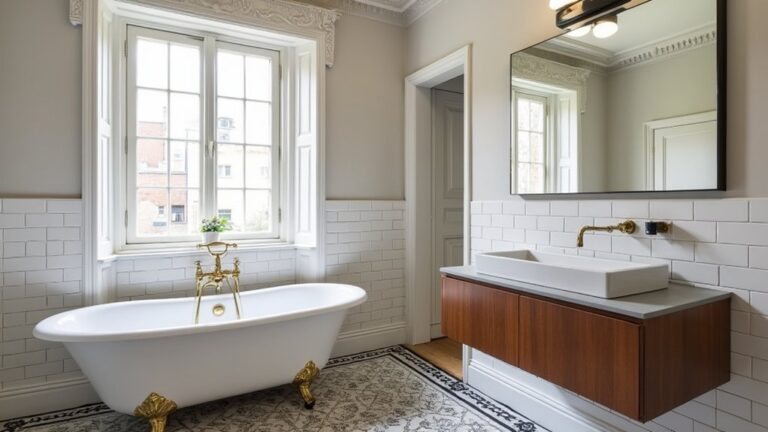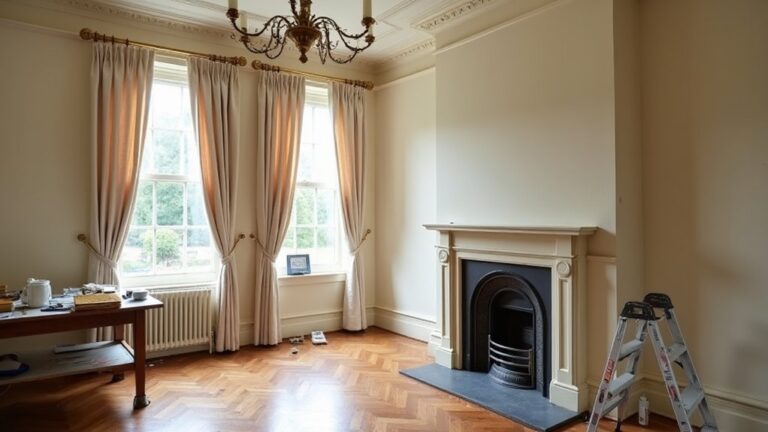
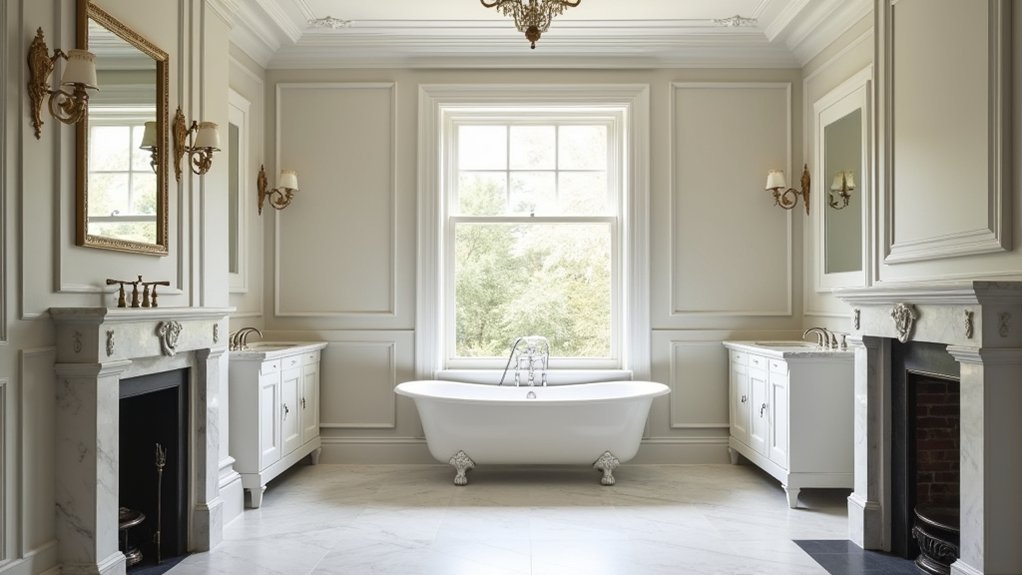
When you lift one loose floorboard and find two centuries of lime dust beneath it, you realise you’re not refurbishing a room so much as negotiating with it. You keep the tall sash windows, lime-plastered walls, and timber skirtings, then thread in comfort with discreet basin placement, concealed pipework, and heritage-style fittings. You choose muted lime paints, small-format tiles, and proper ventilation—yet one decision still tests whether it all feels convincingly Georgian…
Key Takeaways
- We retained sash windows, original doors, architraves, skirtings, and floorboards, repairing and refinishing rather than replacing period fabric.
- We routed new plumbing and wiring through existing voids or discreet boxing-in to avoid chasing walls and damaging plasterwork.
- We repaired historic walls with breathable lime plaster and finished with limewash or heritage paints to prevent trapped moisture and future cracking.
- We improved moisture control using a quiet, high-capacity extractor with humidistat, ducted outside and finished with a heritage-style grille.
- We chose restrained, period-appropriate finishes—small-format stone or ceramic tiles, simple fittings, and warm layered lighting—to keep a Georgian feel.
Georgian Bathroom Priorities: Protect Character, Gain Comfort
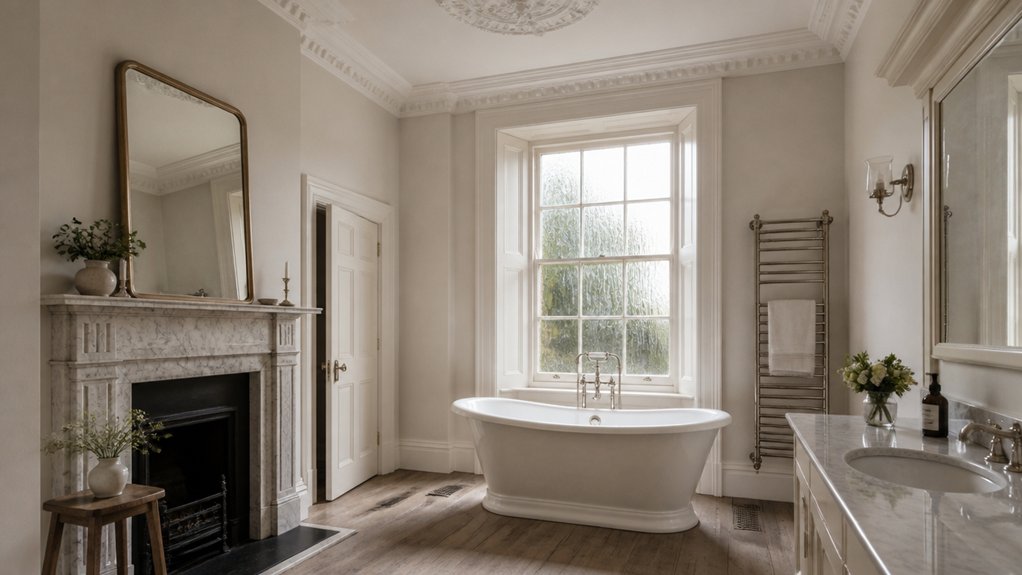
Although a Georgian bathroom needs to work for modern life, your first priority is to protect the period fabric—plasterwork, joinery, floorboards, and any surviving cornice or panelling—while upgrading comfort in ways that don’t jar.
You’ll plan the layout to avoid chasing pipes through laths or hacking skirtings; instead, you’ll use surface routes, existing voids, or a discreet boxing-in that reads like joinery.
You’ll specify breathable lime where repairs touch historic walls, and you’ll manage moisture with quiet, high-capacity extraction vented outside, not into a loft.
Choose finishes that sit politely: muted stone, simple timber, and fittings with restrained profiles.
Modern appliances can hide behind cabinetry, while smart technology controls underfloor heating and lighting without visible clutter.
You’ll keep access panels serviceable, too.
Original Georgian Features We Kept (and Why)
Once you’ve sorted the practicalities—quiet extraction, sensible pipe routes, breathable repairs—the next step is deciding what you won’t change, because those original Georgian elements give the room its authority.
You keep the tall sash, repairing cords and easing the sills, because the waviness of old glass and the light it throws can’t be replicated. You retain the lime-plastered walls and timber skirtings, patching with sustainable materials so moisture moves as the building expects.
You save the simple architraves and panelled door, stripping back to crisp profiles and hand-finished paint. You keep the original floorboards, lifting, numbering, and relaying them tight, then oiling for warmth underfoot.
Modern amenities slot in quietly around these constants, so the room still reads Georgian.
Georgian Bathroom Layout Fixes That Feel Period-Correct
Because Georgian rooms rely on proportion and a clear line of travel, your best layout fixes don’t reinvent the plan—they tidy it: keep the door swing and sightlines calm, align sanitaryware to the window and chimney breast where it makes architectural sense, and use simple, symmetrical spacing so the room still feels like it belongs to the house rather than a later bolt-on.
Keep the bath on the long wall and centre the basin to a panelled run so pipework can hide without chasing historic masonry. If you need Modern amenities, choose a compact WC and a shower-over-bath, then group them to minimise new services.
Build in Accessibility features quietly: widen the clear approach, specify a higher pan, and add discreet timber-backed grab points behind plaster. You’ll improve function without losing Georgian discipline.
Georgian Bathroom Lighting and Ventilation That Actually Works
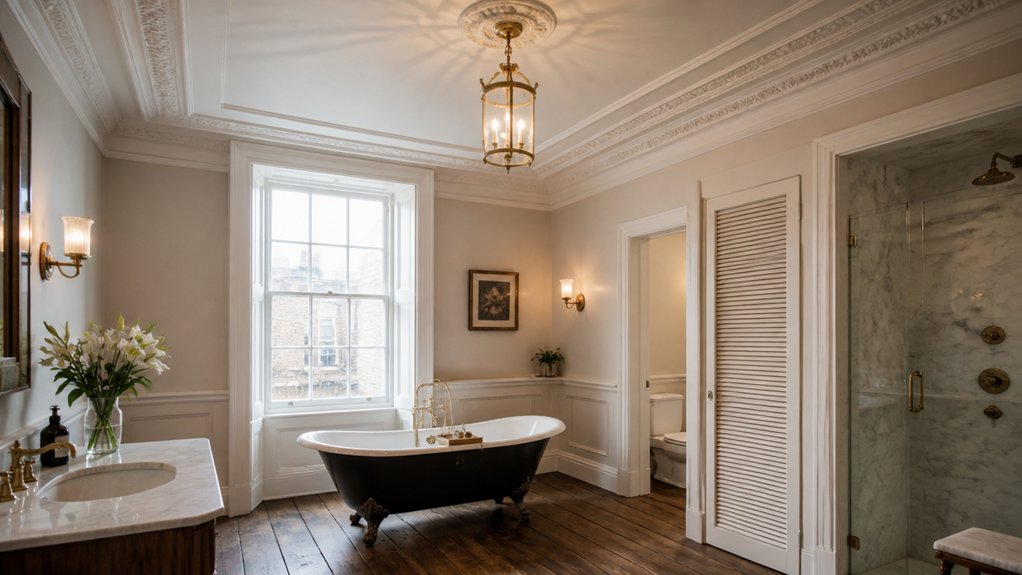
If you want a Georgian bathroom to feel calm and period-correct, you’ve got to make light and air do the hard work without shouting about modern kit. You’ll get the best results by layering warm, high‑CRI LED light: a discreet ceiling fitting for general glow, then slim wall lights at face height to stop harsh shadows.
Choose opal glass and aged metal finishes so modern fixtures read as quietly traditional, and keep cabling hidden in existing voids.
For ventilation, you can’t rely on sash windows alone. Fit a low‑sone extractor with a humidistat, duct it straight outside, and use a heritage-style grille to keep the look intact.
You’ll protect plaster and joinery, and you’ll improve energy efficiency by reducing damp-driven heat loss.
Period-Appropriate Tile, Paint, and Fittings (Plus Subtle Restoration)
While you’re updating the room for modern use, keep the surfaces and small details doing the Georgian storytelling. Choose tiles that read as quietly historic: small-format marble, tumbled limestone, or simple white ceramics laid in brick bond, with a modest border where a dado might’ve been.
Use limewash or breathable heritage paints in muted stone, drab green, or warmed off-white so plaster can manage moisture.
For fittings, mix Vintage fixtures with discreet Modern amenities. You can specify a high-level cistern, crosshead taps, and a roll-top bath, then pair them with a thermostatic valve and efficient boiler feed.
Restore what’s there: regrout with lime, repair hairline cracks, strip paint from architraves, and keep original skirtings sharp. Swap nothing you can mend.
Conclusion
You leave this Georgian bathroom like a walled garden: you don’t uproot the old box hedges, you clip and guide them so new paths appear. You’ve kept the tall sash window, lime-plastered walls, and timber skirtings, patching them lightly and letting them breathe. You’ve hidden pipework, set the basin discreetly, and chosen small-format tiles, muted lime paint, and heritage fittings. With quiet ventilation and considered lighting, comfort settles without stealing the period soul.
About the Author