- Key Takeaways
- The Mid-Century Philosophy
- Defining Mid-Century Modern Design
- Crafting Your Space
- Beyond The Original Blueprint
- The Enduring Appeal
- Avoiding Common Pitfalls
- Conclusion
Key Takeaways
- Mid-century modern interior design is founded on simplicity, function, and democratic design, bringing stylish, well-crafted furniture and decor to all types of homes and budgets. It emphasizes neat layouts, open spaces, and items that have a clear function in everyday life.
- Key style elements like honest materials, organic shapes and minimal ornament came together to create calm and visually balanced rooms. Select furniture and decor with clean lines, rounded edges and evident craftsmanship for that true mid-century vibe.
- A close relationship with nature is key to this style, both inside and out. Use natural light to the maximum, use natural materials, and position furniture to showcase views or connect with outdoor spaces like balconies, terraces, or gardens.
- In mid-century modern interiors, function comes first, so let every item justify its existence. Incorporate multifunctional pieces like modular sofas, storage walls, and expandable tables that can adapt to changing needs and small spaces.
- The style was well-suited to modern living, easily integrating smart technology and sustainable choices without breaking the clean aesthetic. Hide devices in built-ins, choose energy-saving lighting, and opt for earth-conscious materials or cool vintage finds.
- To avoid pitfalls, keep rooms uncluttered, use a unified color scheme, and don’t mix in overly ornate or heavy styles. My advice is to begin neutral, throw in a few iconic or statement pieces, and then build color and texture in slowly.
===
Mid century modern interior designs fuse clean lines, simple shapes and warm wood tones to design relaxing, functional homes. The style burgeoned during the middle of the last century and remains crisp in both apartments and expansive homes.
Rooms often utilize low furniture, open floorplans and large windows for extended light. Typical materials are teak, leather, glass and metal. Below, discover the essential elements, color inspiration, and simple ways to incorporate this look.
The Mid-Century Philosophy
Mid-century modern interiors grow from a clear idea: homes should work well, feel calm, and stay open to change. This design mindset hails from a distant era, yet it still suits tiny city flats, family homes, and mixed-use spaces alike.
Embracing Post-War Optimism and Innovation
Post WWII, everyone desired a clean slate. Mid-century modern design responded with clean lines, minimal adornment and rooms that felt airy and spacious. The primary intent was to smooth the daily grind.
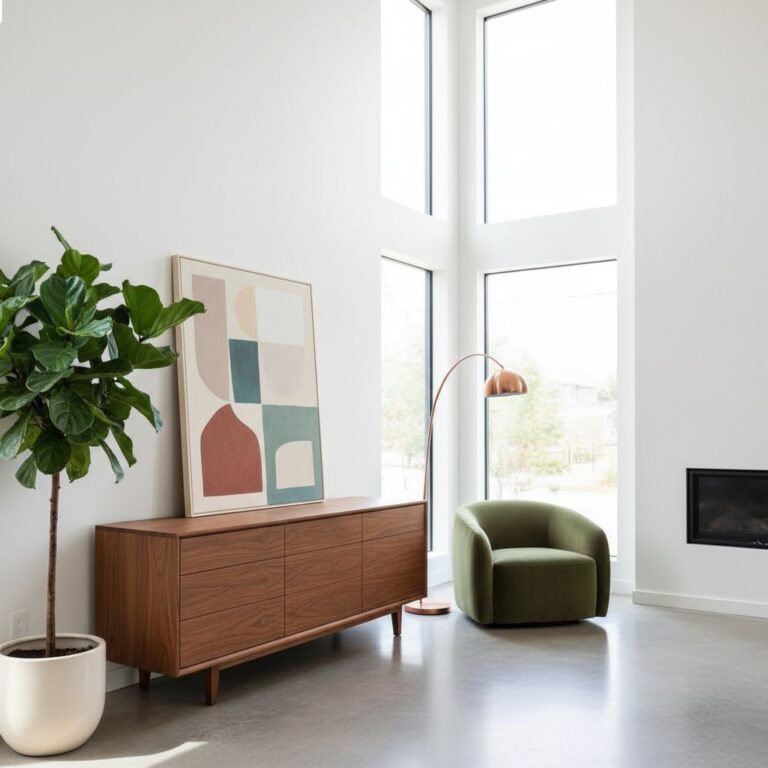
Furniture remained low and simple so rooms appeared less cluttered. A slim sofa on tapered legs or a plain wood sideboard with flat fronts demonstrates this. To each piece, function comes first and fashion comes second.
Meanwhile, new technology and the Space Age influenced the aesthetic. Molded plywood, fiberglass shells and wire bases made chairs lighter and more affordable to ship. Atomic patterns, starburst clocks and boomerang shapes gave a subtle salute to rockets and satellites without turning houses into movie sets.
Modern Architecture, Open Plans, and Uncluttered Layouts
Contemporary architects advocated open floor plans and intimate connections between interior and exterior. What this translated into in practice was fewer walls, larger spans, and clean, geometric shapes.
Post-and-beam construction allowed roofs to rest on beams rather than dense walls, so the living, dining, and kitchen areas could be part of a single, open room. Floor-to-ceiling windows, in particular, let in natural light and made even tiny rooms feel spacious.
A plain pane of plate glass looking out on a garden or courtyard is typical. With this openness, clutter stands out fast, so storage became built-in and quiet: wall units, low credenzas, and closets that blend into the walls. The end product is a design that can transition as demand changes, from individual tasks to communal conversations.
Democratic Design and Accessible Quality
Mid-century modern thinking attempted to make good design more democratic. Designers sought to leverage mass production to make well-made pieces accessible to wider audiences.
Icons such as Charles and Ray Eames, Eero Saarinen, and Hans Wegner employed basic forms, truthful materials, and scalable techniques. Whether a molded plastic chair, a pedestal table that clears leg room, or a solid wood lounge chair with clear joinery, each exhibits this combination of comfort, craft, and rational cost.
For today’s homes, this idea still helps: a few well-made, versatile pieces beat a room full of short-lived trends.
Blending Natural Materials and New Technologies
It balances nature and progress. Wood, stone and indoor plants round out the clean lines and prevent spaces from feeling too cold.
Teak or oak tables, stone hearths, and planters beside big windows establish a firm connection to nature, even in crowded urban centers. Meanwhile, mid-century interiors embraced new materials like fiberglass, bent plywood, steel rods, and eventually plastics.
For example, a room could combine a solid wood dining table with molded chairs and a metal floor lamp. This combination of organic and man-made surfaces embodies faith in both craft and science.
Strong daylight, framed garden views, and easy access to terraces or small balconies round out the core idea: a home should feel grounded, light, and ready for change.
Defining Mid-Century Modern Design
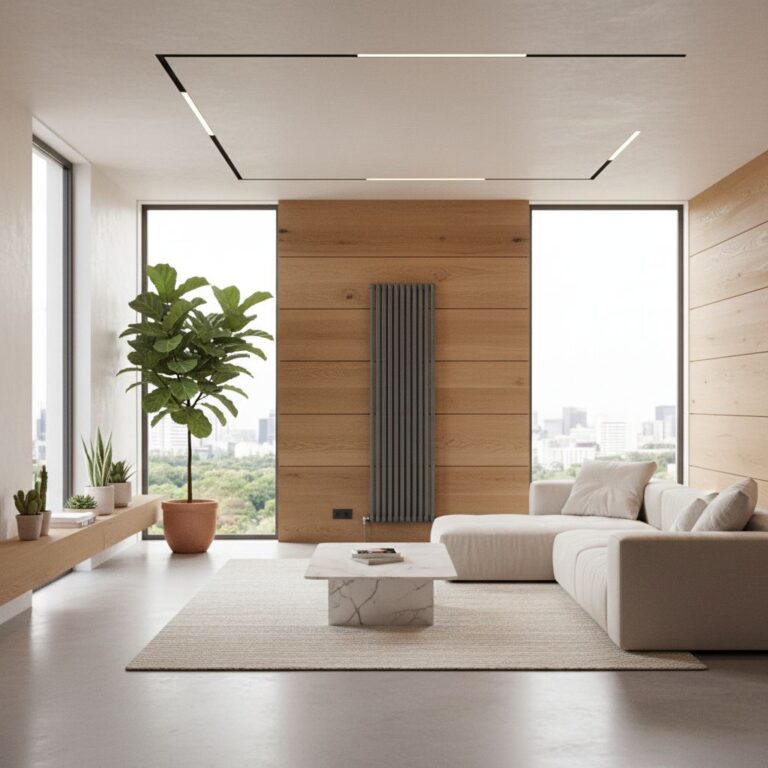
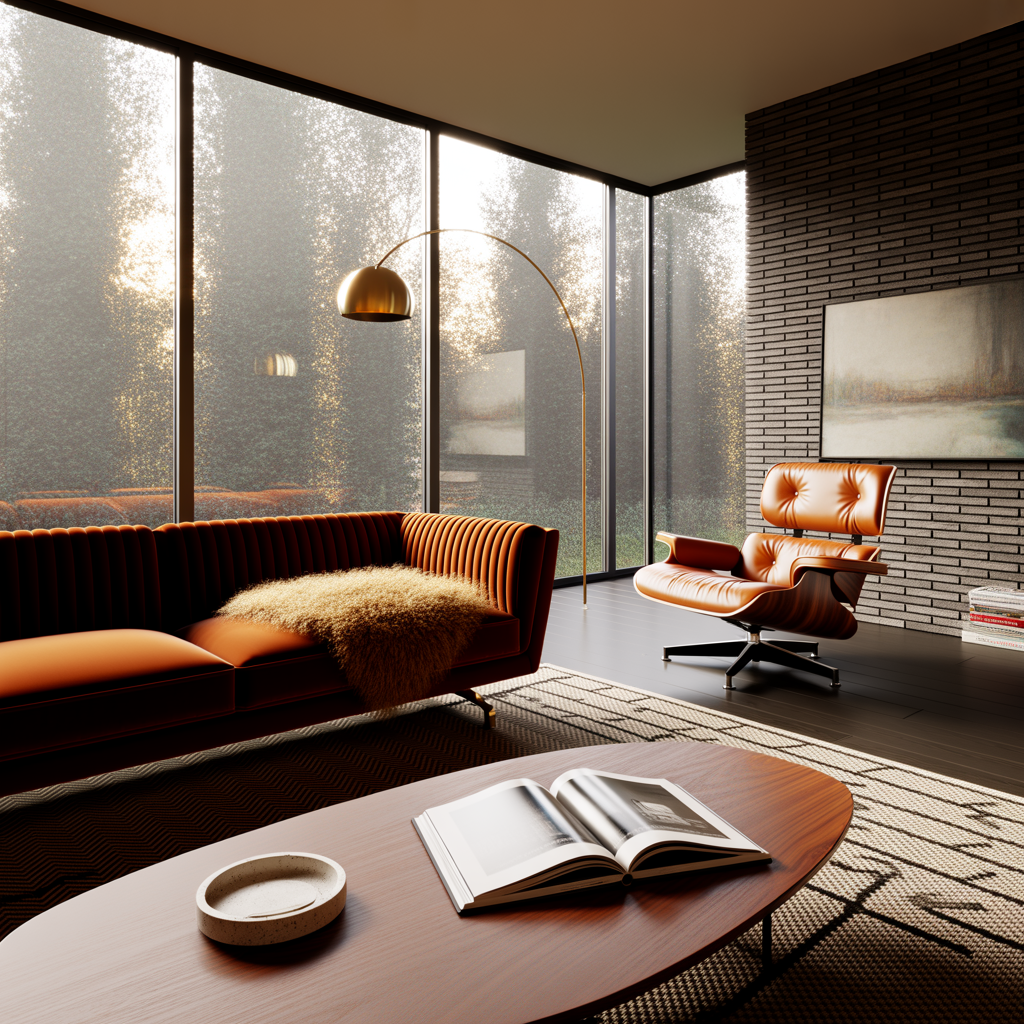
Mid-century modern design developed between the 1930s and 1960s in an era influenced by post-war optimism and emerging technology. Interiors from this movement emphasize clean lines, minimal decoration and rigorous function, while still caring about beauty. Characterized by open, light and serene floor plans, rooms commonly featured furniture raised on slender splayed legs with clean geometric shapes that combined organic curves and straight edges.
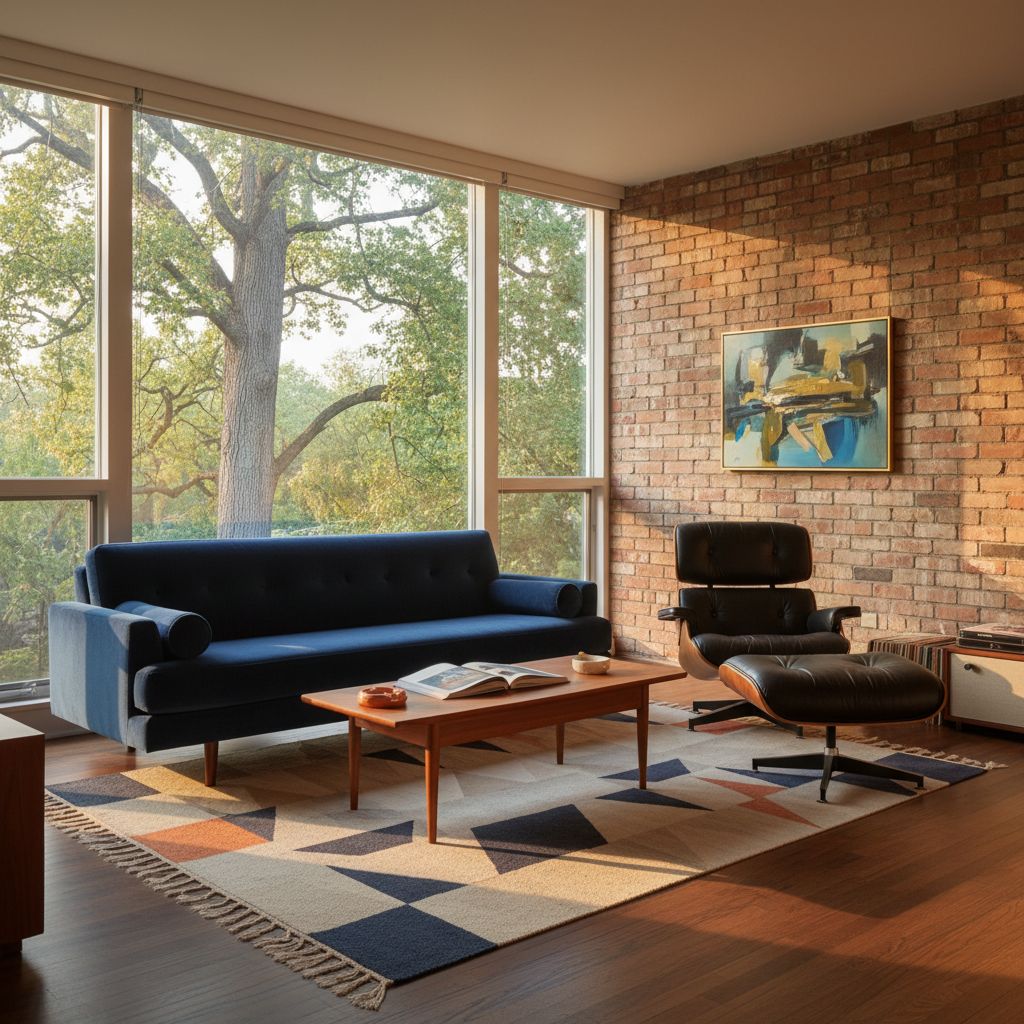
With iconic pieces such as the Eames Lounge Chair or Noguchi Coffee Table, classic examples illustrate how the style combines comfort, craft and a distinct visual aesthetic that continues to complement many interior spaces to this day.
1. Honest Materials
Honest materials rest at the heart of mid-century modern interiors. Designers preferred genuine wood, leather, glass, and stone so that every surface could display its genuine grain, texture, or patina. A teak sideboard with exposed joint work, a patinated leather armchair, or a glass topped coffee table that exposes its base all emphasize this concept of integrity.
Plastic and steel showed up too, but typically in a very honest fashion, where you could see how the piece was constructed instead of shrouding it in thick trim or faux finishes. It’s about keeping decoration light, depending on good proportions and craft, and letting the material do the talking.
2. Organic Forms
Organic forms offset the harsh lines in mid-century rooms. Soft, flowing profile sofas, curved shell low lounge chairs, and pebble-shaped coffee tables all reverberate shapes found in nature. Curved edges and asymmetric shapes, such as those found in many Artifort sofas or the Eames Lounge Chair, disrupt the rigidity of an otherwise simple boxy room and introduce subtle flow.
Smaller pieces follow this biomorphic path: ceramics with irregular rims, leaf-like plates, and abstract art prints with fluid shapes. These curves, together, sit alongside clean geometric elements – rectangular windows, straight bookshelves, and square tiles – so the space feels both organic and structured.
3. Minimal Ornament
Minimal ornament in mid-century modern design doesn’t imply a bare, cold home — it implies that every detail has a role. Furniture is usually characterized by sleek lines and flat, transparent surfaces that are easy to maintain. A low media unit, a simple bed frame or a plain dining table relies on shape and material instead of weighty carving or trim.
Storage does much of the visual work. Wall cabinets, long sideboards, and full-height storage walls keep daily items out of sight, which reduces visual noise. On open surfaces, a few carefully selected artifacts — a lone sculpture, one framed print, or a small cluster of vases — lend personality without overwhelming the space.
4. Function First
Function reigns before show in mid-century modern interiors. Floor plans are open to encourage day-to-day living, with living, dining, and kitchen areas often melding into one another to help homes seem bigger and more sociable. Furniture often has more than one use: modular sofas that reconfigure for guests, storage walls that hold books and dinnerware, sideboards that work as both server and media console, or dining tables that extend for larger groups.
Even things like door placement, built-in lighting, and window size are designed so that circulation remains effortless and natural light penetrates deep into the house.
|
Feature |
Classic Mid-Century Piece |
Typical Contemporary Alternative |
|---|---|---|
|
Seating comfort + support |
Eames Lounge Chair with ottoman |
Oversized sectional with deep cushions |
|
Storage + display |
Long teak credenza with sliding doors |
High-gloss media unit with closed cabinets |
|
Flexibility |
Drop-leaf or extendable dining table |
Fixed dining table with separate occasional tables |
|
Space saving |
Wall-mounted shelving system with integrated desk |
Freestanding shelves plus separate desk unit |
5. Nature’s Connection
Nature is not an afterthought in mid-century modern design. They incorporate big windows, sliding glass doors and open plans so daylight sweeps floors and walls, reducing dependence on harsh artificial light during the day. Natural materials—wood, stone, wool, linen, leather—echo outdoor colors and textures indoors, while rugs or pottery may feature leaf, branch, or abstract landscape designs.
Patios, mini gardens and minimal outdoor furniture stretch those same clean lines outdoors, so the flow through a glass door is seamless. Sofas positioned to face a vista, a reading chair tucked beside a window or light, and simple window treatments all assist rooms in feeling larger and more connected to their environment.
Crafting Your Space
Creating a mid century modern space begins with a tranquil foundation and transparent purpose. Since this style relies on clean lines, minimal decoration and a deep connection to nature, every selection tends to work best if it feels uncomplicated, functional and genuine.
Start with neutral walls and large pieces in soft colors such as white, beige, grey or warm sand. This neutral foundation keeps the room airy and lets statement-making pieces shine without distraction. Add rich color in smaller hits: a deep green armchair, a rust wool throw, or mustard cushions on a low-profile sofa. Go for a few defined accents rather than a lot of competing hues.
Texture is just as important as color. Pair sleek leather with a thick wool rug, a linen curtain and a wooden coffee table. These layers bring warmth and prevent the room from feeling flat while still complementing the mid-century emphasis on order and restraint.
Mix vintage discoveries with new pieces to keep the look grounded and livable. A vintage teak sideboard from a local market can complement a new, minimal fabric sofa from a mainstream store. Vintage lighting, such as a three-arm floor lamp or glass globe pendant, can nestle beside a metal or stone modern side table.
We aim for a mellow blend of old and new where patina embraces the comfort and convenience of contemporary forms.
Design the room for function first. In a living room, determine how many people should sit there on most days, then select a sofa, chairs, and tables that accommodate that need without extra mass. Each piece needs a clear purpose: storage that really stores, a coffee table with space for books and daily items, and a dining table that fits the room but still allows people to walk around it with ease.
Symmetry can help calm the space, such as matching lamps on either end of a sideboard or two chairs across from a sofa, but it doesn’t have to be exact. Repeated patterns, such as a modest geometric rug or striped pillows, help to sustain equilibrium without making a visual racket.
Let light be the common thread. Mid-century interiors depend on a combination of natural light, overhead lamps, and low, warm lamps at eye level. Select warm-white bulbs, and think of lighting as much about utility as it is about form.
A statement pendant in the dining area or a linear floor lamp beside the sofa serves as focal points while making the room feel cozy and lived in. Natural materials such as wood, leather, and stone snag this light gently, adding yet another layer of warmth and making the space feel cozy instead of ‘set-up’.
Beyond The Original Blueprint
Mid-century modern keeps evolving because its core ideas solve real problems: how to live well with less, how to link indoors and outdoors, and how to balance form and function without waste. The style went well beyond its infancy, influencing architecture, interiors, furniture, and even fashion and media.
Yet it still suits open plan homes, work from anywhere, and smart tech.
Keep the clean lines and low profiles, but plan for how people live now: open kitchens that face living areas, flexible zones that can shift from work to rest, and sightlines that reach windows, balconies, or gardens.
Combine traditional woods and plain forms with innovative materials like resilient quartz, engineered wood floors and recycled plastic textiles, so rooms remain faithful to the movement’s affection for modernity and fulfill today’s standards for coziness and concern.
Use the original indoor–outdoor mindset as a base: large windows, sliding doors, and balconies that act like extra rooms. Then add shading, good insulation, and smart glass where needed to handle today’s climate and energy demands.
Construct in tech, storage, and lighting so rooms stay serene, not chaotic, and the furniture can shine without a tangle of cords and devices standing behind as a maze.
Modern Tech
Mid-century modern homes play nicely with technology when it conceals itself in plain sight. Smart lighting can perch in slim ceiling tracks or behind wall panels, bathing wood and stone with gentle, uniform light as settings shift for work, meals, or relaxation.
Climate systems connect to sensors and maintain rooms at a constant temperature without cumbersome radiators or noisy units diverting attention from the furniture.
Cabinetry keeps screens and speakers in check. A wall unit in walnut or oak can frame a flat display so it feels built in, with sliding doors to cover it when not in use. Media gear tucks inside low credenzas with back cutouts, so all you see is a simple box on legs, not wires.
Minimalist hubs, neutral speakers and slim white or black switches merge into the palette instead of competing with it. In daily life, this quiet tech boosts comfort: blinds that close at midday heat, dimmed lights for a movie, or soft audio in several rooms, all while the room still reads as a mid-century inspired space instead of a gadget showroom.
Sustainable Choices
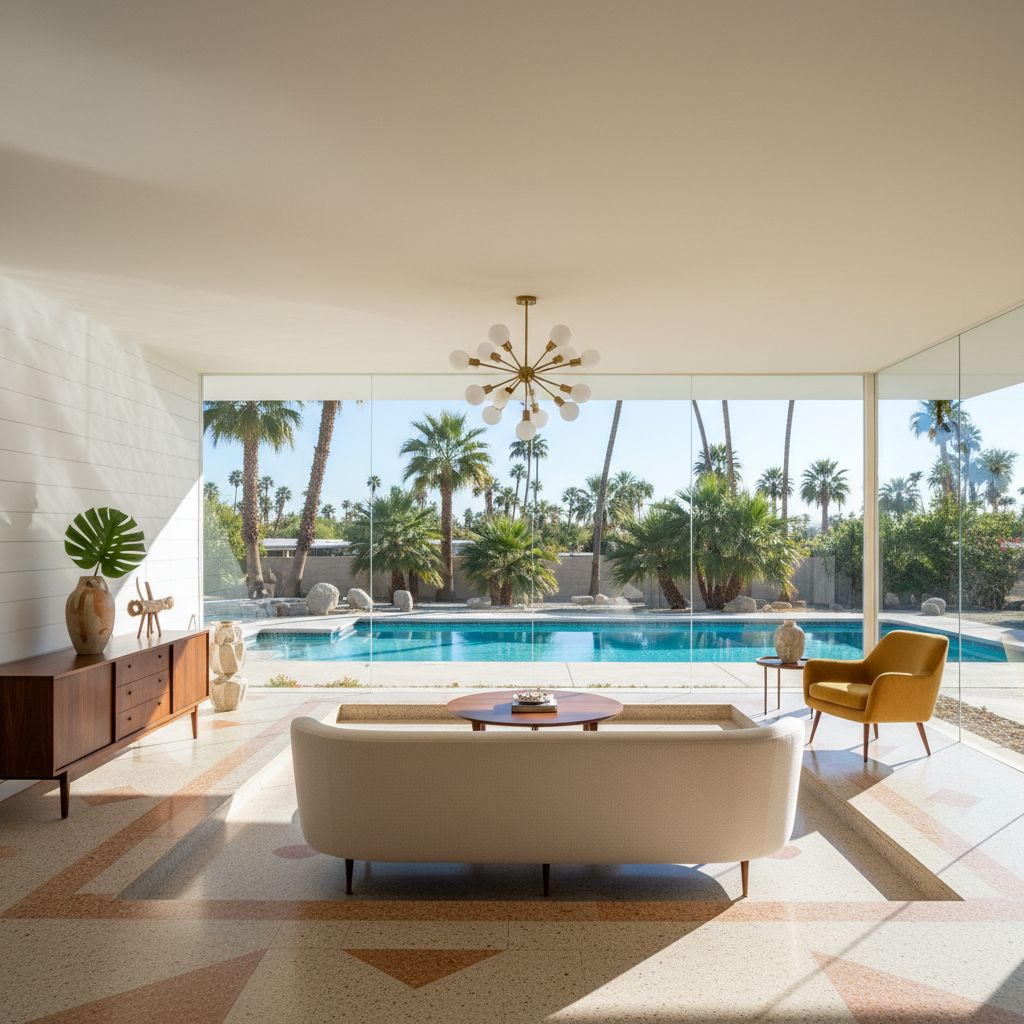
Sustainability maps neatly onto mid-century values as well, because the original movement championed new materials and durable pieces over fleeting fads. By opting for FSC wood, recycled fabrics, and low-VOC paint or finish, you maintain the warm appearance of teak, oak, and ash while reducing both impact and indoor toxins.
Many modern makers pay homage to old school shapes and employ modern techniques, so you end up with rugged items that seem genuine and straightforward, not throw-away. The vintage pieces serve their purpose well. Restoring a battered sideboard, re-upholstering a lounge chair, or refinishing a dining table keeps design heritage in circulation and minimizes waste.
When originals aren’t available or are prohibitively expensive, nice reproductions with sturdy frames, actual wood veneers, and replaceable components can bridge the gap and still honor the design language.
- Exchange mass-produced plastic chairs for molded plywood or recycled-plastic shells in basic shapes.
- Synthetic rugs awash with heavy chemicals lead to flat-woven wool or jute with natural backing.
- Exchange brutal overhead fluorescents for LED bulbs in old-school cone, globe, or dome fixtures.
- Swap single-use decor pieces for multipurpose trays, bowls, and planters in wood, glass, or metal that move with you between rooms.
Small Spaces
Tiny houses can leverage mid-century modern to smell like roses, not body odor, because the style shuns clutter. Modular sofas that break up into smaller seats, nesting side tables, and thin-legged armchairs keep air circulating around furniture and allow a single room to perform multiple functions.
Wall units and floating shelves free floor space, while fold-down desks or drop-leaf dining tables facilitate work or meals without occupying permanent space. Light color schemes make small rooms feel less hectic. Soft white or pale gray walls, light oak or beech furniture and a simple rug provide a foundation that bounces daylight.
One mirror positioned near a window or a glass-topped coffee table can multiply views and make the room feel larger without altering the footprint. The layouts remain clean and straightforward. A defined path from door to window, minimal accent pieces, and one or two punchy shapes, such as a statement chair or a daring art print, prevent the eye from bouncing around everywhere all at once.
- Credenzas on tall legs that hide gear but show the floor.
- Circular dining tables with narrow single-pedestal bases for easy access.
- Hidden storage benches that function as a work table, entryway, or window seat.
- Wall-mounted bedside shelves instead of full nightstands.
The Enduring Appeal
That’s why mid-century modern design still resonates. It addresses actual issues of lived experience while remaining cool and aesthetically uncomplicated. It flourished out of a desire to optimize houses for human use, and that straightforward purpose continues to manifest itself in its approach to light, space, and furnishings.
It’s this sense of clean lines and emphasis on function that make the style so timeless and a fit for a wide variety of spaces. Low-slung sofas, tapered wood legs, and sleek cabinet fronts don’t scream for attention, so they hold up better over time than trend-laden styles.
In a small city flat, a skinny sideboard and skinny sofa keep the room spacious. In a bigger house, those very same elements tie together living, dining, and work areas without clutter. It’s this utilitarian approach where form follows how people sit, eat, and lie down that’s a major reason architects and designers continue to turn to mid-century modernism for inspiration.
The magic of the key mid-century designers and makers continues to keep the style alive. The timeless appeal extends to classic chairs and tables from Herman Miller and Knoll and by designers such as Charles and Ray Eames or Arne Jacobsen, which are still produced, resold and pirated.
Many people who may not know the names still know the silhouettes: an Eames lounge chair in a reading corner, a tulip table in a kitchen, or a molded plastic chair at a desk. These have entered a common visual vocabulary, demonstrating how timeless bold design can be.
The style flexes easily to a variety of budgets, aesthetics, and dwellings. A petite studio can get away with one or two antique discoveries, maybe a teak coffee table or mini credenza, mixed with easy, new pieces from lower-priced labels.
Bigger houses could combine fine originals with custom built-ins in walnut or oak. Since mid-century modern plays nice with Scandinavian, industrial, and eclectic styles, it’s easy to layer into what people already have. A leather sofa with steel legs can sit next to a woven rug and plants, or raw brick and concrete, and still feel cohesive.
There’s an emotional tug as well. A lot of us associate this style with grandma’s house, vintage pictures or old movies. There’s something about warm wood, natural light and open floor plans that just makes spaces feel familiar and safe even when the layout is cutting-edge.
Big windows, indoor-outdoor flow and simple, honest materials like wood and wool resonate with today’s wellness-sustainability vibe. This absence of heavy ornament combined with clearly defined shapes assists in decluttering the visual chaos which can alleviate stress in a busy home containing work zones, study corners and shared rooms.
By introducing nature, embracing fine craft and maintaining open, peaceful spaces, mid-century modern design continues to resonate with new generations.
Avoiding Common Pitfalls
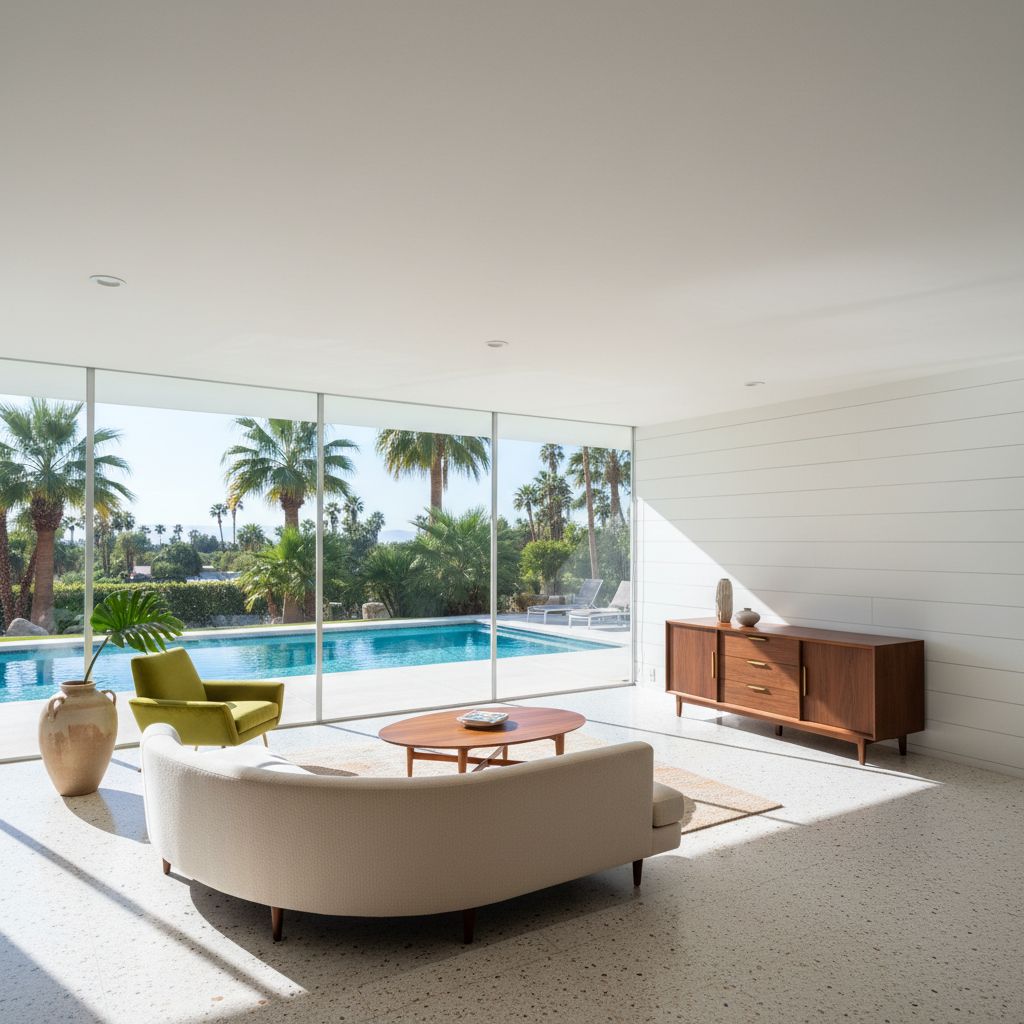
Mid-century modern interiors hold up best when cool, minimal, and transparent. Small missteps in furniture, color, or styling can break that balance fast.
Over-cluttering is the most common issue. A room full of vintage or reproduction mid-century pieces can feel like a showroom, not a home. Select a couple of solid pieces and let them breathe. A classic sideboard, for instance, shouldn’t have more than three things on top: a lamp, a sculptural vase, and a small bowl.
Designate it as a working surface, not a mail or charger drop zone. The same rule applies to a console table: one small plant, one object, or a simple tray for keys is enough to keep the line of the furniture clear. On the coffee table, one ceramic bowl or tray can go a long way. Resist the urge to pile books, candles, and décor all at once, which buries the simple form that sets mid-century apart.
Heavy traditional styles can drag the room away from the look. Fancy Victorian pieces, carved legs or gold-framed mirrors battle with the clean lines and “low and lean” shapes that mid-century modern favors. Go for low sofas, media units, credenzas with slim legs and unadorned fronts.
That keeps the room open and light, even in tiny apartments. If you throw in some older pieces, opt for simple silhouettes and understated accents — like a plain antique wooden bench instead of a carved one.
Color is another place the style can migrate. Super bright or mismatched palettes tend to come off busy instead of warm. A simple base in white, warm ivory, or soft beige on walls and bedding provides a calm beginning.
One accent color, repeated two or three times in the room, adds interest without chaos. For example, a muted teal on a pillow, a vase, and a small print. Above the sofa, one huge abstract canvas or print is usually more powerful and cleaner than a cluttered gallery wall.
For fenestration, floor-length linen curtains in a warm neutral offer softness without weight. Forgo heavy drapes or loud patterns that close in the space.
Function and form should collaborate in every decision. Furniture has to be good to sit on and yet maintain that uncomplicated silhouette. Storage needs to mask mess, not showcase it.
When the shapes remain lean, the colors remain subdued, and the surfaces remain uncluttered, the mid-century modern vibe can carry itself.
Conclusion
Mid century modern design continues to provide a serene, open aesthetic that suits everyday life. Clean lines, warm wood, and honest shapes do wonders either in a tiny city flat or in a big family home. Even one will do — a simple teak table, a low sofa, and one bold lamp can shift a room fast without a full redo.
The style flexes in clever directions. It can rest alongside world crafts, plush textiles, or cutting edge innovation and still fit. With some attention, it remains warm, not frigid.
For a beginning, select one room, trim your belongings, insert one mid century piece and experiment. Expand from there at your own speed and let your space narrate your tale.
About the Author