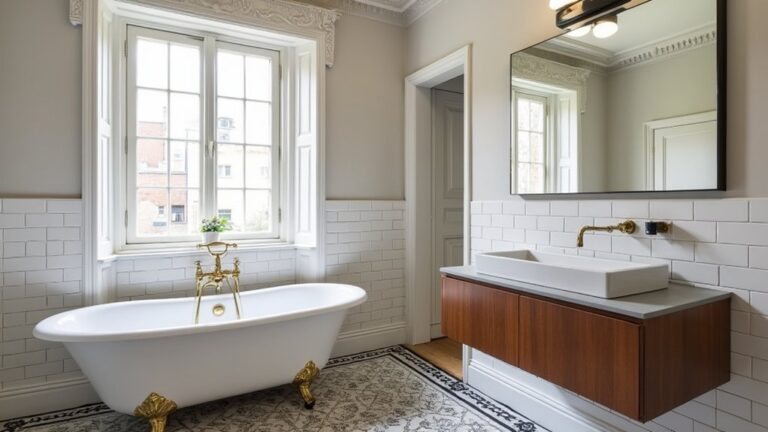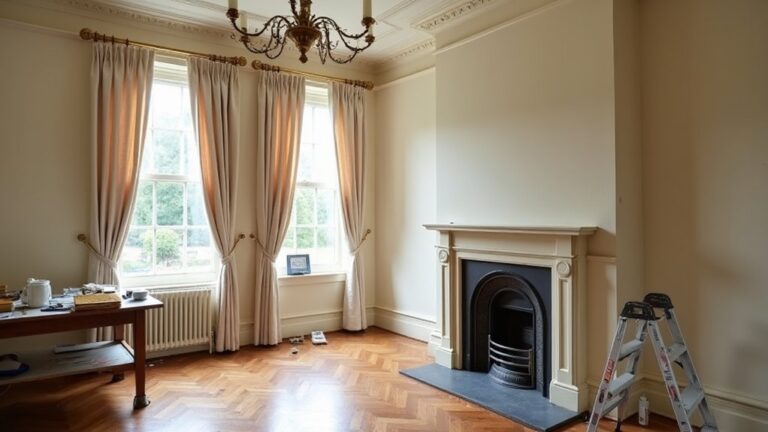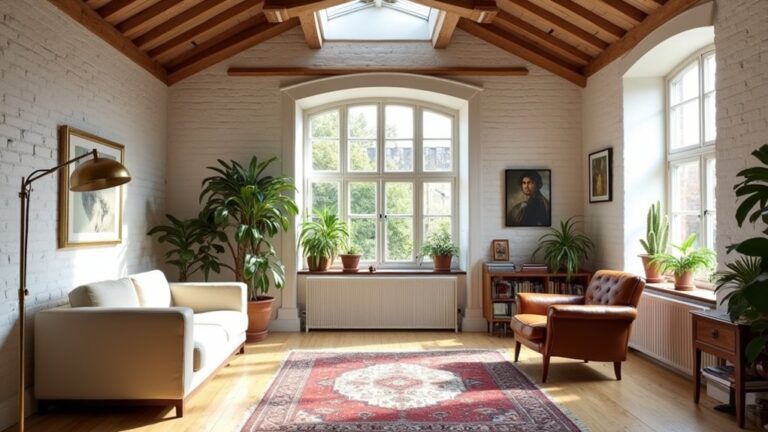

You could spend a lifetime chasing Georgian perfection and still miss the mark. You start by setting the rules—symmetry, strong axes, and disciplined proportion—then you repair what matters: crisp cornices, deep casings, and proper paneling. You match floors, limey plaster, and quiet paint, and you keep openings aligned even when you open the plan. You hide HVAC, lighting, speakers, and smart controls in plain sight—yet the one detail that makes it all work is still ahead…
Key Takeaways
- Re-established Georgian order using strict symmetry, axis alignment, and disciplined proportions for doors, windows, stairs, and primary rooms.
- Restored authentic trim by surveying surviving profiles, rebuilding full cornice runs, and squaring casings for crisp reveals and consistent shadow lines.
- Chose period-appropriate materials—plaster walls, wide plank floors, muted breathable paints, and scaled brass or iron hardware—for durable, quiet luxury.
- Designed modern kitchens with inset, symmetrical cabinetry and concealed appliances, preserving uninterrupted sightlines while delivering contemporary performance.
- Hid HVAC, lighting, audio, and networking in service voids and joinery, using understated grilles and aligned controls to protect historic character.
Set Your Georgian “Rules”: Symmetry, Axis, Proportion

If you want Georgian comfort to feel authentic rather than “inspired,” start by setting a few non‑negotiable rules: symmetry, a clear axis, and disciplined proportion. You’ll make every choice answer to that structure, not trends.
Establish an architectural axis through the entry, stair, and principal room, then align doorways, lighting, and key sightlines to reinforce it.
Apply Symmetry principles with restraint: balance window groupings, mirror major furniture masses, and keep paired elements truly paired in size and spacing.
Use proportion to guide scale—ceiling height to room width, mantel size to wall field, sofa length to bay rhythm.
When you need modern comfort, you’ll integrate it quietly: deeper seating, layered illumination, and concealed storage that preserves the order.
Restore Georgian Trim: Cornices, Casings, Paneling
Once you’ve set symmetry, axis, and proportion as your governing rules, trim becomes the tool that makes those rules visible at eye level. You’ll restore cornices, casings, and paneling with the same discipline you used to set the plan, letting shadows and profiles do quiet, luxurious work.
Keep what’s sound, splice what’s missing, and match historic profiles so joins disappear.
- Survey rooms for surviving ornamental moldings; photograph and measure every profile.
- Rebuild cornices in full runs, aligning returns and miters to the axis.
- Square up door and window casings, then tune reveals so openings read crisp.
- Repair paneling with scarf joints, re-cut beads, and re-establish consistent decorative trim widths.
Choose Georgian Materials: Floors, Plaster, Paint, Hardware
Because trim only reads as “right” when the surfaces behind it behave like they did historically, you’ll want to choose materials that carry Georgian weight and restraint: wide plank or tight-grained boards underfoot, real plaster that takes a crisp edge, mineral-rich paints with a soft depth, and hardware with honest brass or iron and correct proportions.
For floors, you’ll specify quartersawn oak or pine, finished in oil or matte varnish so light rakes across boards without glare, and you’ll prioritize material durability at thresholds.
Use lime or gypsum plaster where historic ornament meets wall; you’ll get sharper reveals and quieter acoustics than drywall.
Choose muted, complex colors—ochres, bone, soot blues—in breathable formulas for a layered patina.
Finally, pick butt hinges, rim locks, and knob sets scaled to doors, not trends.
Create Open Flow With Aligned Openings and Cased Beams

You’ll create Georgian-style ease by aligning doorways so your sightlines run cleanly from entry to rear, letting light and symmetry do the work.
You can keep rooms distinct while feeling connected by casing key beams, turning structure into a refined threshold.
With crisp trim profiles and consistent head heights, your plan reads orderly, gracious, and effortlessly comfortable.
Align Doorways For Sightlines
While Georgian rooms often read as a sequence of beautifully proportioned boxes, aligning your doorways turns that heritage order into a purposeful sightline—one that pulls the eye cleanly through the house and makes circulation feel effortless.
You’ll preserve doorway symmetry while upgrading daily ease, because sightline alignment guides movement as much as it frames views.
- Center primary openings on room axes, then confirm alignment from standing height, not just plan.
- Match head heights and casing reveals so the rhythm reads intentional, not patched.
- Use shallow offsets only where structure demands it, and correct with equal margins.
- Aim each vista at a focal point—chimney breast, artwork, or garden glazing.
Done well, you’ll get calm grandeur without sacrificing privacy or practical function.
Case Beams To Define Flow
Once your doorways line up and the sightlines read true, you can open the plan further without losing Georgian discipline by casing beams to mark the thresholds. You’ll keep the new span honest by wrapping the beam in paneled timber, matching your architraves, skirting, and ceiling cornice profiles.
Set crisp reveals so the casing reads like a purposeful lintel, not a boxed compromise, and center it on the aligned openings to guide movement room to room.
Add Decorative corbels at the spring points to echo period joinery and visually “carry” the load. Choose paint-grade poplar for smoothness or oak for warmth, then size the proportions from nearby door heads.
That’s Historical craftsmanship, translated for everyday comfort.
Build a Georgian-Style Kitchen With Modern Function

You’ll get a Georgian-style kitchen by choosing classic cabinetry with disciplined symmetry, stepped cornices, and inset doors that read as built-in joinery.
You can hide modern function behind paneled refrigerator fronts, a trimmed hood surround, and appliance garages so today’s performance doesn’t break the period rhythm.
Finish it with period-style hardware—bin pulls, mushroom knobs, and polished brass or aged nickel—so every touchpoint feels authentic and quietly luxurious.
Classic Georgian Cabinetry
How do you bring Georgian restraint into a kitchen without sacrificing today’s ease? You start with Custom cabinetry that honors symmetry, framed doors, and disciplined proportions, then tune every detail for daily use. Choose inset construction, consistent reveals, and a measured cornice that reads like fine joinery, not showroom flash.
Layer Vintage finishes—hand-rubbed stain, soft milk paint, or aged brass—so the room feels inherited, not installed. Keep storage clever but discreet, preserving calm elevations and balanced sightlines.
- Match door rails and stiles to period widths for true scale.
- Use furniture-style toe kicks and pilasters to ground the run.
- Add beaded panels inside glass uppers for subtle depth.
- Specify dovetailed drawers and oak interiors for lasting refinement.
Modern Appliance Integration
With cabinetry set in disciplined symmetry and period-correct proportions, the next task is letting modern appliances do their work without disturbing Georgian calm. You’ll specify fully integrated refrigeration and dishwashing behind matching fronts, keeping sightlines uninterrupted from range to larder.
Set a quiet induction hob beneath a traditional mantel-style surround, and vent it through a concealed, high-capacity hood so the room stays serene.
Place wall ovens in a balanced bank, aligning reveals to cabinet rails for crisp, architectural order.
Choose Smart appliances that let you preheat, monitor, and troubleshoot discreetly, reducing visual clutter and daily friction.
Prioritize Energy efficiency with low-noise compressors, heat-pump drying, and LED task lighting, so performance feels luxurious while running costs stay disciplined.
Period-Style Hardware Details
Although the cabinets may carry the room’s symmetry, period-style hardware sets the tactile tone that makes a Georgian kitchen feel authentic rather than themed. You’ll feel it every time you open a drawer: weighty brass, crisp edges, and restrained shine that echoes historical ornamentation without shouting.
Choose finishes that age gracefully, and keep proportions aligned with your rails, stiles, and inset reveals.
- Pick oval or bail pulls with a thin neck and solid backplate.
- Use unslotted, domed screws or conceal fixings for cleaner sightlines.
- Specify latches and butt hinges sized to door thickness and swing.
- Repeat one metal across knobs, taps, and lighting for calm unity.
With period style hardware, you gain daily function and inherited character in equal measure.
Plan Hidden Tech: Lighting, HVAC, Speakers, and Wi‑Fi
For HVAC, route slim ducting through secondary closets and service voids. Keep grilles understated, and specify energy-efficient systems that won’t demand bulky soffits.
You can hide in-ceiling speakers in panel bays or behind acoustically transparent fabric, preserving proportions and sightlines.
For Wi‑Fi, position access points centrally, hardwire key rooms, and conceal gear in a ventilated joinery cabinet.
With Smart home integration, you’ll control scenes discreetly, keeping switches minimal and period-correct.
Conclusion
When you’re done, your home still reads unmistakably Georgian—calm, symmetrical, and disciplined—yet it lives like today. If you worry hidden systems will feel “fake,” you’ll see the opposite: vents vanish into cornices, speakers hide behind paint-matched grilles, and Wi‑Fi tucks into joinery, leaving paneling and sightlines untouched. You’ll walk an axis of aligned openings, touch crisp brass, and feel warm floors—quiet comfort wrapped in true heritage.
About the Author