You’re restoring original fireplaces in a Manchester renovation, so you start by deciding what’s worth saving: check the surround, hearth, lintel, and flue for cracks, salts, and damp, and confirm what’s genuinely period. You price the job with a HETAS installer and a conservation-minded brickie, then factor permissions, liners, vents, and lime mortar. Next, you open up the block-up without chipping the edges—but what you find behind it changes everything…
Key Takeaways
- We inspected each fireplace’s structure, original details, and damp signs to decide what could be safely restored.
- We planned budgets, lead times, and compliance with Part J, plus any conservation or listed-building permissions needed in Manchester.
- We hired HETAS/Gas Safe and period-masonry trades early to coordinate sweeping, liners, ventilation, and roof pots or cowls.
- We opened blocked fireplaces by hand, layer by layer, using dust control and documenting original features for accurate reinstatement.
- We repaired with compatible lime mortars, restored surrounds and hearths, and matched tiles using reclaimed or small-batch reproductions.
Is This Period Fireplace Worth Saving?
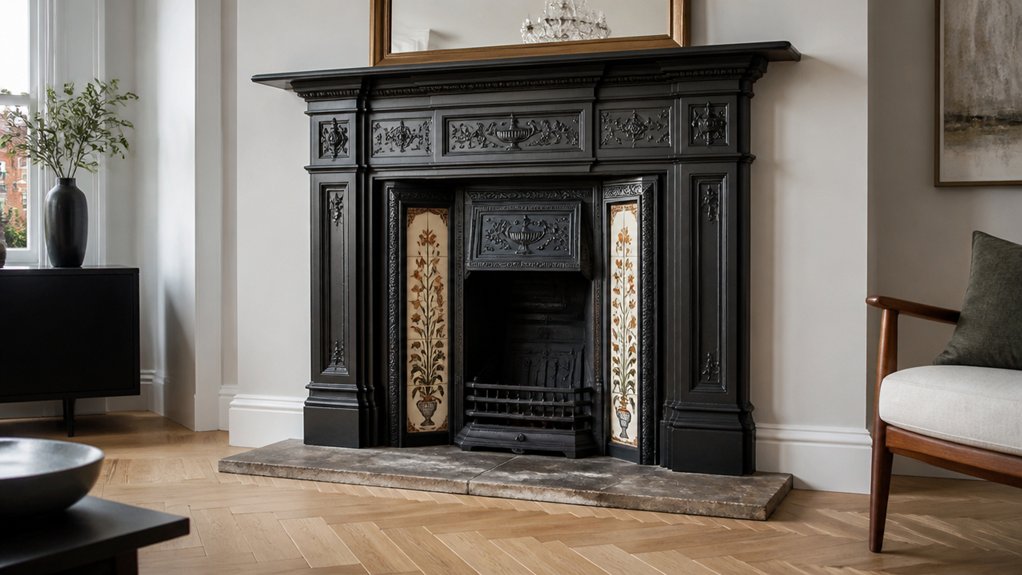
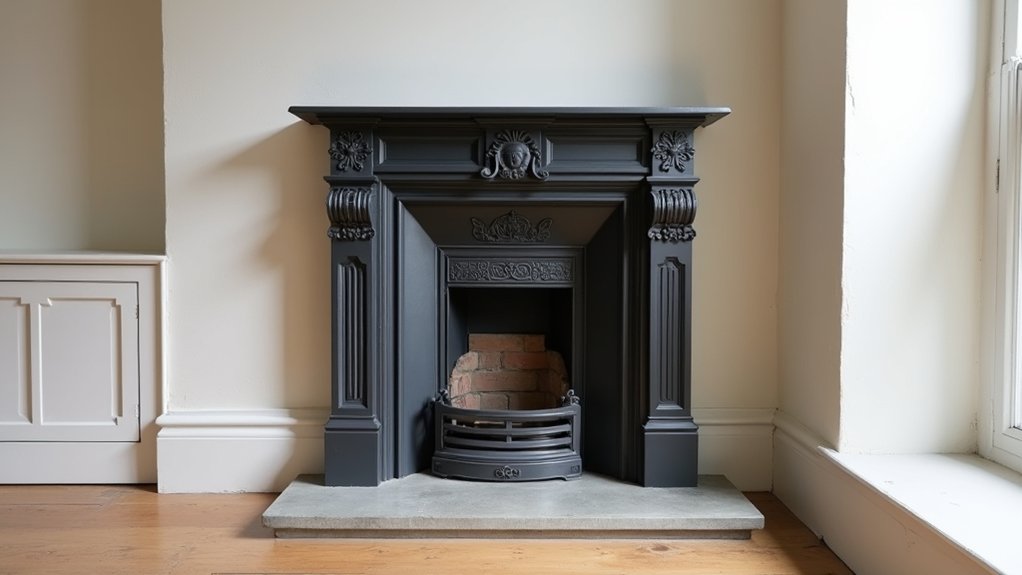
Although a tired surround and a blocked flue can make a period fireplace look like a lost cause, it’s often worth saving if the core fabric is sound and original to the property. You start by checking the opening’s proportions, lintel integrity, and whether the hearth is slate, quarry tile, or concrete infill.
You tap for hollow render, inspect the fireback for cracking, and confirm the chimney breast shows no stepped fractures or sulphate staining. You look for surviving details—Victorian cast-iron insert, tiled cheeks, or an Edwardian timber mantel—because they drive Historical significance and resale value in Manchester terraces. The appeal of Reclaimed Cast Iron Fireplace Surrounds in any living room, is a sight to behold.
You also judge aesthetic appeal: crisp mouldings, balanced reveals, and authentic materials that’ll take gentle stripping, lime repairs, and blacking without losing definition.
Plan the Job: Costs, Trades, and Permissions
You’ll need a realistic budget that covers not just the surround and insert, but chimney sweeping, flue lining, hearth upgrades, and the common surprise of damaged brickwork or a failed lintel.
You should line up the right trades—HETAS (solid fuel) or Gas Safe (gas) engineers, plus a builder familiar with period masonry and ventilation requirements—so the finish stays authentic and safe.
You must also check permissions and compliance, from Building Regulations Part J and carbon monoxide alarm rules to listed building consent or conservation area constraints in Greater Manchester.
Budgeting And Hidden Costs
Before you lift a single hearth tile in a Manchester terrace, pin down a realistic budget because the headline cost of “restoring a fireplace” rarely includes the essentials: chimney sweeping and CCTV inspection, liner supply and fitting (often required for Part J compliance), hearth construction to current clearances, ventilation upgrades, and any remedial masonry to the gather, lintel, or chimney breast.
Build cost analysis into your budget planning by pricing contingencies: soot disposal, skip hire, floor protection, plaster patching, and specialist heatproof materials (lime, fire cement, vermiculite).
Expect extra if you uncover a concrete infill, a cracked arch, or a blocked flue from a 1960s back boiler.
If you’re in a conservation area, allow for heritage-appropriate tiles and reclaimed surrounds, plus potential drawings for Building Control sign-off.
Hiring Specialist Trades
Once you’ve costed the liner, ventilation, hearth build-up, and the inevitable soot-and-plaster mess, the next job is lining up the right trades in the right order so the work meets Building Regs and doesn’t get bodged behind a Victorian surround.
You’ll want a fireplace restorer to free the opening, keep the jambs true, and protect original tiles. Bring a HETAS-registered installer early to specify liner diameter, gather, and closure plate details.
Then, book a competent roofer for pot, cowl, and flashing. If you’re reinstating a cast insert, use a metalworker who can stitch-crack and reblack for historical accuracy.
Source sustainable materials: lime mortar, reclaimed slabs, and FSC oak for mantels. Get itemised quotes, day rates, and lead times upfront.
Permissions And Compliance
Where do you stand on permissions and compliance when you’re opening up a Manchester fireplace? Start by checking whether your home’s listed or in a conservation area; Manchester City Council may require Listed Building Consent, and you can’t assume “like-for-like” is exempt. Keep photos, hearth dimensions, and any removed fabric to evidence historical significance and protect period detailing.
You’ll also need Building Regulations, mainly Part J. You must verify flue integrity, liner suitability, ventilation, hearth projection, and clearances to combustibles. If you alter the chimney breast or add a new opening, use structural calcs and notify Building Control.
Fit a compliant carbon monoxide alarm. Choose lime mortar and reclaimed surrounds where possible so you meet standards without flattening fireplace aesthetics or resale value.
Open Up a Blocked Fireplace (Without Damage)
You start by evaluating the chimney breast, flue line, and existing surround for movement, damp salts, and any cracked lintel before you touch the infill.
You then remove the blocking materials layer by layer—typically modern blockwork, plaster, and rubble—keeping vibration low so you don’t shock a Victorian or Edwardian opening.
Throughout, you protect the original brickwork with dust control, careful hand tools, and sacrificial boards, preserving the arrises for a proper lime-based repair later.
Assess Chimney And Surround
Before any plaster comes off, assess the chimney breast and original surround so you can open a blocked fireplace without cracking historic brickwork or ruining a Victorian cast-iron insert.
Start with a chimney inspection: check the stack for lean, spalled bricks, failing pointing, and damp salts blooming on the breast—common in Manchester terraces. Use a torch and mirror through any existing vent; note soot fall, bird nests, or a redundant liner. Confirm whether the fireplace shares a flue with another room, as party-wall flues can mislead.
Then map the surround: tap for hollow render, measure the opening against standard Victorian proportions, and photograph mouldings, tiles, and fixings. Label loose components and test iron for movement.
Plan gentle support and documentation for accurate surround restoration later.
Remove Infill Layer By Layer
Once you’ve confirmed what you’re dealing with, start opening the fireplace as if you’re unpicking a Victorian bodge—slowly, and in the right order. Begin at the centre of the infill, not the edges, and work in hand tools only: cold chisel, bolster, and lump hammer. You’re looking for changes in sound and resistance that flag soot, ash, or a later skim of hard cement.
- Remove modern plasterboard or skim first, bagging debris as you go.
- Take out loose brick or block infill course by course, top down.
- Stop at any timber, iron fixings, or original hearth edge and reassess.
Keep each layer separate so you can date interventions and maintain Historical authenticity. That sequencing supports Material preservation and keeps Manchester’s typical mixed-infill surprises manageable.
Protect Original Brickwork
Where do most openings go wrong? You rush the last 10mm and chip the arrises of the original bricks. Before you go further, tape a sacrificial hardboard face to the jambs and lay dust sheets to catch falling rubble.
Use a cold chisel with a hand guard, not an SDS, and work from the centre out so you don’t lever against the reveal. If you hit hard cement, score it with a multi-tool and peel it away in slivers.
Keep the bricks dry; misting can drive salts to the face and spoil fireplace aesthetics. Photograph bond patterns and soot lines for historical significance, then repoint only where needed with NHL 2.0 lime, colour-matched to Manchester stock.
Inspect What You’ve Exposed: Flue, Lintel, Damp
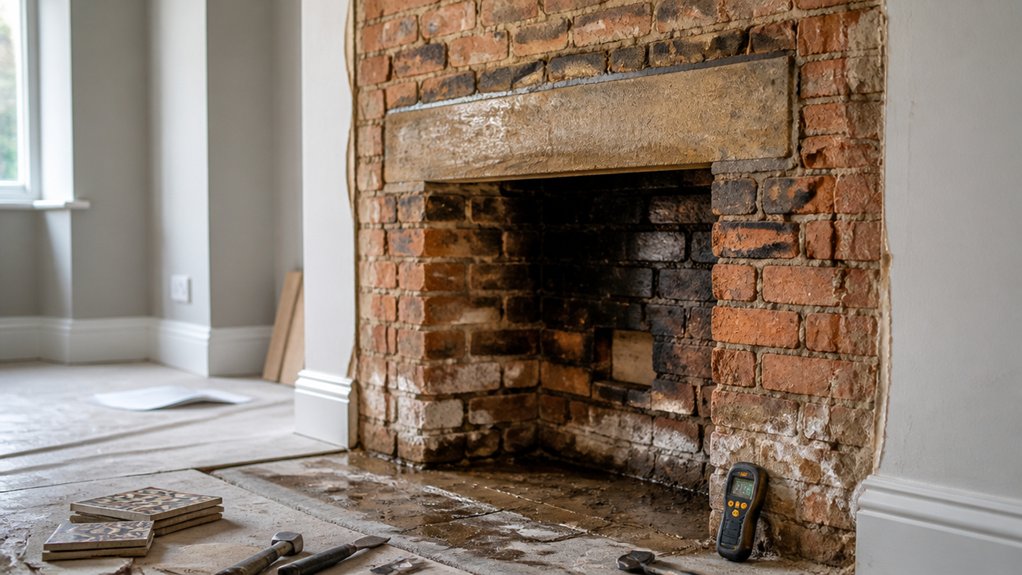
Although the temptation is to start rebuilding as soon as you’ve opened the fireplace up, you’ll get a better—and safer—result by inspecting what you’ve exposed: the flue’s condition and route, the lintel’s bearing and soundness, and any damp staining that suggests a failed parging, bridged DPC, or a leaking stack, all of which can be common in Manchester’s older brick terraces and Victorian conversions.
Don’t guess—verify the structure and moisture path before you commit to finishes that affect fireplace aesthetics and the room’s historical significance. Check:
- Flue: confirm continuity to the terminal, look for offsets, missing liners, and tar glazing; allow for Part J compliance.
- Lintel: identify timber, stone, or RSJ; check end bearings, cracking, and soot-softened mortar.
- Damp: map tide marks, salts, and cold-bridge points; assess stack flashing and ventilation.
Clean Soot and Ash Safely (And Contain Dust)
Before you touch the hearth, treat soot like a fine, oily contaminant that’ll travel through a Manchester terrace in minutes if you let it. Seal the opening with 500-gauge polythene and tape, then make a zip door; run a HEPA air scrubber or extractor fan to the window for Dust containment.
Wear a P3 respirator, goggles, and nitrile gloves—soot’s acidic and stains fast. Mist surfaces lightly with a pump sprayer (don’t soak) to keep particulates down, then lift ash with a metal scoop into double-bagged rubble sacks.
Vacuum only with an M-class/HEPA unit; domestic vacs just exhaust fines. Finish with dry Cleaning techniques: soft brush, soot sponge, then sugar soap wipe on sound masonry.
Repair a Period Fireplace Surround and Hearth
Once you’ve contained the soot and cleared the hearth, you can assess the period surround and hearth properly without grinding grime into the finish. Check for hairline cracks, delaminated plaster, loose slips, and heat-spalled stone. You’ll preserve historical significance by repairing, not over-replacing, and by keeping crisp moulding lines that define the fireplace aesthetic in Manchester terraces.
- Rake out failed joints with a thin chisel, then repoint with lime putty mortar; avoid cement that traps moisture.
- Consolidate friable stone or cast with breathable consolidant, and pin loose sections with stainless fixings set discreetly.
- Level a rocking hearth bed with lime-based bedding and slate shims, keeping clearances to Part J guidance.
Finish by dry-brushing, then apply a microcrystalline wax or casein sealer for a low-sheen, period-correct look.
Replace or Match Missing Fireplace Tiles
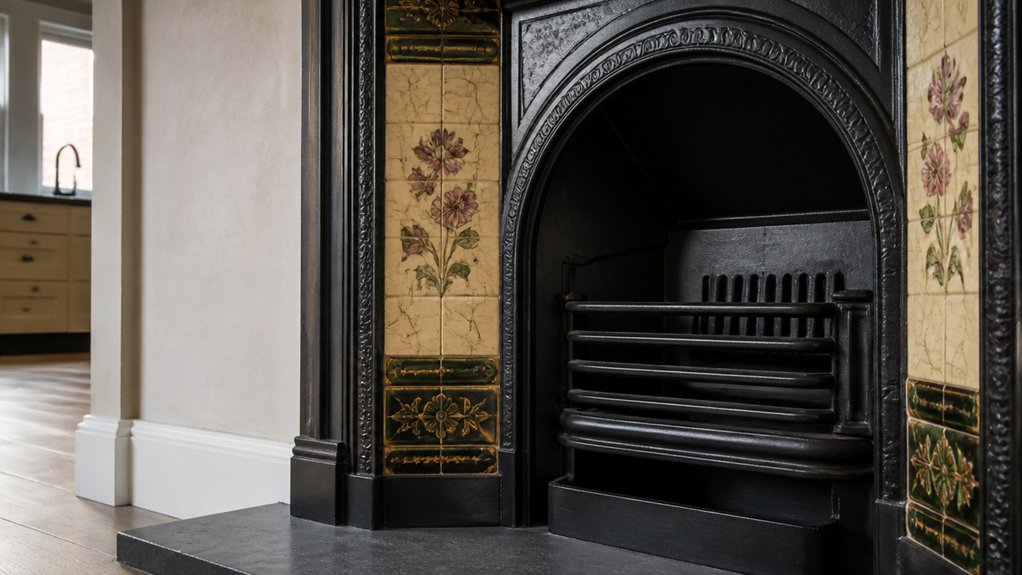
Where do you start when a Victorian or Edwardian tile set has gaps, chips, or a few “new” tiles that don’t sit right? You document the run: tile size, thickness, edge chamfer, glaze crackle, and transfer pattern repeat, then measure the aperture and returns so your replacements don’t throw the symmetry.
For fireplace tile matching, you compare body colour and glaze tone under daylight, not warm LEDs, and you check for period-correct dust-pressed ceramics rather than modern glossy repros.
For missing tile replacement, you source salvaged originals from UK reclamation yards, then commission a small batch only if the moulded profile can’t be found.
You dry-lay the set, balance patina, and keep any honest wear consistent across the face.
Make It Safe and Usable: Liners, Vents, Finishes
With the tiles dry-laid and the face looking period-correct, you then sort the part that makes a Manchester fireplace legal, safe, and actually usable: the flue, the air supply, and the finishes that cope with heat.
Get a HETAS sweep to test draw, then specify Fireproof liners to suit the appliance and chimney height; stainless flex for stoves, pumice or ceramic for open fires where you want better heat retention.
You also plan Ventilation upgrades so the room won’t backdraft under modern airtightness.
- Fit a top plate, clamp, and cowl to stop rain and downdraughts
- Add a discreet air brick or underfloor vent sized to kW output
- Finish with lime plaster, heatproof slip, and a proper hearth upstand
Conclusion
You’ve proved a period fireplace can earn its place in a modern Manchester renovation when you assess it properly, budget sensibly, and follow UK permissions. You open it up carefully, inspect the flue, lintel, and damp, then clean soot with tight dust control. You repair surrounds and hearths with lime mortar, match tiles, and document everything. Finally, you fit liners and vents so it performs like a well-tuned stove, without losing character.
About the Author