You can modernise a Georgian hallway without stripping out its charm if you start like a pro: measure ceiling height, cornices, stair runs, and where daylight actually falls. Then you choose contemporary fittings with slim silhouettes and proper finishes—aged brass, bronzed nickel, warm opal glass—rather than anything shouty. Layer ambient, task, and accent light, and keep pendants and sconces in calm symmetry. The tricky part is getting the proportions and colour temperature right…
Key Takeaways
- Survey the hallway’s dimensions, cornices, and existing wiring routes, and confirm any listed-building constraints before designing the scheme.
- Select contemporary fixtures with slim projections, clean silhouettes, and heritage-friendly finishes that suit high ceilings and narrow circulation.
- Build layered lighting using dimmable 2700K ambient light, targeted task lighting at key zones, and accent light to highlight cornices or niches.
- Position pendants and sconces symmetrically on the hallway axis, aligning heights with door heads and repeating spacing for long runs.
- Avoid common errors by using opal or baffled optics to reduce glare, specifying CRI 90+ LEDs, and planning coordinated switching and dimming.
Measure Your Georgian Hallway and Key Features
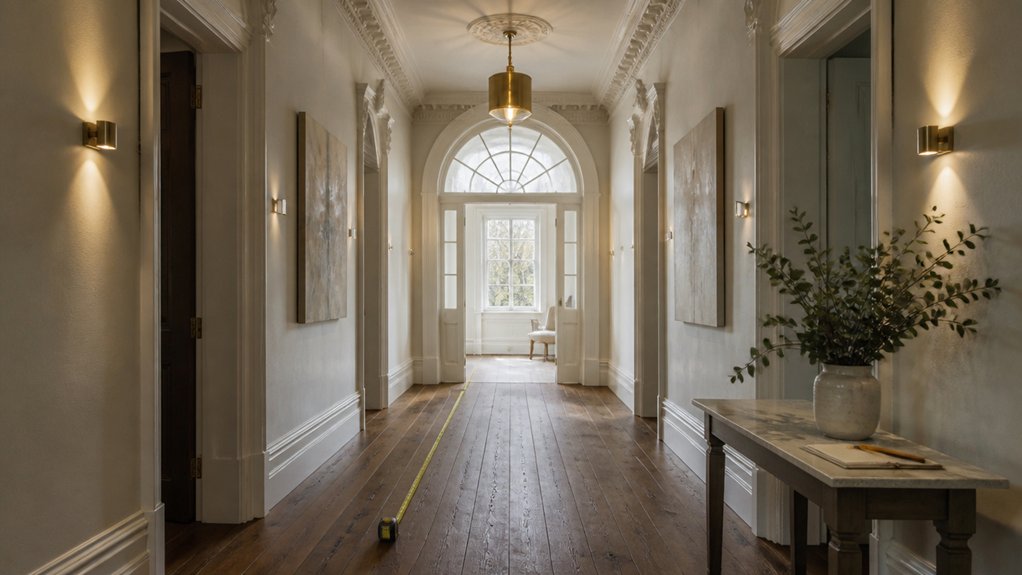
Before you choose any modern lighting, measure your Georgian hallway properly and note the architectural details that will dictate what works. Take ceiling height, hallway width, and stair pitch, then map where daylight falls through fanlights and sash windows.
Measure cornice projection, ceiling roses, architraves, and dado rails so fittings don’t clash or visually crowd period lines. Check the location of existing junction boxes, switches, and any surface-mounted conduit, common in UK retrofits, and record safe cable routes.
Photograph plasterwork, panelled doors, and niches, and note finishes (lime plaster, timber, stone) that affect fixings. Flag listed-building constraints early and keep Historical accuracy in mind when you assess what can be altered.
Your notes on Architectural details become your brief.
Choose Contemporary Lights for a Georgian Hallway
Once you’ve logged the proportions and period details, you can choose contemporary lighting that sharpens the hallway’s geometry without fighting the cornice lines and ceiling roses. Keep silhouettes clean: slim cylinders, opal globes, or shallow discs sit neatly under high ceilings and look current in UK renovations.
If your hallway’s narrow, pick fittings with a tight projection so coats and bags don’t clip them.
Mix eras thoughtfully by pairing modern forms with Vintage fixtures in adjacent rooms, so the changeover feels intentional rather than jarring. Prioritise quality finishes—brushed brass, aged bronze, or matte black—that echo your door furniture.
Use Color coordination to link metalwork, paint, and flooring undertones; warm metals flatter heritage whites, while black reads crisp against stone or Farrow & Ball greys.
Plan Layers: Ambient, Task, and Accent Light
Although a Georgian hallway often looks like it only needs a single statement pendant, you’ll get a far more usable (and current) result by planning three layers: ambient light to lift the whole space, task light where you actually move and use keys or mirrors, and accent light to pick out plasterwork, panelling, and artwork without flattening the period details.
Start with warm, dimmable ambient light (think 2700K LEDs) so the entrance feels welcoming on grey UK afternoons.
Add task light at the console, cloak area, and mirror so you can find post, check shoes, and see faces clearly.
Then bring in accent light on picture rails, niches, or cornices to create depth and highlight heritage textures.
Balance modern drivers with Vintage fixtures for character, and match beam spreads to your colour schemes so paint reads true, not muddy.
Position Pendants and Sconces to Keep Symmetry
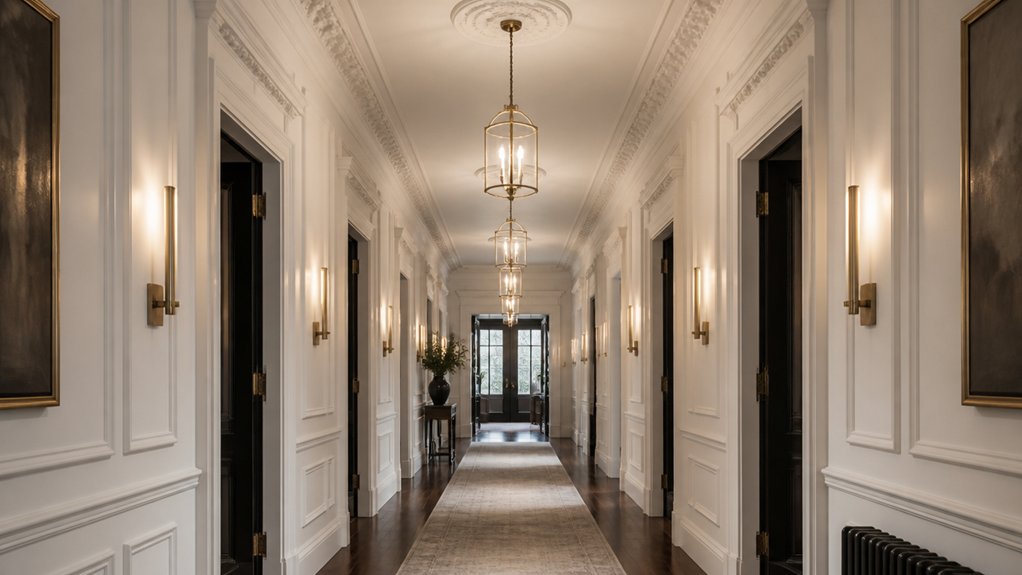
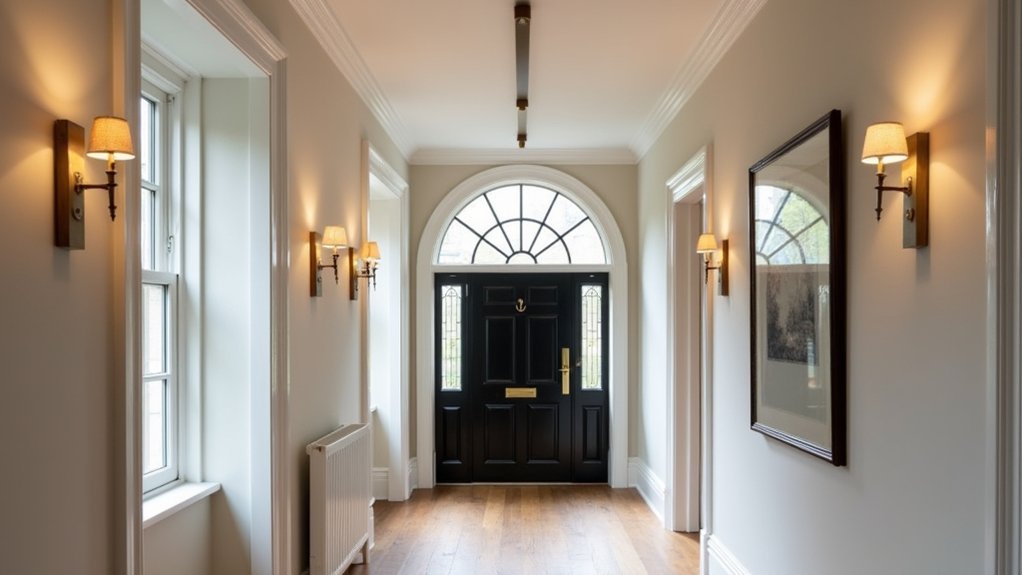
When you keep the lighting layout symmetrical, a Georgian hallway instantly reads calmer and more intentional, even with contemporary fittings. Centre a pendant on the axis of the front door and stair run, then repeat it at consistent intervals if the hall is long, using matching drop lengths to preserve proportion.
Flank key architectural points with sconces: place pairs either side of the archway, mirror, or console, aligning backplates with door-head height and keeping equal offsets from skirting and cornice lines.
Choose Decorative fixtures that echo period geometry—opal globes, ribbed glass, or slim brass—while still feeling current.
Lock in Color coordination by matching metal finishes to your door furniture and using consistent bulb temperatures throughout, so the symmetry looks deliberate, not busy.
Fix Common Georgian Hallway Lighting Mistakes
A symmetrical plan gives you a strong starting point, but a few classic slip-ups can still make a Georgian hallway feel flat, glary, or oddly chopped up. First, ditch a single central pendant on its own; you’ll get harsh pools and dark corners. Layer light: a dimmable ceiling piece, wall lights at shoulder height, plus discreet stair or skirting uplights.
Next, fix colour temperature—2700K warm white suits lime plaster and timber; cooler LEDs look showroom‑cold. Watch glare: choose opal glass, linen shades, or baffled downlights, and angle beams off panelling.
For Historical accuracy, keep proportions right: slim stems, modest diameters, and period‑friendly metals like aged brass. Your Fixture selection should prioritise CRI 90+ and good dimming compatibility. Use a coordinated switching plan.
Conclusion
When you measure the ceiling line and spot that original cornice, you’re also measuring what can change without losing soul. Choose slim, contemporary pendants and warm‑white LEDs, and you’ll notice how brushed brass or blackened bronze quietly echoes old ironwork. Layer ambient, task, and accent light, then keep pendants and sconces symmetrical—you’ll “accidentally” make the hallway feel wider, calmer, and more expensive. Fix glare and cold colour temps, and character returns.
About the Author