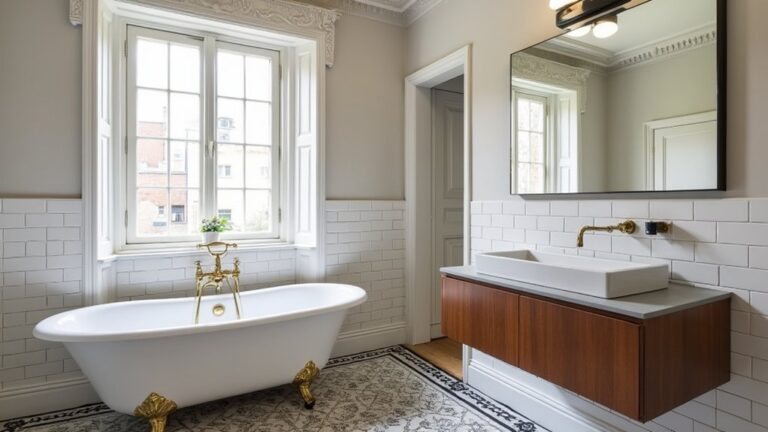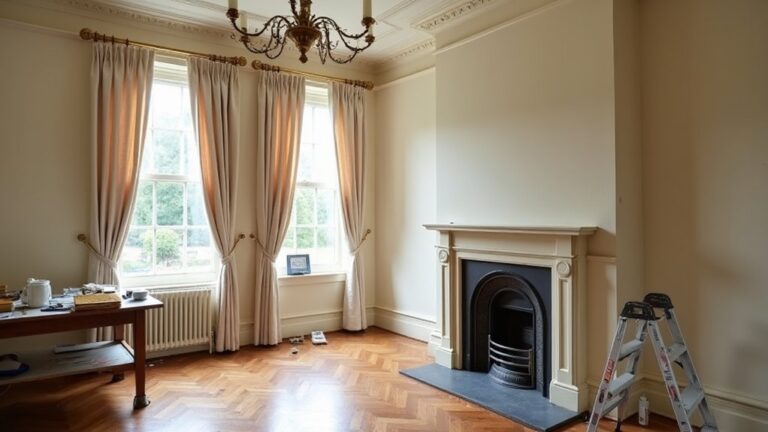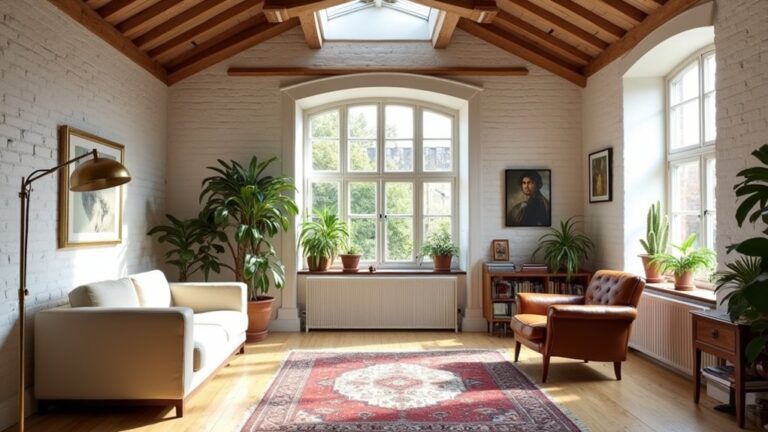
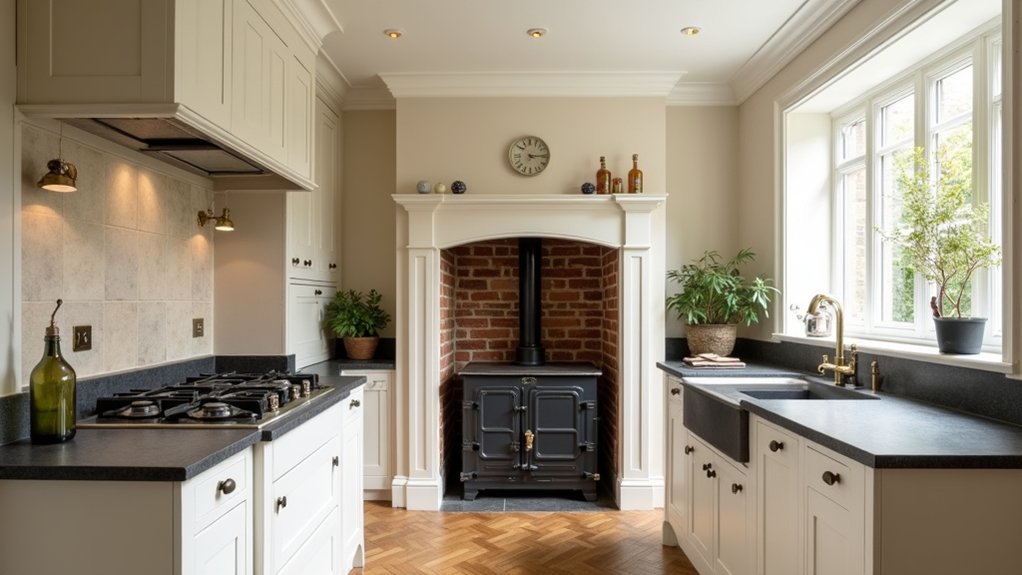
In York, you walk into a Victorian terrace kitchen with timber skirtings and a tiled hearth, yet the room feels oddly new. You keep what’s honest—architraves, cornices, chimney surrounds—and strip back shiny fixes that flatten the era. You choose hard-wearing stone, glazed tiles, and muted paint that suits northern light, then tuck appliances behind joinery and layer quiet lighting for family life. The question is where you start without losing the plot…
Key Takeaways
- Stripped out modern flat-front units and plastic trims, restoring Victorian character with salvaged skirtings, architraves, cornices, ceiling roses, and tiled hearth details.
- Replanned for family life using zoned stations for cooking, cleaning, and dining, with clear sightlines from doorway to garden and smooth circulation.
- Chose period-appropriate, durable materials—painted tulipwood or quarter-sawn oak joinery, honed stone tops, and aged brass or nickel hardware that patinas well.
- Used an authentic Victorian palette and restrained tilework: deep olive and warm neutrals, small-format tiles with dark grout, and minimal patterning.
- Integrated modern lighting, appliances, and ventilation discreetly using milk-glass pendants, hidden appliance doors, and a concealed extractor routed through chimney and cabinetry voids.
Why Our Victorian Kitchen Didn’t Feel Victorian
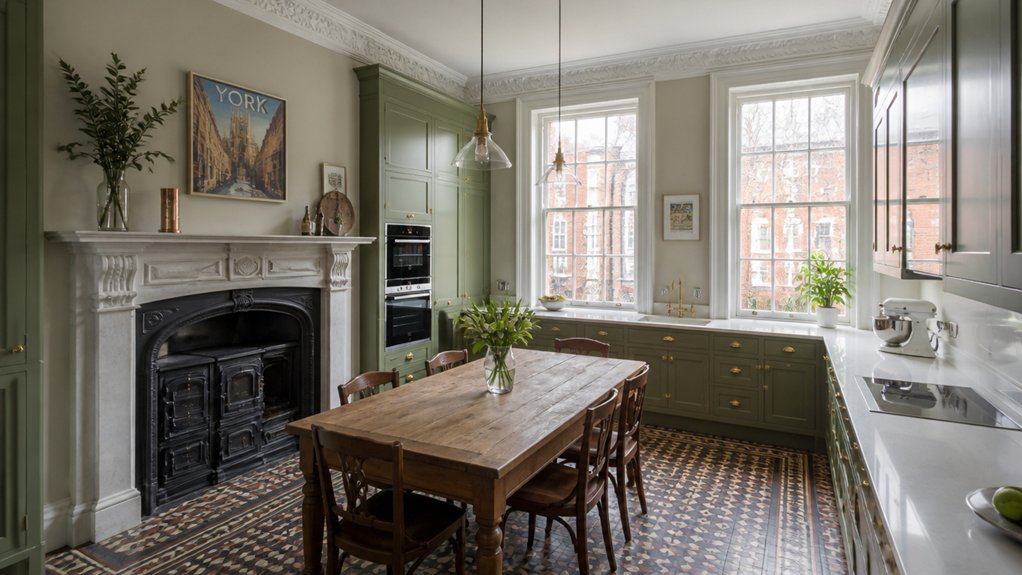
Although the house dated to the Victorian era, the kitchen read as generically “updated” the moment you stepped in: flat-front cabinets, cool gray finishes, and a run of recessed LEDs washed out any sense of age or craft. You couldn’t find a single cue that belonged to York’s late-19th-century build: no cornice profile, no framed joinery, no patterned tile, no weighted sash-like proportions in the glazing.
Modern laminate hid the chimney breast, and plastic trims severed sightlines where skirtings and architraves should’ve met cleanly. Even the hardware felt wrong—oversized bars instead of knobs, machine-brushed rather than aged.
Without Historical accuracy, the room read as a showroom. You needed preservation techniques to reveal what survived and replace what didn’t.
A Family-Friendly Victorian Kitchen Layout
You’ll get a family-friendly Victorian feel by planning a zoned layout: a proper range-and-prep run for cooking, a scullery-style cleanup station, and a welcoming table area that keeps little feet out of harm’s way.
You’ll hold onto period correctness while improving daily life with open sightlines and smooth circulation, so you can cook, supervise homework, and keep the room feeling gracious rather than cramped.
You’ll also choose durable, high-traffic workspaces—sealed wood or honed stone counters, hardwearing tile underfoot, and wipeable painted cabinetry—that wear like well-kept antiques, not tired renovations.
Zoned Layout For Family
When a Victorian kitchen has to serve homework, hurried breakfasts, and late-night cups of tea, a zoned layout keeps the room gracious rather than chaotic. You assign each task a proper “station,” so family life doesn’t trample Victorian aesthetics.
Place prep and cooking together with generous worktops, a deep butler sink, and cabinetry that echoes original joinery. Keep baking and tea-making near a small larder niche, stocked with jars and tins, so children can help without crowding the hob.
Create a homework perch at a peninsula end or tucked table, with concealed sockets, charging drawers, and discreet task lighting—Modern technology that won’t jar against period lines.
Finish with a quiet clean-up zone: integrated bins, a dishwasher behind panelled fronts, and durable stone that wears like heritage.
Open Sightlines And Flow
So the kitchen still reads as a composed Victorian room rather than a modern traffic hub, keep sightlines open from doorway to garden and let movement flow around—not through—the main work zone. You’ll do this by aligning the island and table on the room’s long axis, leaving a clear central view that honours original proportions and keeps Historical accuracy intact.
Tuck tall storage and appliances to one side, so doors and glazing stay visually calm. Use cased openings with slim architraves to echo period joinery while widening passages for prams, guests, and homework traffic.
Set lighting in a gentle hierarchy—pendants over social points, discreet task lights elsewhere—so the eye travels naturally. Maintain aesthetic cohesion by repeating timber tones, aged brass, and painted mouldings at every threshold.
Durable High-Traffic Workspaces
Although a Victorian kitchen should feel gracious, it still has to take the daily knocks of muddy boots, school bags, and constant tea-rounds, so plan a hardwearing “working lane” at the room’s edge that preserves the period centre. Set sink, hob, and prep within this strip, keeping the original hearth wall and bay window clear for dining and display.
Choose encaustic-look porcelain underfoot, finished with dark grout, for Victorian authenticity with Modern durability. Run a slim oak or honed granite upstand to resist splashback without shouting “new build”.
Fit inset doormats at thresholds, add a coat-and-bag rail by the back door, and specify wipe-clean paint below dado height. You’ll protect joinery while the room stays calm.
Where We Hid Appliances (and Ventilation)
You keep the Victorian calm by tucking small electrics into appliance garages and masking larger kit behind painted panels that read like fitted joinery. You’ll also want an integrated extractor—set into a canopy or hob—so the sightlines stay traditional while the air changes meet modern cooking.
To make it all work, you route ducting through cornice voids, boxed-in chimney breasts, or floor cavities, keeping grilles discreet and access panels sensibly placed.
Appliance Garages And Panels
To keep a York kitchen feeling Victorian rather than gadget-forward, we tucked the modern workhorses into appliance garages and paneled enclosures that read like original joinery. You’ll keep kettles, toasters, and the coffee machine on a hidden run of worktop, then close pocket or tambour doors so the elevation stays calm and cornice-led.
With panel integration, you match rails, stiles, and beading to your cabinet fronts, so dishwashers and tall fridges disappear behind painted timber faces. You’ll align reveals, keep hinge lines consistent, and use antique-brass knobs to echo period furniture.
Inside the garages, you add durable liners, a switched socket strip, and a generous cable port, so everything lives ready-to-use yet out of sight. The result feels tailored, not techy, and it photographs beautifully.
Integrated Extractor Solutions
Once the small appliances disappear behind pocket doors and paneled fronts, the extractor becomes the next giveaway that a kitchen’s been updated. You keep the Victorian sightlines intact by choosing an integrated canopy that tucks into a chimney breast-style surround, trimmed with simple ogee moulding and painted to match the cabinetry.
You’ll want quiet extraction, so you specify a low-sone motor and a well-sealed, washable baffle filter that won’t look plasticky when it’s down. With Smart technology, you can set automatic boost when steam spikes, then let it drop back to a near-silent setting.
For energy efficiency, you opt for an efficient EC motor and LED task lighting that reads warm, not blue, against aged brass and honed stone.
Concealed Ducting Routes
Although the canopy disappears neatly into a chimney-breast surround, the duct run still needs the same discipline as any modern system, so we hid it where Victorian builders already gave us voids: behind the chimney stack, within a boxed cornice line, and through the depth of a tall larder rather than across the ceiling.
You keep bends wide, joints taped, and access panels aligned with joinery so servicing doesn’t scar plaster. Where the route crosses cold corners, you wrap the pipe and restore ceiling insulation to stop condensation and drumming.
You let wall paneling do double duty, concealing a slim service chase for power and make-up air while reading as original wainscot. At the external wall, you select a heritage grille and paint it to match brickwork.
Victorian-Style Storage: Pantry, Larder, Dressers
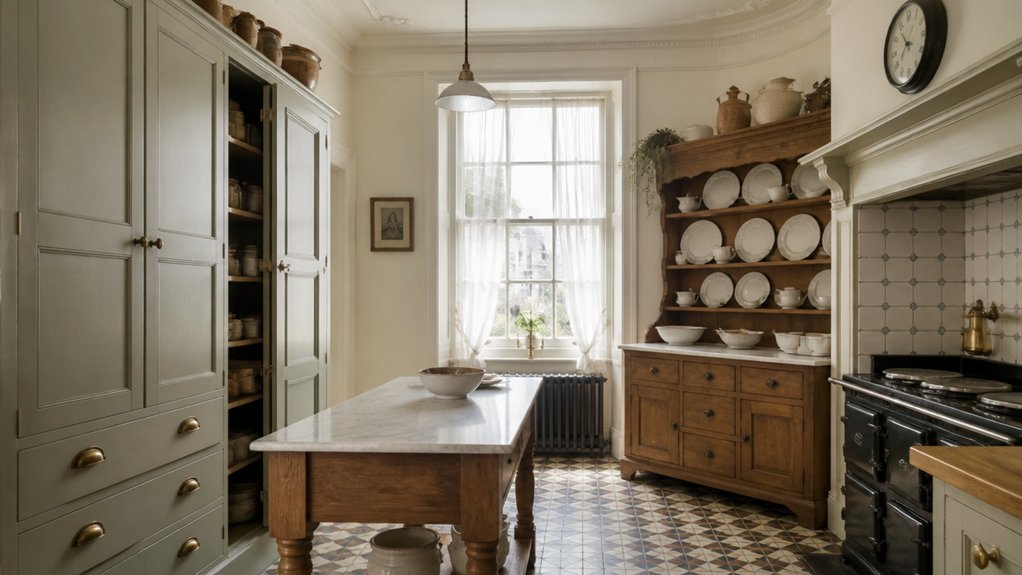
Because a Victorian kitchen worked hardest behind closed doors, your storage should feel purposeful, handsome, and quietly abundant. You’ll get that sense of order by treating Victorian storage as joinery, not just cupboards, while keeping modern accessibility front and centre.
- Fit a tall pantry with internal oak shelves, spice trays, and a shallow drawer for scales and clips.
- Give the larder a cool, shaded corner with breathable fronts, tight seals, and washable stone or zinc-lined shelving.
- Choose a dresser with glazed uppers for everyday china, and deep base drawers for pans, so nothing’s buried.
- Add discreet lighting, soft-close runners, and a hidden charging nook, so the period profile stays calm.
Keep labels neat, hinges robust, and edges bead-detailed.
Which Original Victorian Features We Restored
If you want a Victorian kitchen to feel authentic rather than “styled,” you start by saving what the house already gave you. You lift later paint from the original timber skirtings and architraves, then reinstate crisp shadow lines around doors and the chimney breast.
You repair the tiled hearth and keep its slightly uneven patina, so it reads as honest use, not newness. You reopen the bricked-in fireplace aperture to restore the room’s proportions, then fit a discreet liner so it’s functional.
You retain the sash window and overhaul the weights, cords, and meeting rails, stopping draughts without losing the thin glazing bars. You also salvage the ceiling rose and cornice sections, aligning joins so Victorian craftsmanship meets Modern elegance.
Period-Appropriate Materials That Last
Once you’ve brought the original bones back into view, the quickest way to keep a Victorian York kitchen feeling genuine is to choose materials the period would recognise—and that today’s daily cooking won’t punish.
You’ll get true period authenticity when every surface works hard and ages with dignity, rather than fighting patina.
- Quarter-sawn oak or painted tulipwood for joinery: stable, repairable, and right for Victorian proportions.
- Honed marble or soapstone for worktops: heat-tolerant, tactile, and quietly luxurious with honest wear.
- Brass, bronze, or nickel hardware: weighty, serviceable, and it improves with handling.
- Lime plaster and breathable sealers: they protect walls while letting old masonry behave naturally.
Layer Vintage decor on top, and your kitchen stays resilient and believable.
Victorian Colours, Tiles, and Trim Details
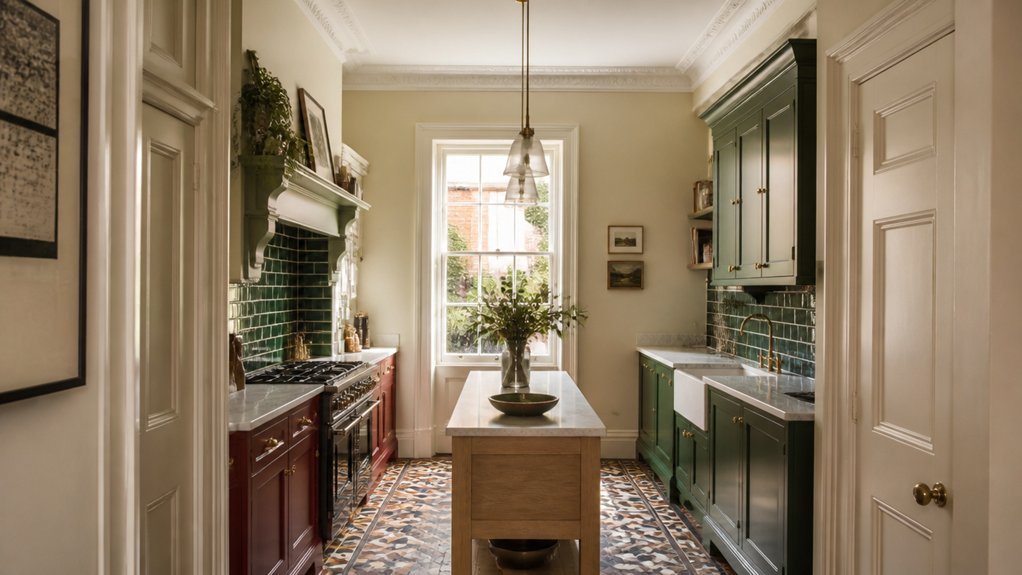
Although Victorian kitchens prized utility, they still used colour, tilework, and trim to signal order and quiet prosperity—so you should treat these finishes as architecture, not afterthought.
Start with a grounded palette: deep olive, ochre, soot black, and warm stone, balanced with crisp off‑white to keep cabinetry sharp.
Choose tiles the way a joiner chooses timber: for rhythm and edge discipline. A simple 3×6 or small-format square, set in a running bond, looks correct; cap it with a glazed pencil liner or a bullnose to avoid modern “wet-room” bluntness.
If you want pattern, keep it to a narrow dado band.
Finish with trim that reads original: restore skirting profiles, add ornate cornices, and frame chimney breasts.
Use Victorian wallpapers sparingly, inside pantries or breakfast nooks.
Victorian Kitchen Lighting That Feels Bright
Because Victorian kitchens relied on daylight and reflective surfaces to do the heavy lifting, you should build your lighting plan in bright layers rather than chasing “moody” period drama.
Start by honouring Victorian lighting proportions: fixtures feel generous, but never fussy, and every fitting earns its place.
- Fit a milk-glass pendant over the table, with warm LEDs, for period softness and Bright illumination.
- Add slim under-cabinet strips to lift worktops without visible modern glare.
- Choose brass or aged-nickel sconces by a dresser to echo gaslight-era sparkle.
- Use a discreet ceiling downlight grid, set back from cornices, to keep plaster details crisp.
Dim everything on separate circuits so weeknights stay practical and weekends feel quietly grand.
Conclusion
You end up with a kitchen that feels quietly Victorian, yet works like a modern hub. Original skirtings, architraves, and the tiled hearth sit beside concealed appliances, discreet ventilation, and layered task lighting. Ornate cornices and a proper chimney surround meet wipeable finishes and hard-wearing worktops. Soft, historically tuned colours contrast with crisp trim and gleaming tiles. Instead of choosing nostalgia or convenience, you get both—character restored, comfort upgraded, and family life accommodated.
About the Author