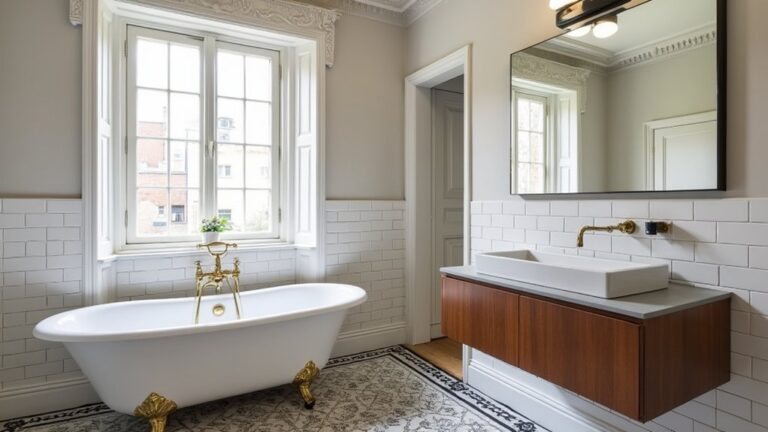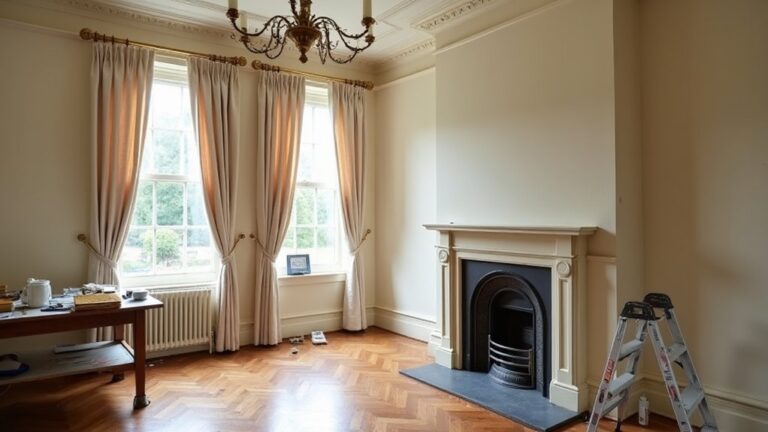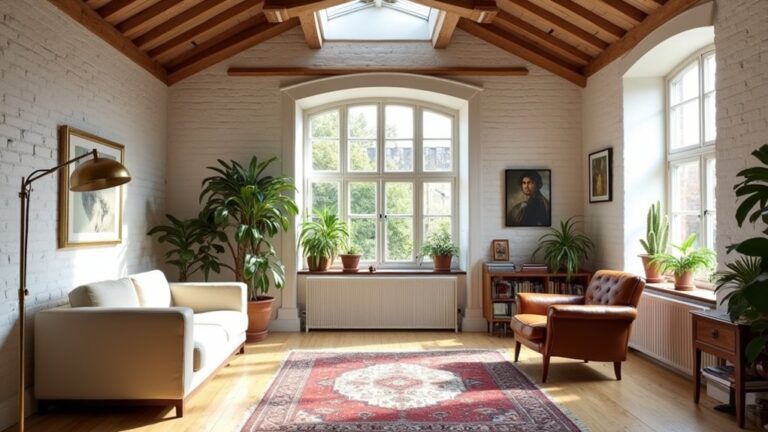
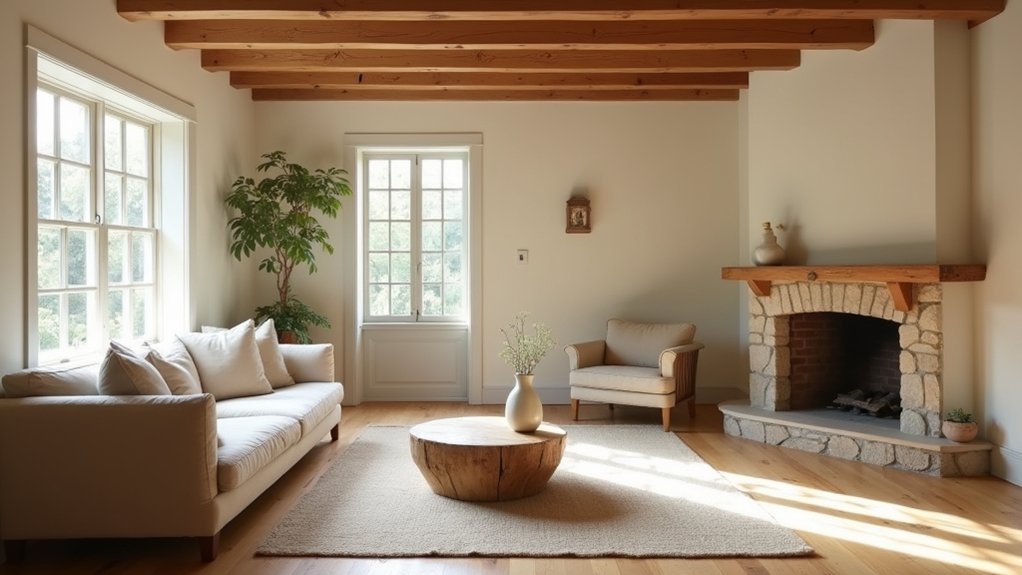
You start by setting clear soft rustic minimalism rules that suit a 1930s bungalow, then you protect what can’t be replaced—original architraves, stair spindles, and honest joinery—before you touch anything cosmetic. You edit bulky furniture and harsh lighting, not the trim, and you keep the palette calm with warm whites, muted clay, and aged pine tones. Linen, wool, and worn timber add quiet depth, but the real shift comes from the smallest handmade details—once you decide which ones stay.
Key Takeaways
- We defined a soft rustic minimal palette—putty, clay, and soft sage—to calm the bungalow while retaining vintage warmth.
- We preserved 1930s details like picture rails, skirtings, and stair spindles by repairing and re-waxing instead of replacing.
- We protected original features during works by photographing rooms, labeling hardware, and taping or guarding trim from paint and tools.
- We curated lean, well-scaled furniture with one vintage hero piece, keeping items on legs to maintain open floorlines and modest proportions.
- We layered warm lighting, linen and wool textures, and handmade ceramics and prints for an authentic, lived-in finish without over-styling.
Set Soft Rustic Minimalism Rules for a Bungalow
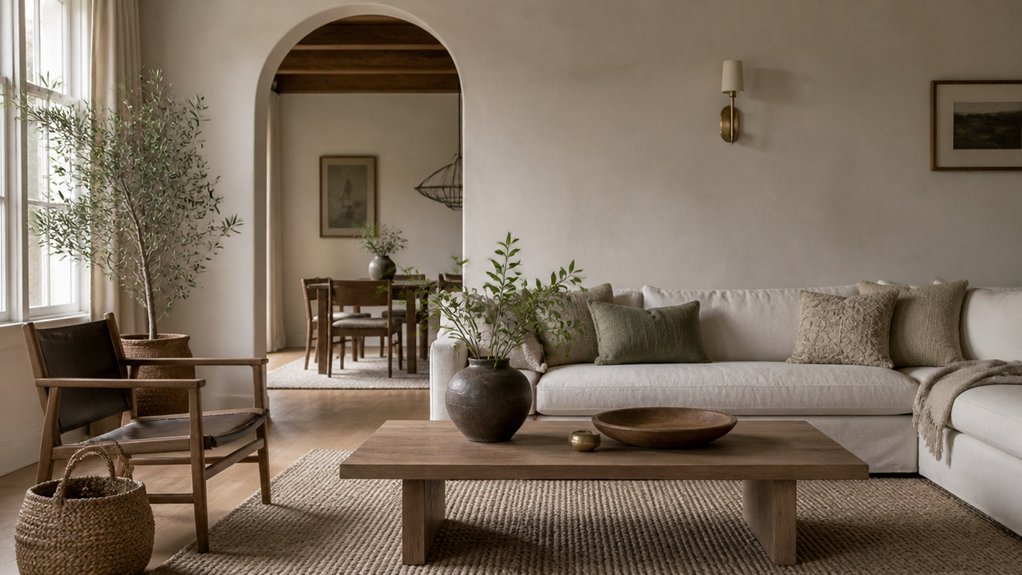
Although a 1930s bungalow can feel cramped once you start modernising it, you can keep it calm and characterful by setting a few soft rustic minimalism rules.
Start with a tight palette: chalky off-white, warm putty, and soot-grey, so rooms read larger in grey UK light. Limit each space to one timber tone and one metal finish; you’ll avoid visual noise and save on mismatched buys.
Choose honest textures—linen, wool, oak, terracotta—and keep patterns small-scale.
Practise Antique preservation in what you already own: repair, re-dye, re-wax, and re-upholster rather than replace.
Then apply Modern reinterpretation with simple, boxy storage, slimline radiators, and discreet LED strips.
Shop British salvage yards and local joiners for better value and longevity.
Protect Original 1930s Bungalow Features First
Once you’ve set your soft rustic minimalism rules, protect what makes a 1930s bungalow worth saving before any paint, plaster, or new storage goes in. Photograph every room, then label and bag screws, hinges, and escutcheons so nothing “disappears” during works.
Tape off picture rails, original skirtings, architraves, and stair spindles; add Correx or hardboard guards where trades will brush past. If you’ve got crittall-style windows, check putty lines and ease sash cords before decorating, not after. Keep leaded glass and bakelite switches boxed, dry, and inventoried for antique preservation.
When you repair, match profiles and timber species from a local reclaim yard, and use lime where appropriate. You’ll maintain historical accuracy and protect resale value for UK buyers.
Edit Furniture, Lighting, and Decor (Not the Trim)
Keep the picture rails, skirting, and architraves exactly as they are, then edit what sits against them.
You’ll get the best value by curating a lean furniture mix—fewer, better-scaled pieces with clear walkways and useful storage—so the 1930s proportions read properly.
Finish with warm, minimal lighting layers: a soft ceiling fitting, a couple of table or floor lamps, and discreet wall lights to lift corners without visual clutter.
Curate Lean Furniture Mix
When you’re revitalizing a 1930s bungalow, you’ll get the biggest visual lift by curating a lean furniture mix that respects the room’s footprint rather than competing with it. Start with one properly scaled sofa, then add two compact occasional chairs rather than a bulky matching suite; you’ll keep circulation clear in narrow UK rooms and protect original proportions.
Aim for furniture balance: pair a simple oak coffee table with a slimmer side table, and choose pieces on legs so the floorline stays visible.
Build in Vintage charm through one hero find—an Ercol-style chair, a reclaimed pine dresser, or a mid-century trolley—then keep everything else quiet and functional.
Before you buy, tape out sizes, check delivery routes, and prioritise second-hand to stretch your budget.
Warm Minimal Lighting Layers
Although a 1930s bungalow often comes with low ceilings and smaller windows, you can make it feel bigger and calmer by layering warm, minimal lighting that does the heavy lifting instead of extra decor.
Start with a simple ceiling pendant in opal glass to bounce light softly, then add wall lights to lift the edges of the room and reduce shadows. Use 2700K LED bulbs, dimmable, so you control mood without swapping fittings.
Place a slim floor lamp behind the sofa for reading, and a small table lamp on a sideboard to keep Vintage charm without clutter. Choose shades in linen, clay, or aged brass for colour harmony with oak floors and warm neutrals.
This approach costs less than rewiring and feels tailored.
Choose a Soft Rustic Minimalism Paint + Wood Palette
Because a 1930s bungalow tends to mix modest room sizes with strong architectural lines, you’ll get the most value from a soft rustic minimalism palette that brightens the space without bleaching its character.
Start with a warm off-white on walls (think clay-leaning, not icy) to keep Vintage charm intact and bounce daylight around alcoves and picture rails. Add a muted grey-green or oatmeal accent for colour harmony across hall, lounge, and snug.
For wood, choose one honest tone and stick to it: mid-oak or lightly fumed oak suits UK joinery and hides wear better than pale pine.
If you’re budget-led, tint existing boards with a water-based stain and seal in a low-sheen lacquer, so skirting, doors, and shelving read calm, consistent, and easy to maintain.
Layer Soft Rustic Minimalism Textures for Cozy Warmth
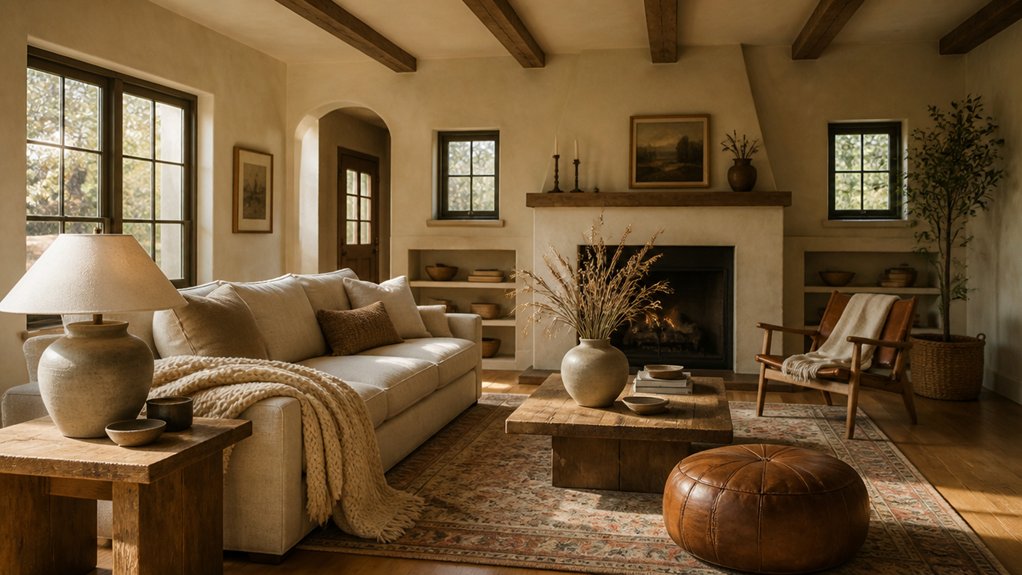
You’ll warm up your 1930s bungalow fast by layering natural fibres and linen—think relaxed curtains, a wool runner, and a textured throw that softens hard edges.
Add warm woods with honest patina, so a scrubbed oak table, aged pine shelves, or a vintage sideboard earns its keep and looks better over time.
Finish with matte ceramics and clay, using stoneware mugs, a chalky vase, and an earthenware bowl to bring quiet, tactile comfort without clutter.
Natural Fibers And Linen
Where do you start when a 1930s bungalow needs warmth without losing its clean lines? You begin with Natural fibers that sit quietly against crisp plaster and simple joinery. Swap synthetic throws for wool and cotton, then add jute or sisal underfoot to soften echoes in narrow halls.
Choose linen textures for curtains, Roman blinds, and relaxed slipcovers; they filter UK daylight, hide minor creases, and feel cool in summer. Keep colours oatmeal, chalk, and pebble so the space stays minimal, not bland.
For value, buy long-staple linen by the metre from British suppliers and hem it yourself. Finish with woven baskets for storage, and a quilted coverlet that invites you to linger.
Warm Woods And Patina
Although a 1930s bungalow often leans on crisp plaster and simple trim, warm wood and honest patina stop it feeling flat without cluttering the lines. You’ll get the most impact by keeping the silhouettes clean: a pared-back oak sideboard, a simple pine bench, or reclaimed floorboards repaired, not replaced.
Choose aged woods with tight grain and muted tones, then let one hero piece carry the room. A sanded-and-oiled worktop, a chest with Vintage patina, or old scaffold boards as floating shelves adds depth without busy ornament.
You don’t need matching sets; you need consistent warmth. Use beeswax, hardwax oil, or a light stain to unify mixed finds, and you’ll spend less than new joinery while gaining character.
Matte Ceramics And Clay
Because plastered bungalow walls can read a bit stark once you’ve stripped back the fuss, matte ceramics and clay bring in soft, rustic-minimal texture without breaking the clean 1930s lines. You’ll notice how Matte ceramics diffuse light, so shelves feel calmer and corners look finished, not styled.
Choose hand-thrown mugs, shallow bowls, and chunky vases in chalky whites, mushroom, and warm terracotta to echo your warm woods and patina.
Lean into Clay textures with a lamp base, a slip-cast tray, or a simple tile splashback behind the hob; they add grip and depth without pattern overload.
Shop local potters, salvage yards, or British brands that do seconds—small imperfections save money and look intentional. Keep quantities tight, group in threes, and you’ll get cosy warmth for less.
Add Simple Handmade Accents That Fit the Era
When you add a few handmade details in the right places, a 1930s bungalow instantly feels more authentic without looking like a themed set. Choose Handmade accents that echo what you’d have seen in a UK home of the era: a simple oak picture rail hook, a stitched linen lampshade trim, or a hand-turned wooden knob on a built-in cupboard.
Lean on Era appropriate crafts with honest materials and modest scale. Swap mass-produced wall art for a small linocut print in a thin timber frame, or hang a woven rush trivet near the range. Keep colours chalky—putty, clay, soft sage—so they sit quietly beside matte ceramics and clay.
You’ll spend less than on “vintage” reproductions, and the room feels lived-in, not staged.
Conclusion
You end up with a 1930s bungalow that feels like it’s exhaled—lighter, calmer, still full of soul. By guarding the original architraves and stair spindles, you let history stay on the walls while you edit what’s movable. A soft paint-and-wood palette, linen and wool layers, and warm, pooled lighting work like a well-made brew: simple, comforting, and lasting. Handmade touches finish it—quiet value, honest craft, no fuss.
About the Author